Case 01
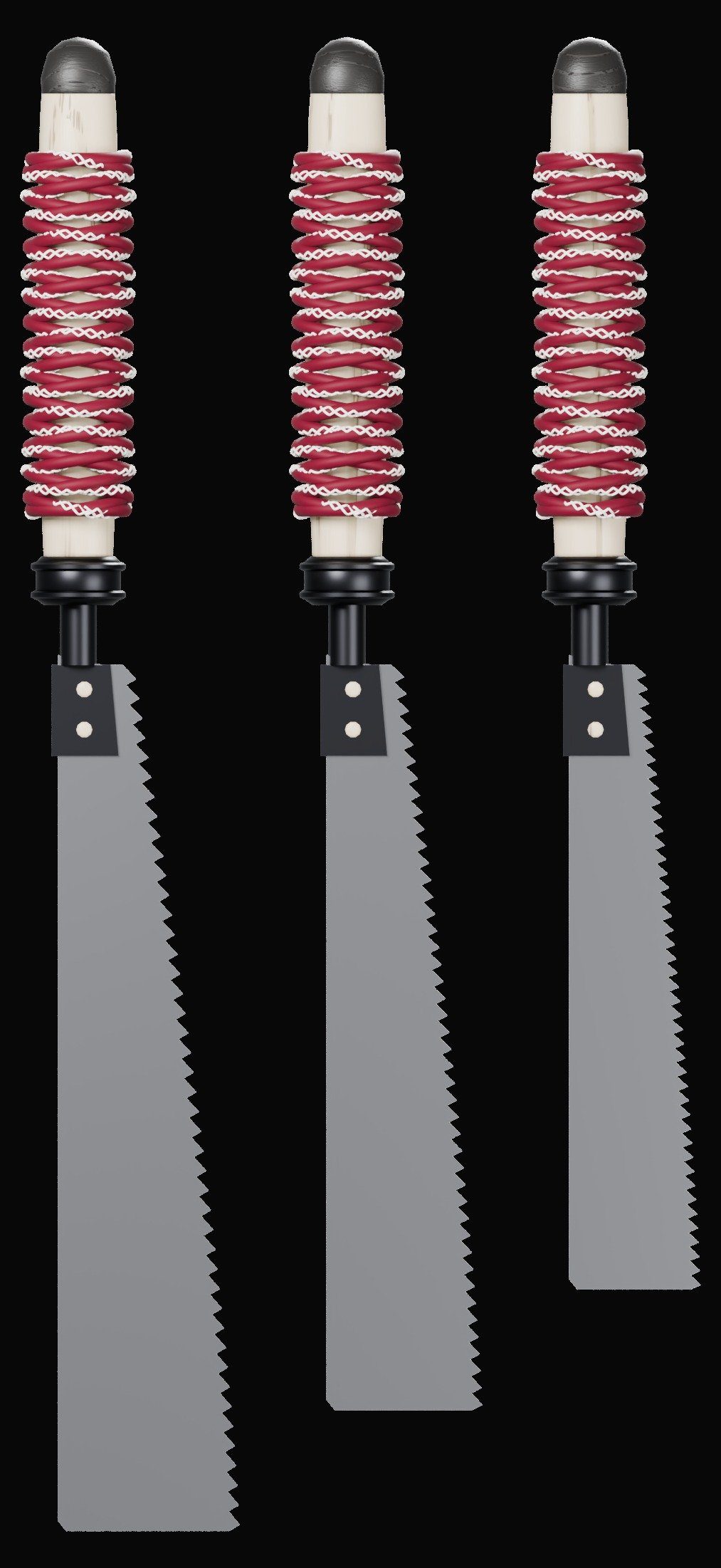
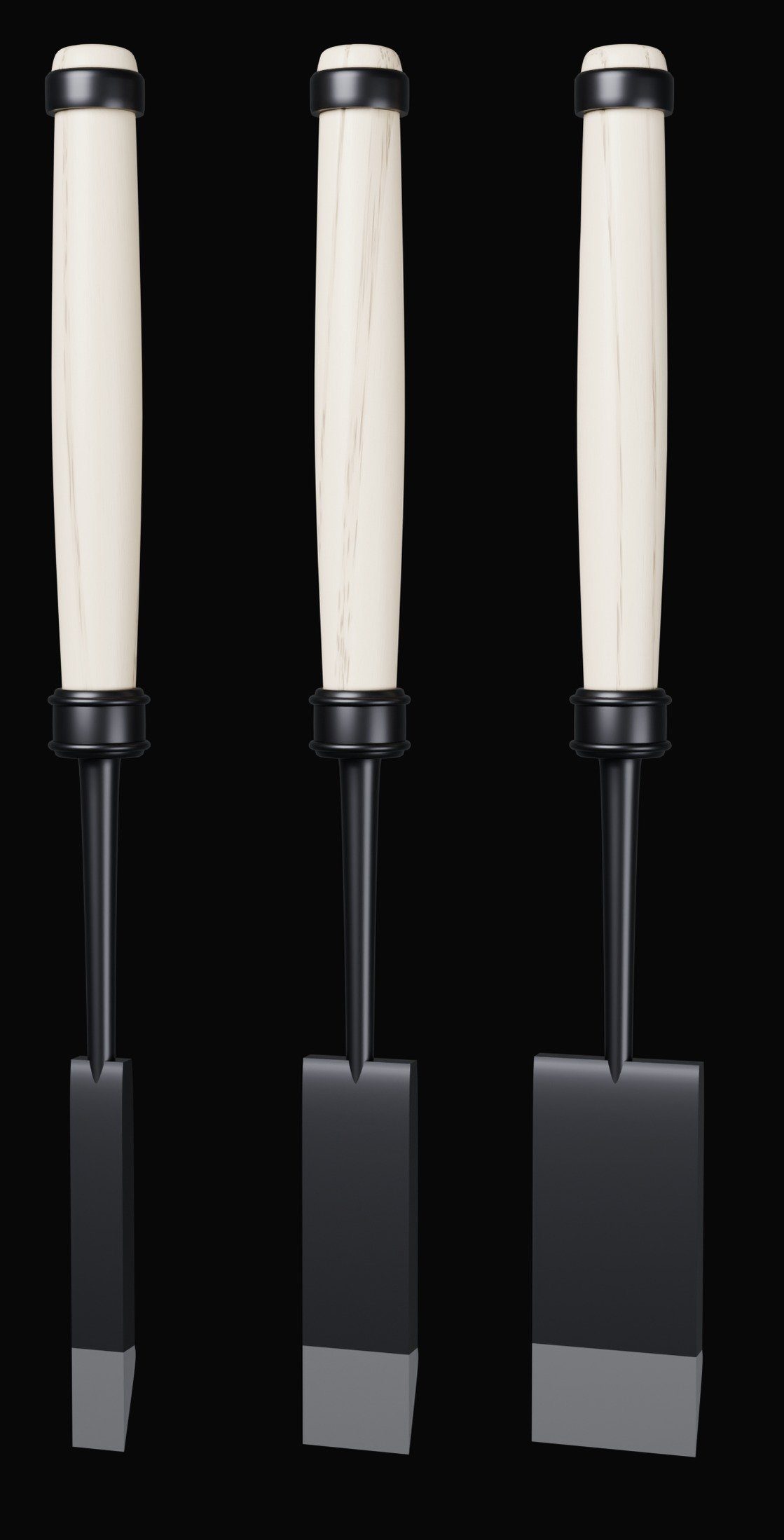
Marrow saws
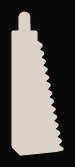
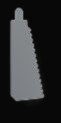
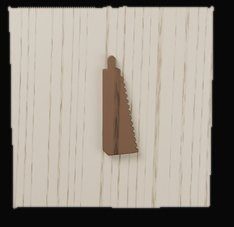
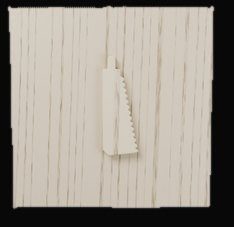
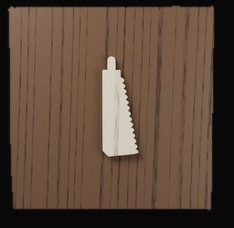
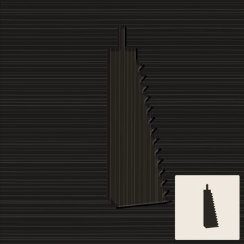
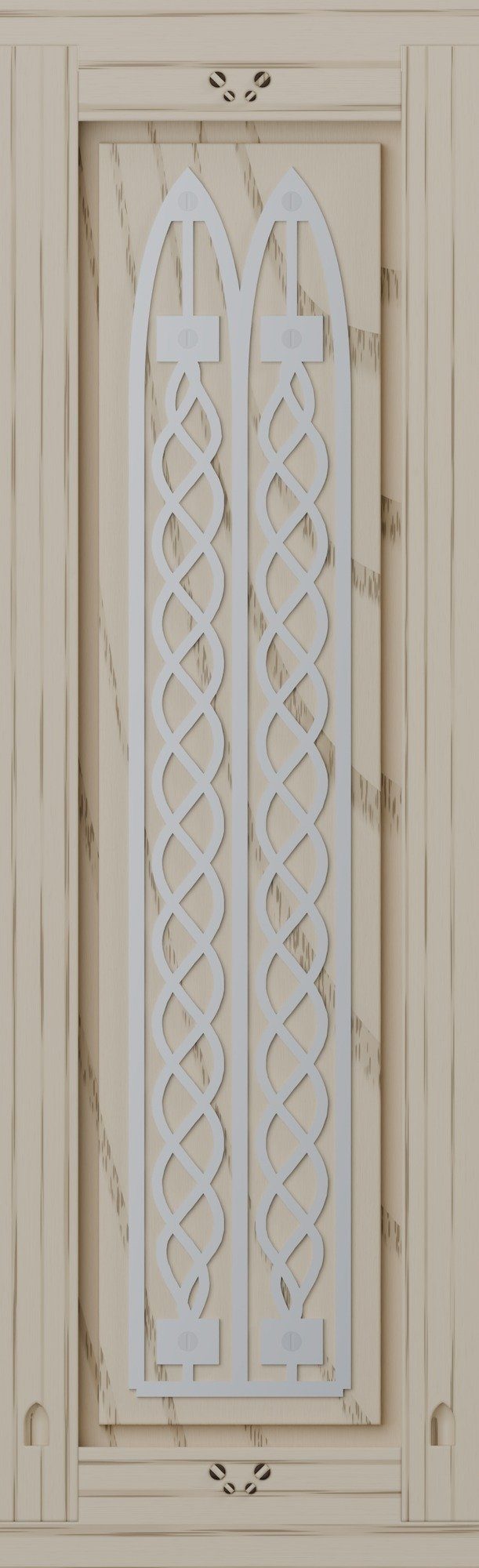
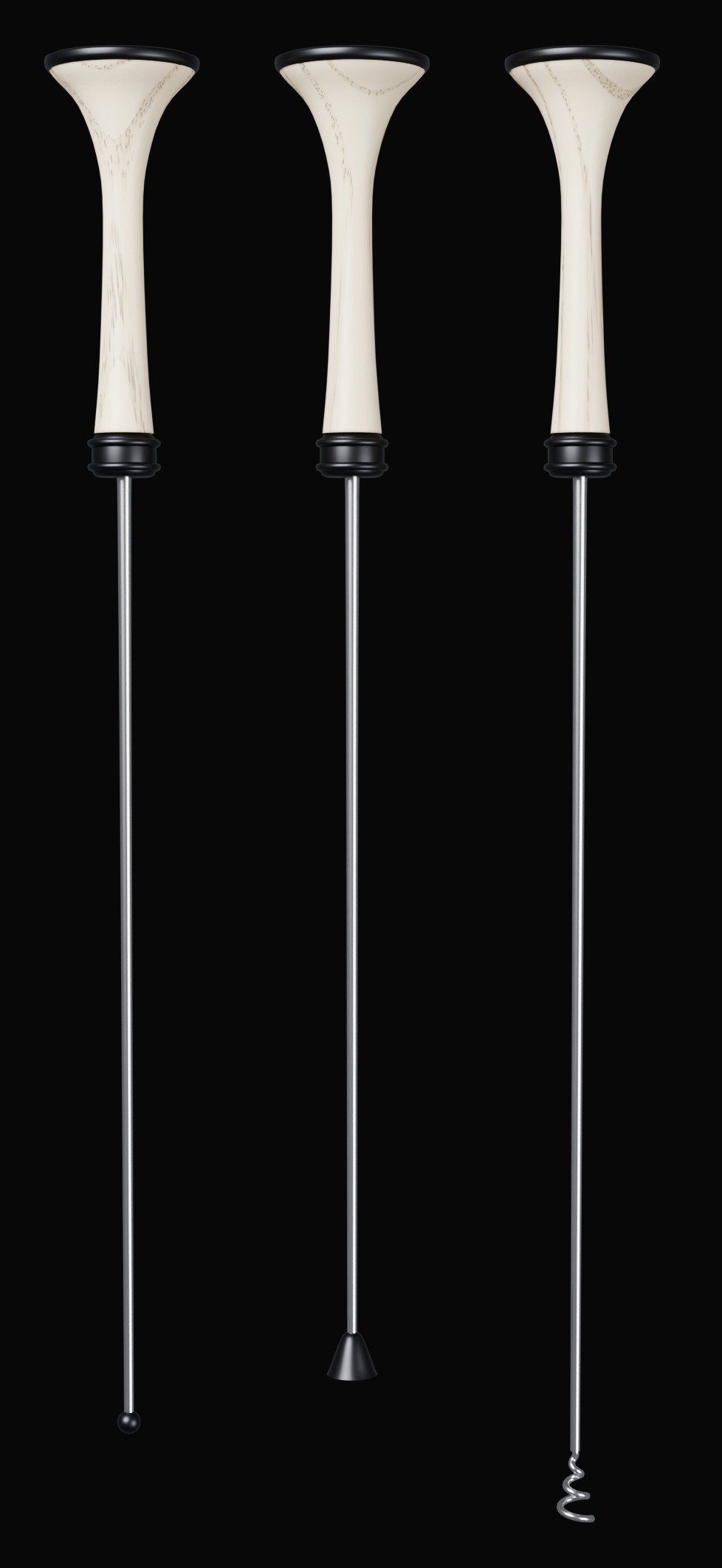
The tapered plate with its teeth and the two ash pins at the neck.
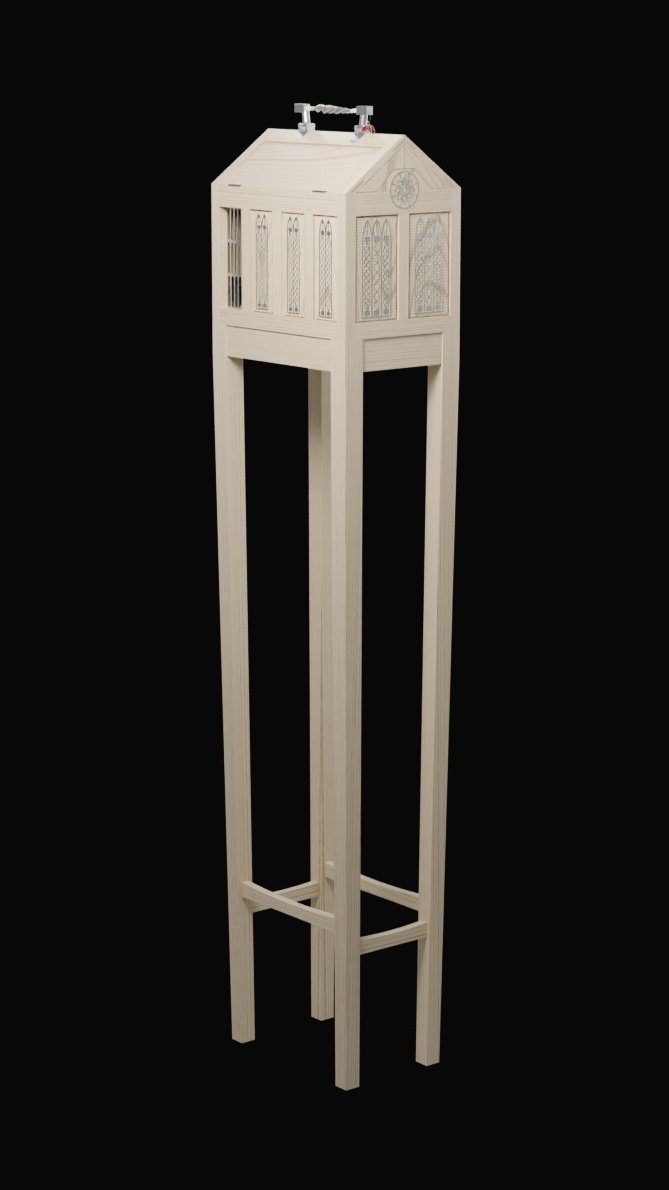
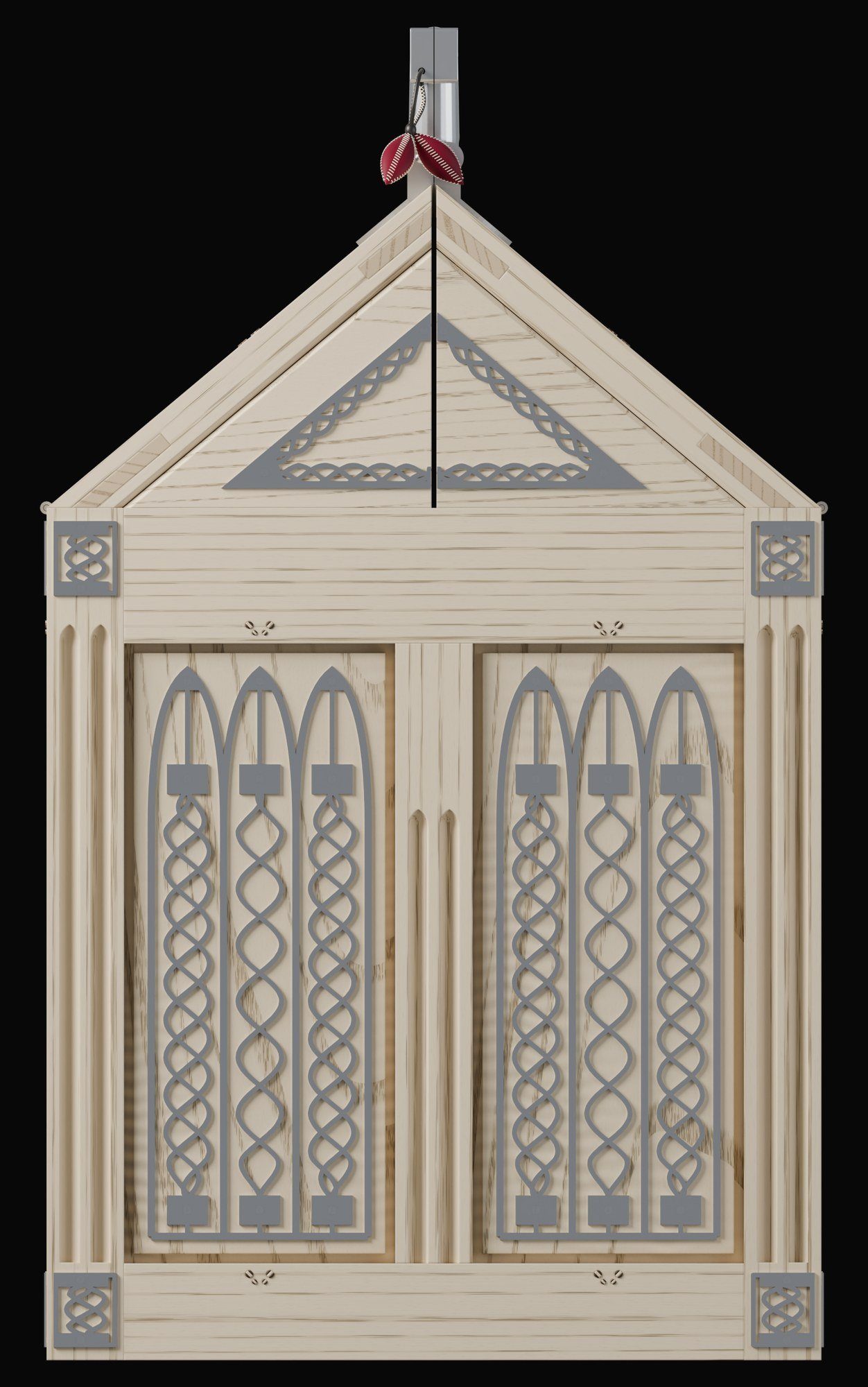
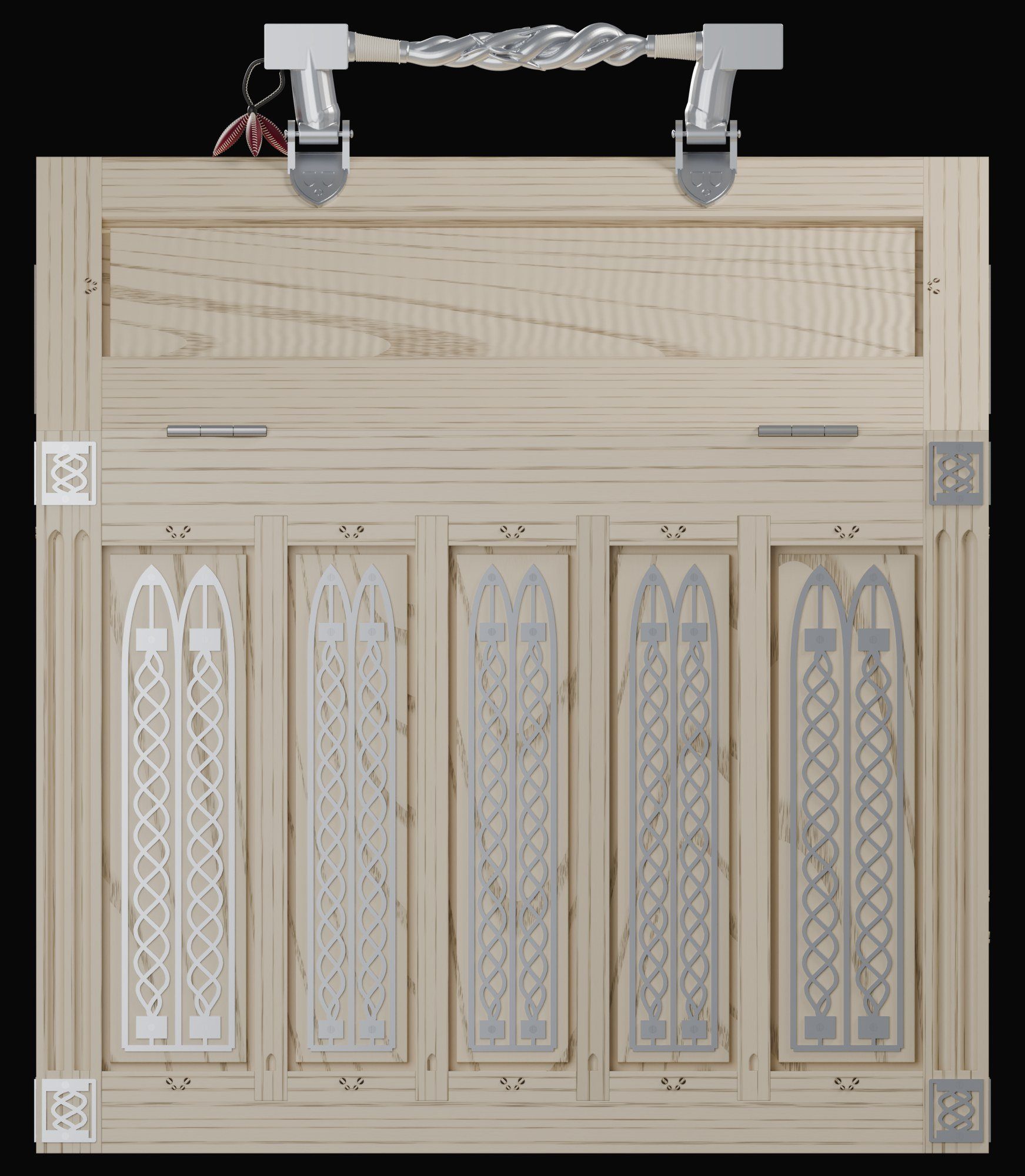
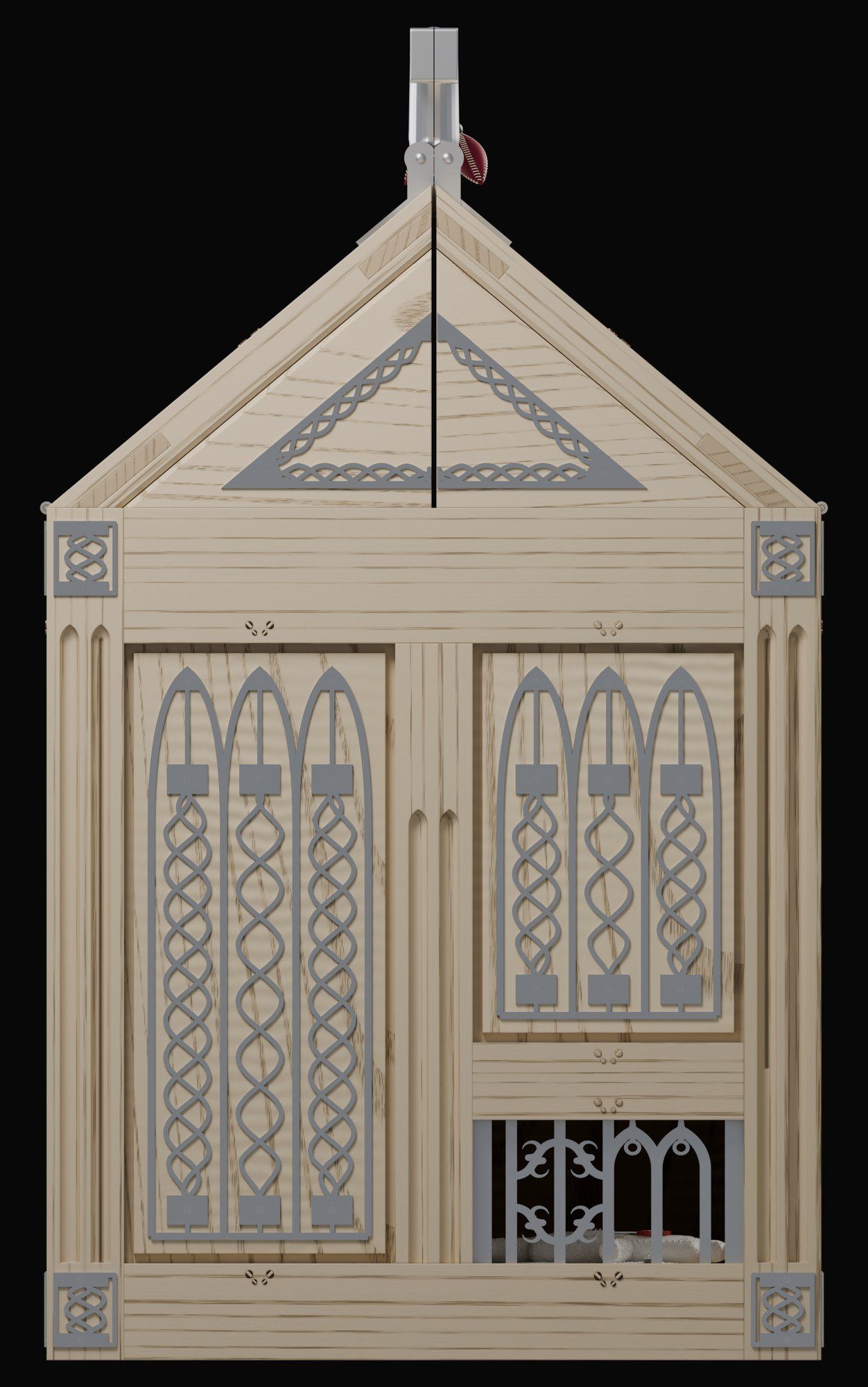
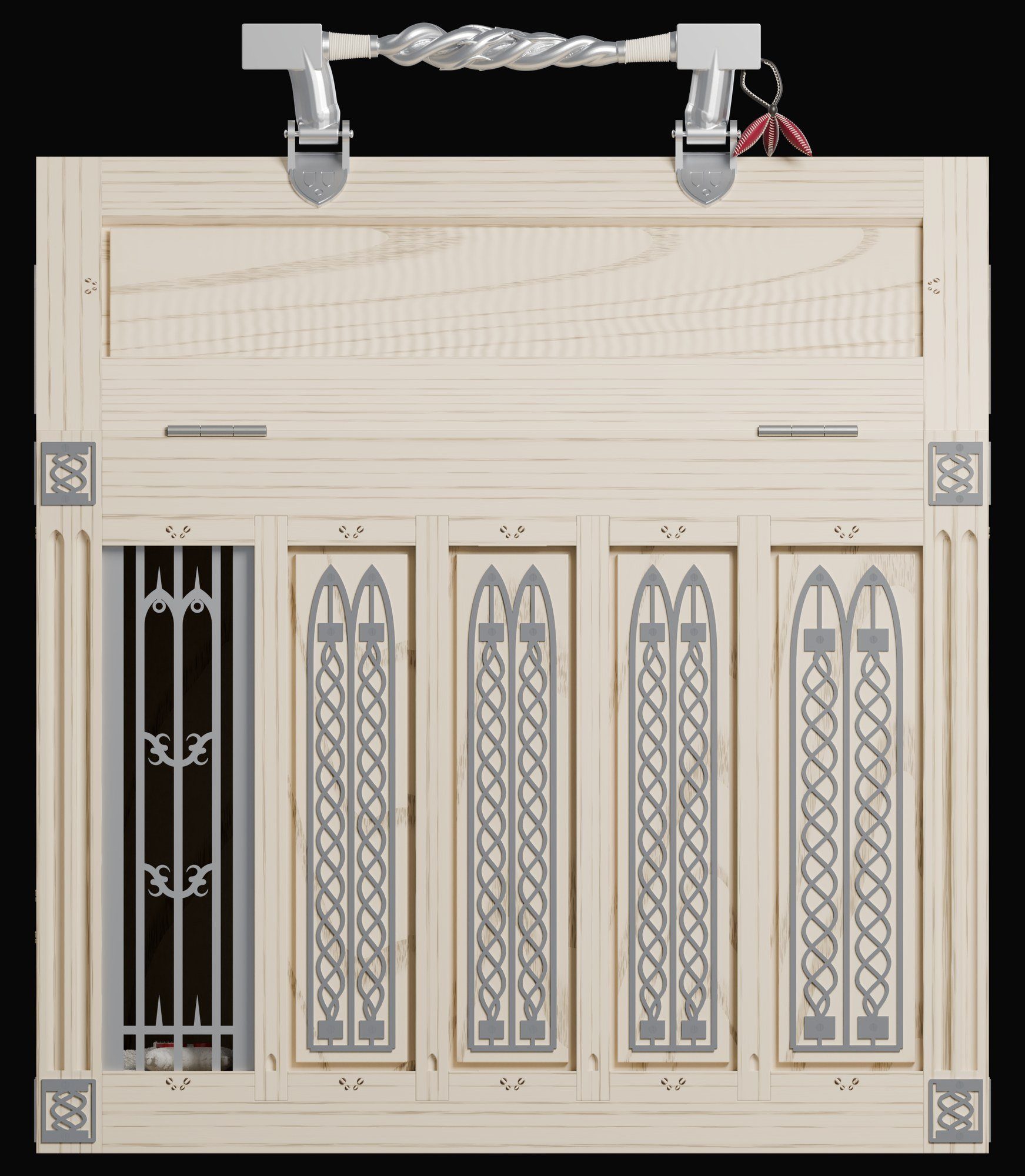
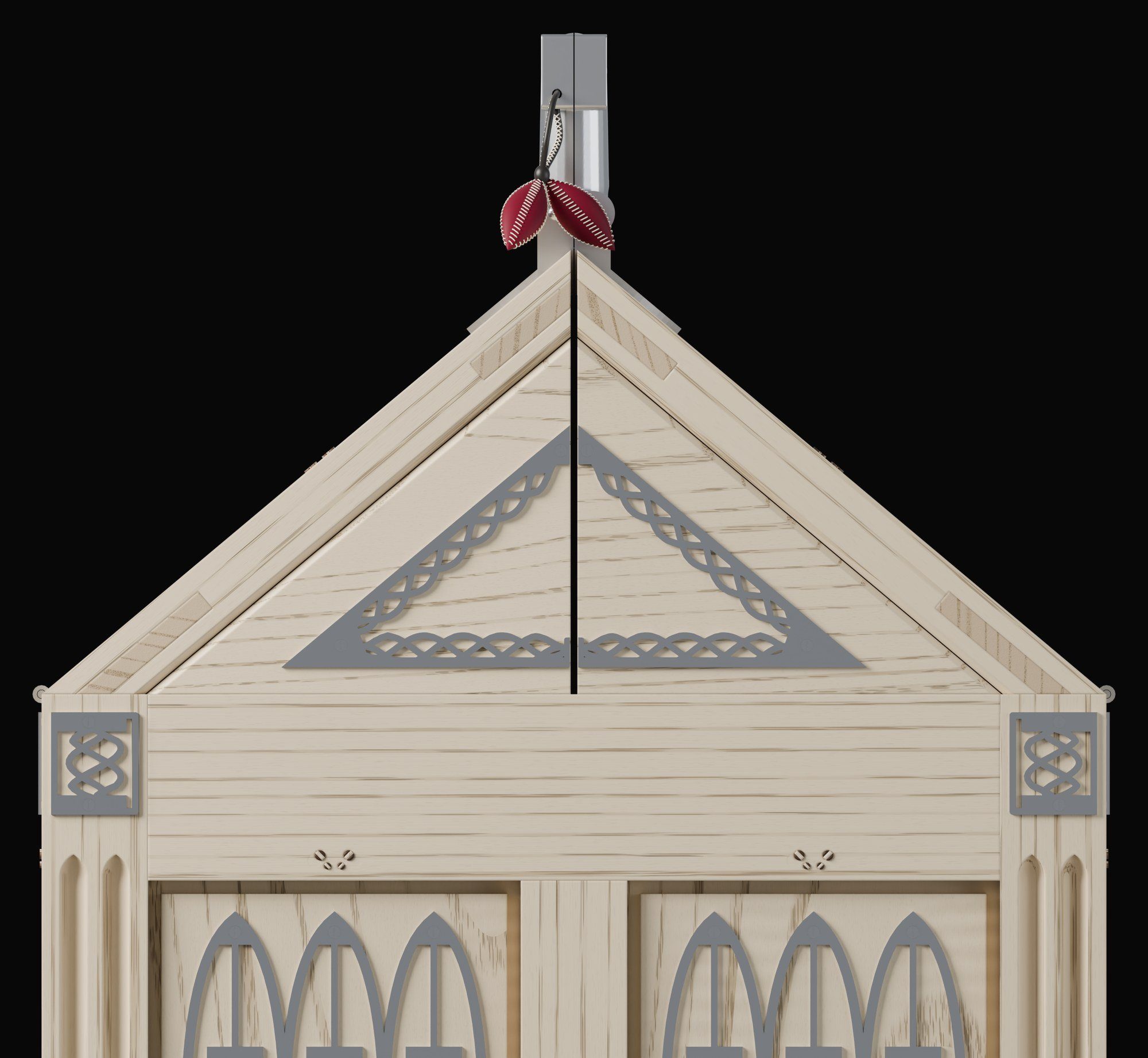
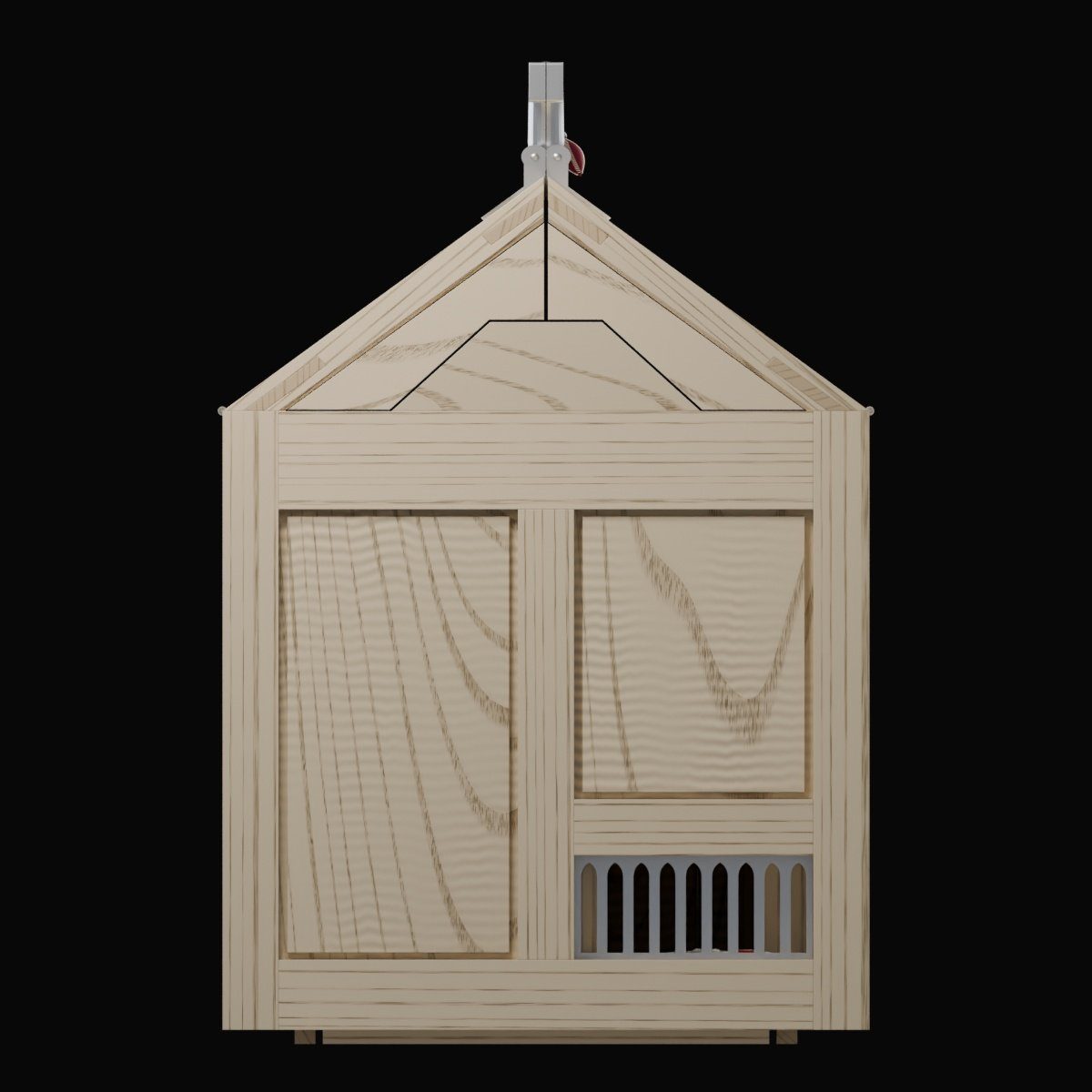
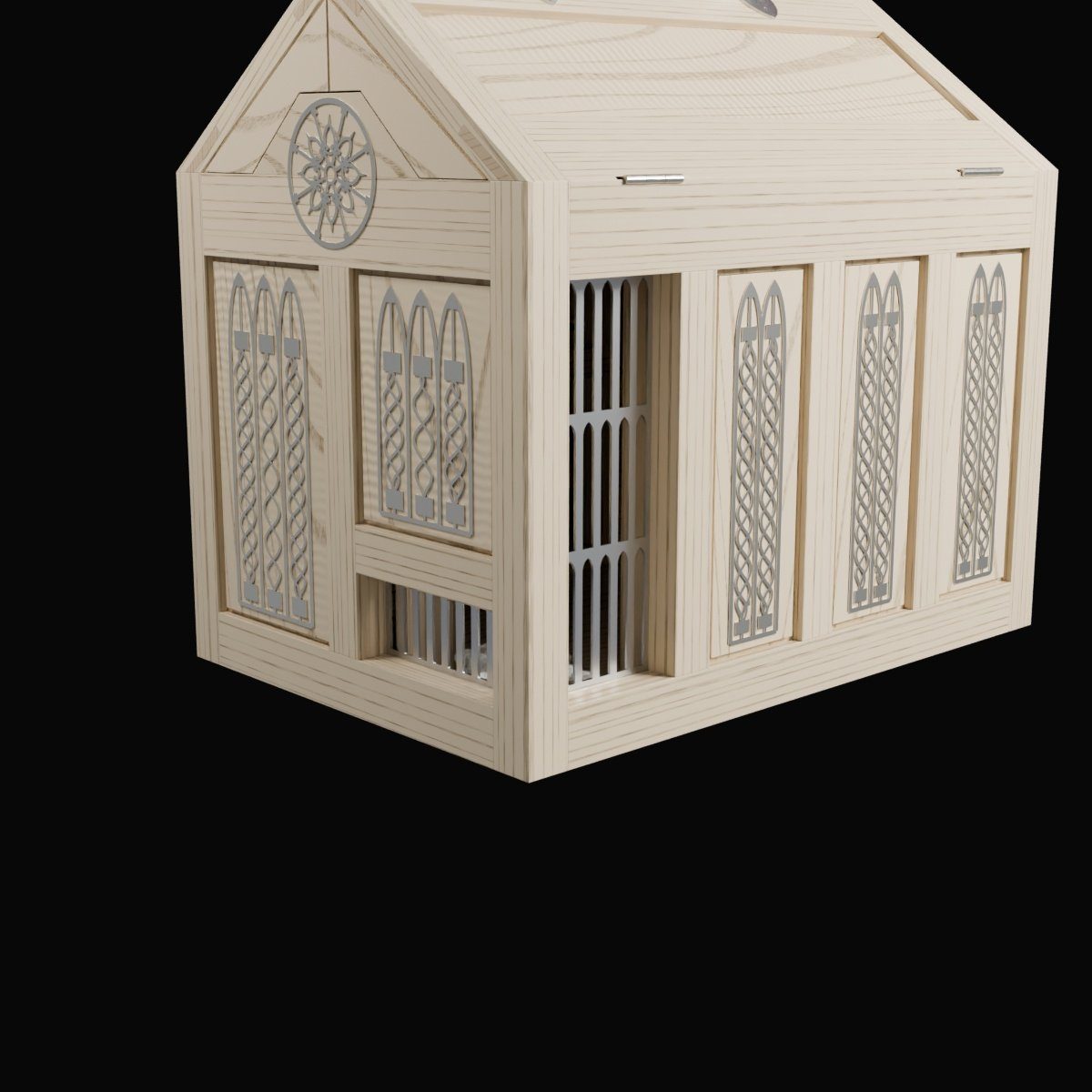
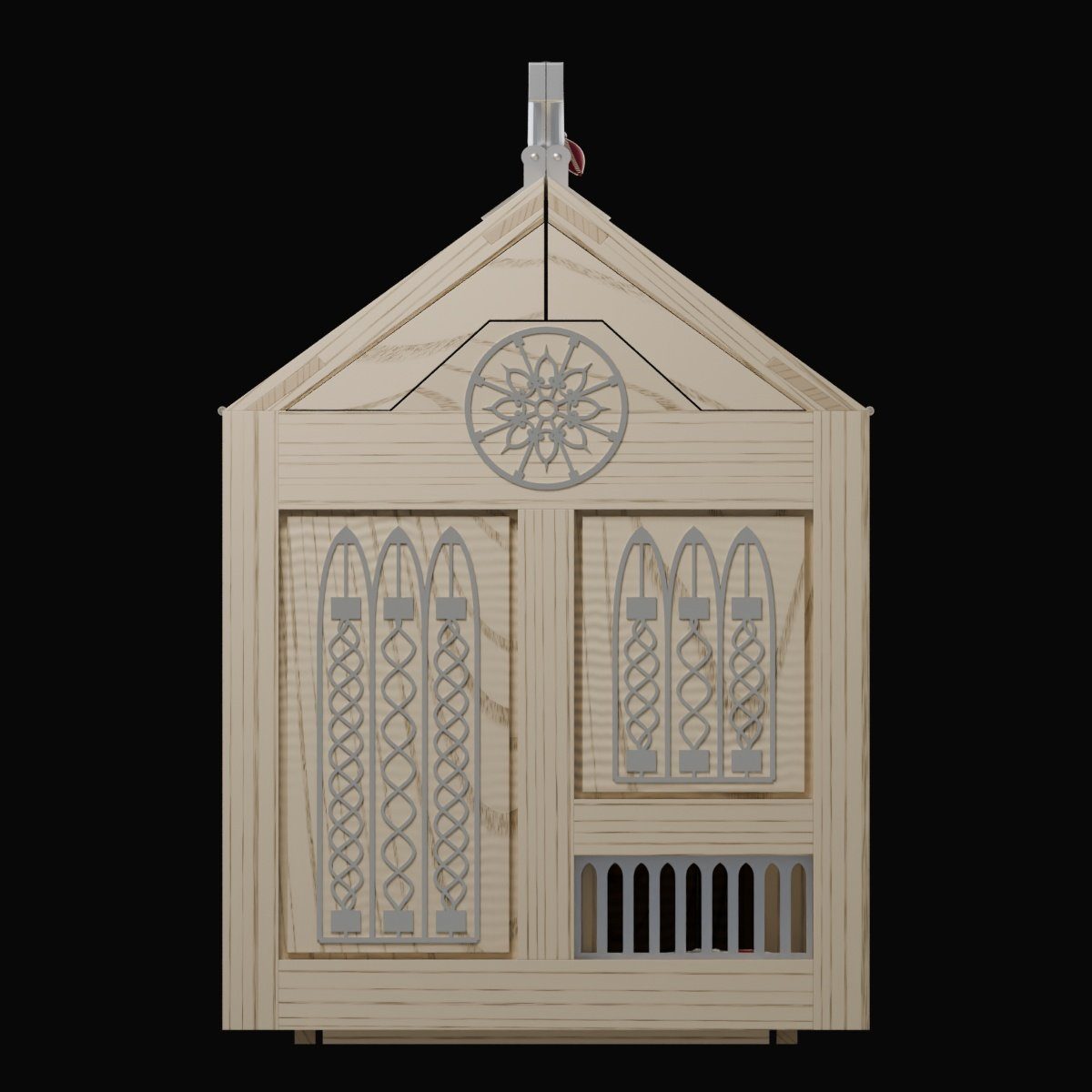
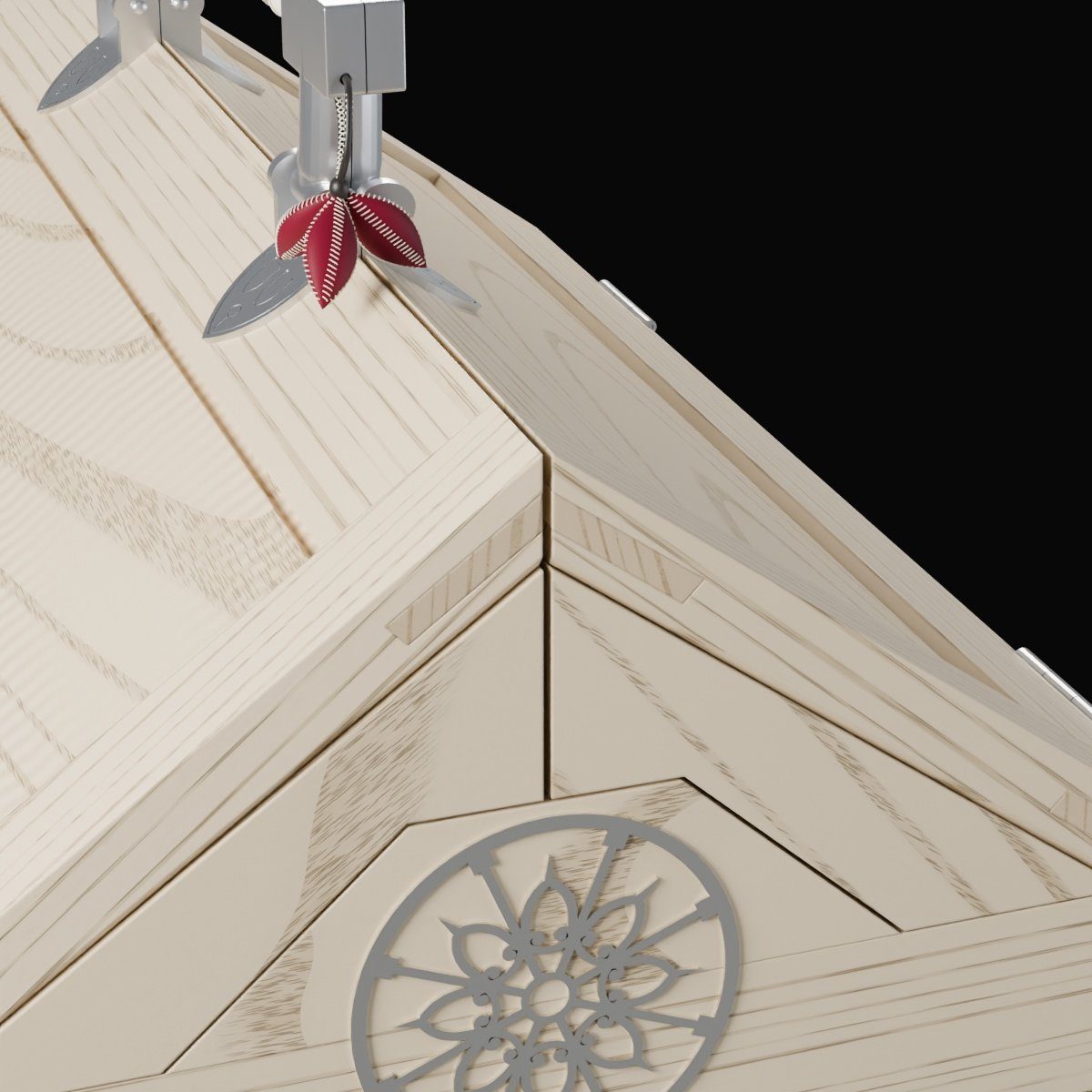
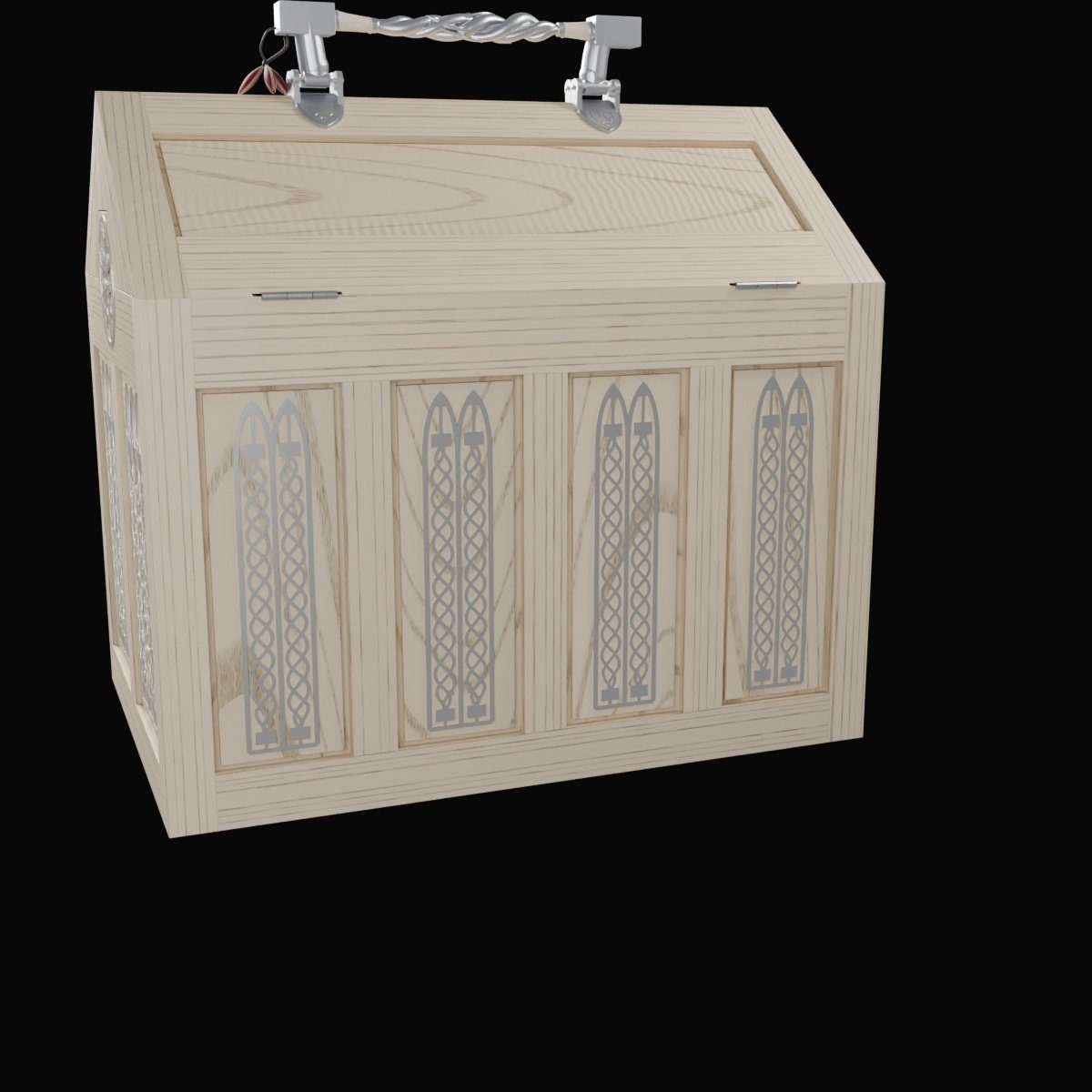
A gable-roofed toolbox case in raw white ash, built to hold ten caskets of instruments for the Moth Doctor. The roof splits on the ridge and opens on stainless eave hinges. Every panel floats in a plain solid-ash frame, and in one back corner a jail of laser-cut stainless bars keeps a small white monster on the case floor.
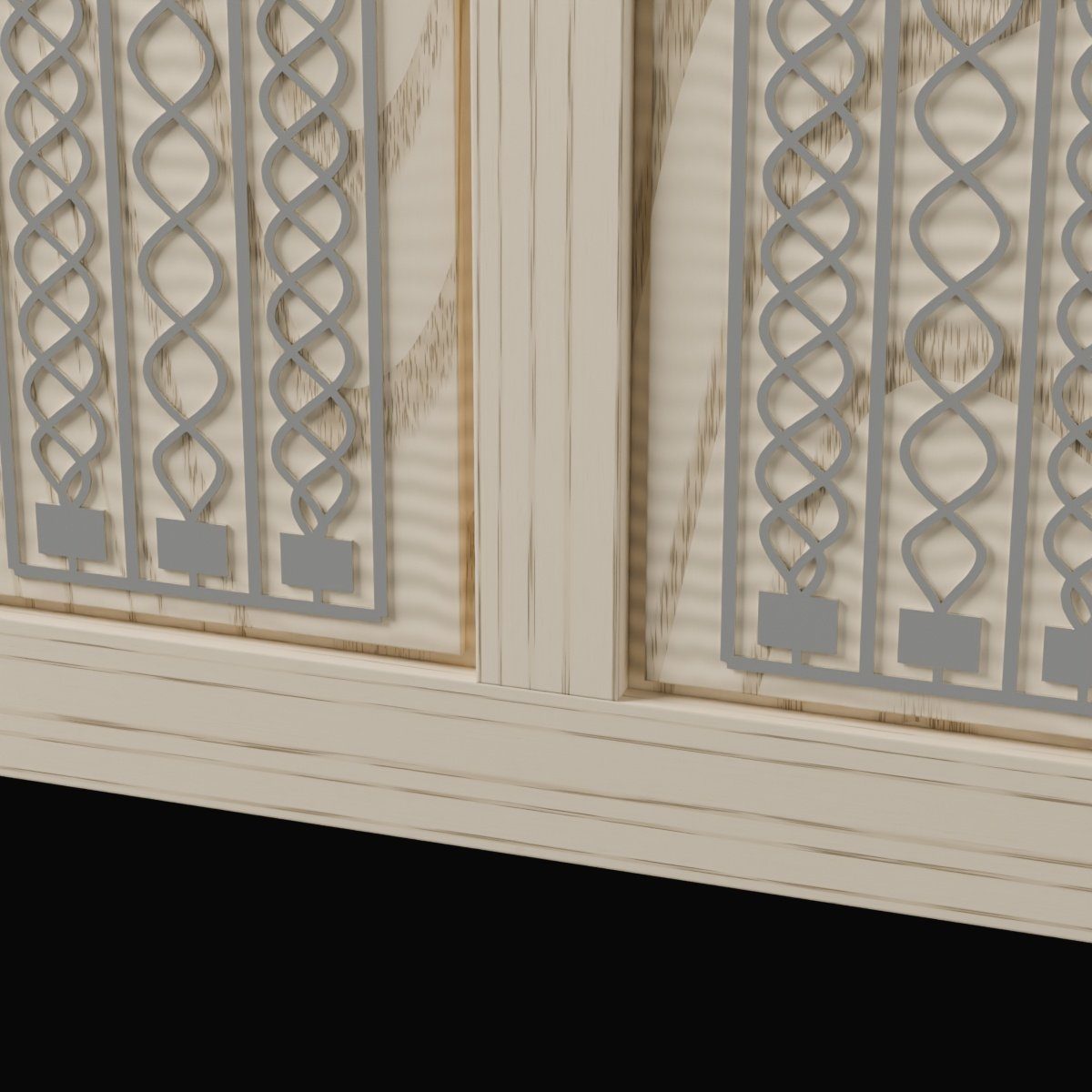
The case stands on a tall ash stand with a hidden tray beneath it, about 75 3/16 in to the ridge. Laser-cut stainless is set on the face of every panel and both gables, screwed on with slotted flat heads.

Thirty instruments from the ten caskets, and the monster from the jail
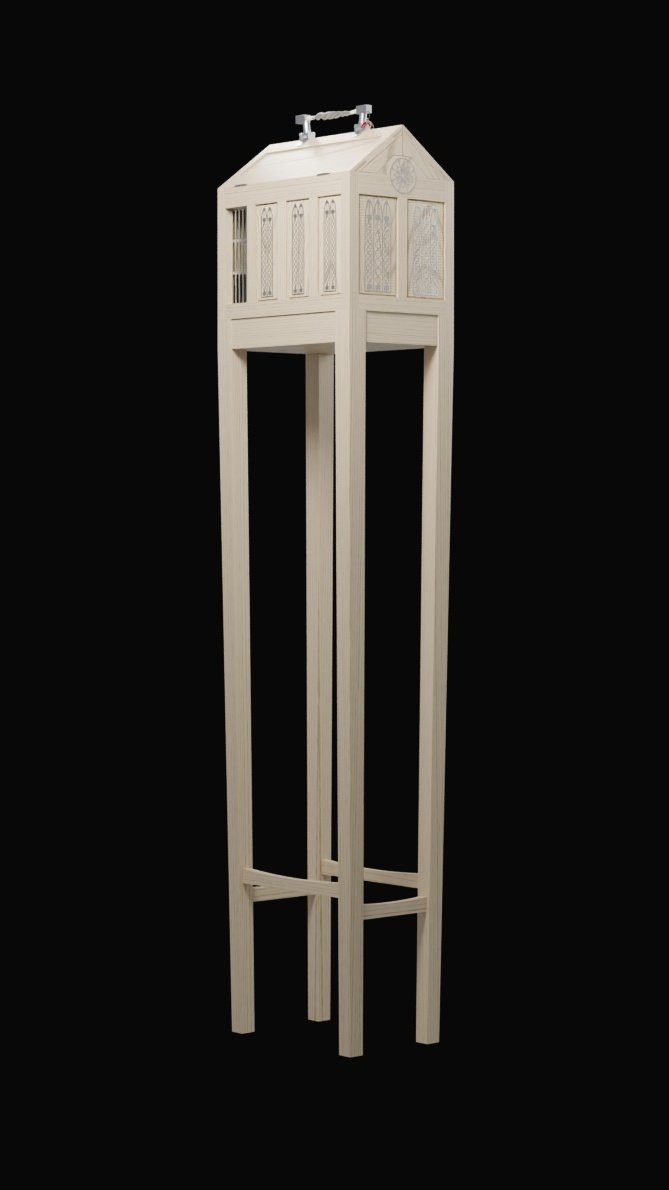
The case rides on a tall ash stand, about 75 3/16 in to the ridge, nearly five times the height of the case. The stand is an open tray: the case sits on the apron tops, and lifting it off shows the recessed tray. Four glued ash locating strips under the case bottom keep it in place.
The case itself is a gable-roofed box in raw white ash. The roof splits on the ridge and both halves swing back on stainless eave hinges, so the whole top folds open onto the ten caskets inside. Laser-cut stainless is set on the face of every panel and both gables, screwed on, and the back corner holds the jail.
What changed in this version: the roof now splits on a stepped line, up on a diagonal, level across the top, then down again. Each gable has a round window with a radial grille drawn from the jail bars. The handle sits on its hinge knuckles. The stand aprons are plain boards with a hand-planed bevel, the stretchers are straight rails set lower with a slight spokeshaved U, and the old corner screw holes are gone. The stand stretchers now sit centred on the legs with real tenons, the gables join the top rails on their own tongues, and the ridge latches are gone. The routed flutes are gone and the joinery is reworked for solid wood: plain tenons into plain mortises at every corner and solid ash gable caps. The stand legs grew to 60 in, so the piece now stands about 75 in. The moth pins are gone: the rails are plain solid ash. The case is rebuilt for the shop: every pin hole and inlay pocket is gone, the frame is plain mortise-and-tenon with stub-tenoned muntins, the case and stand bottoms are veneered ply, the stand lid is gone, and glued ash locating strips replace the dowels.
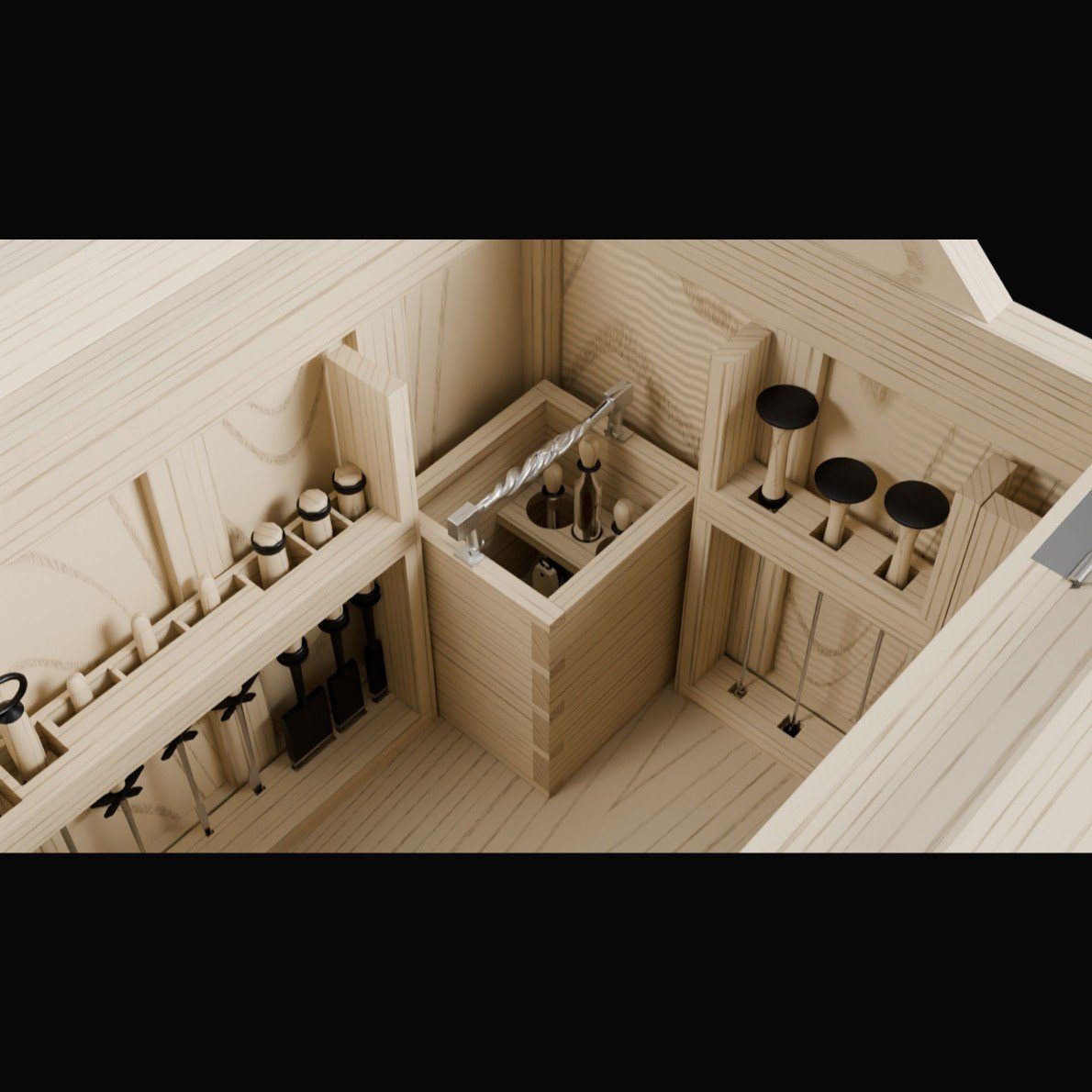
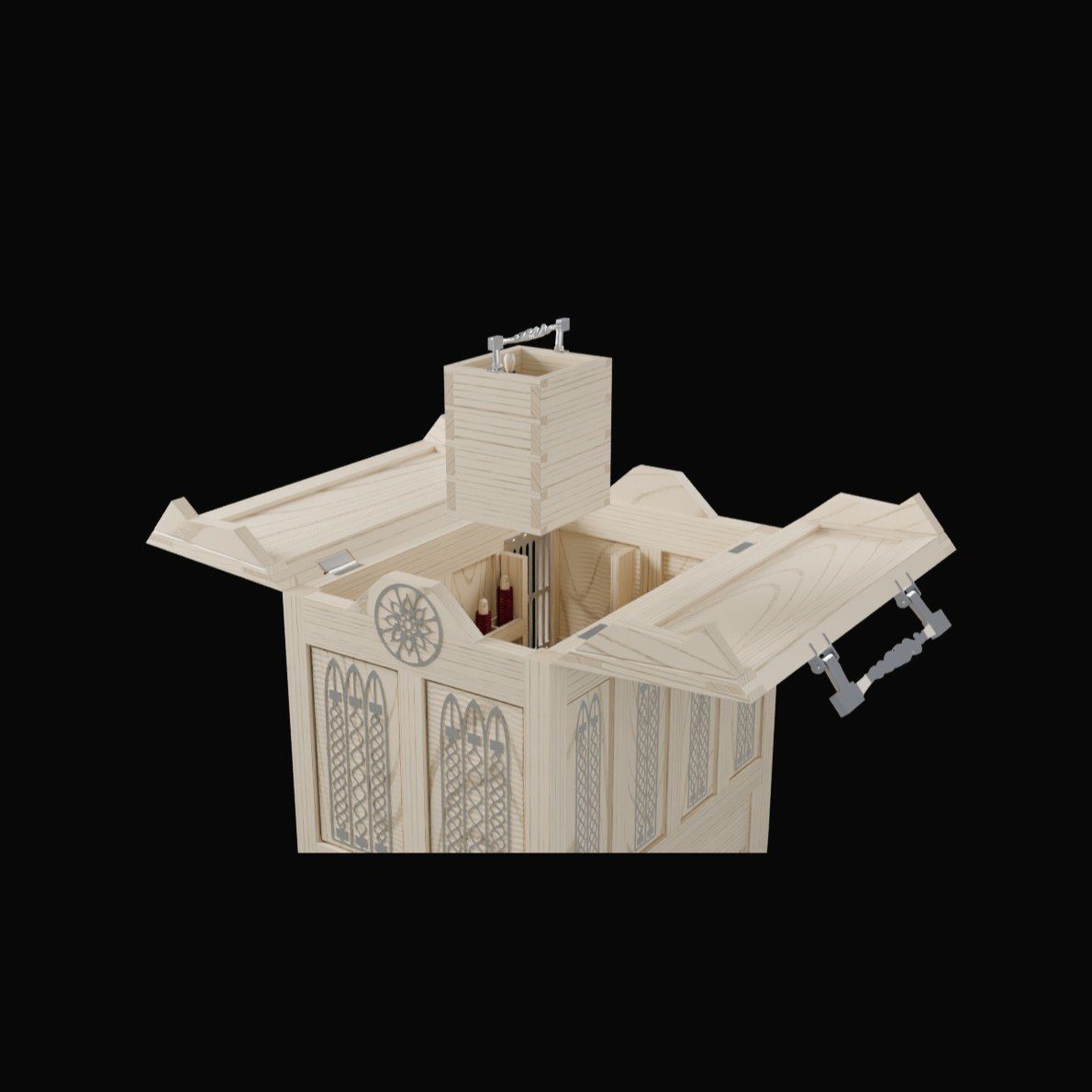
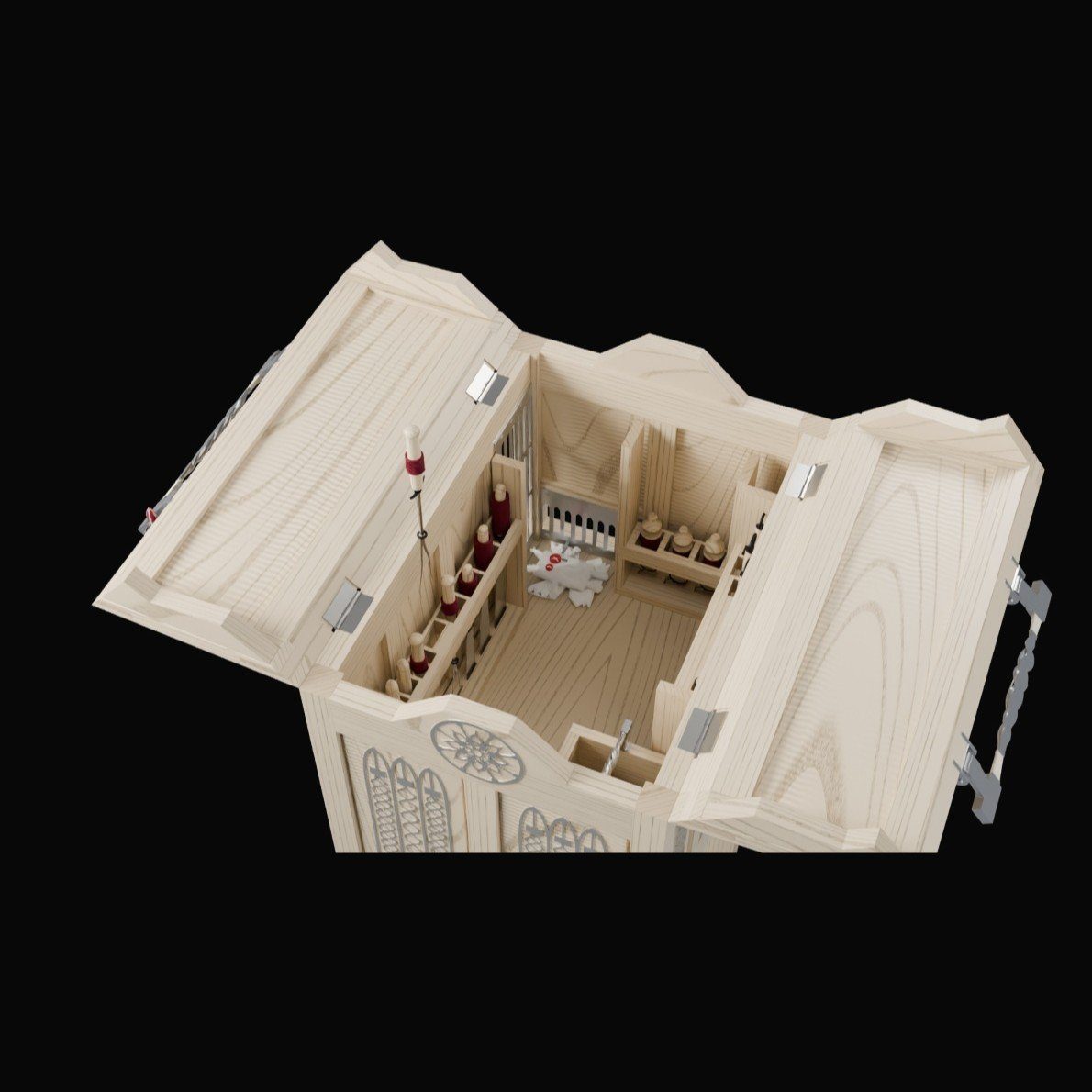
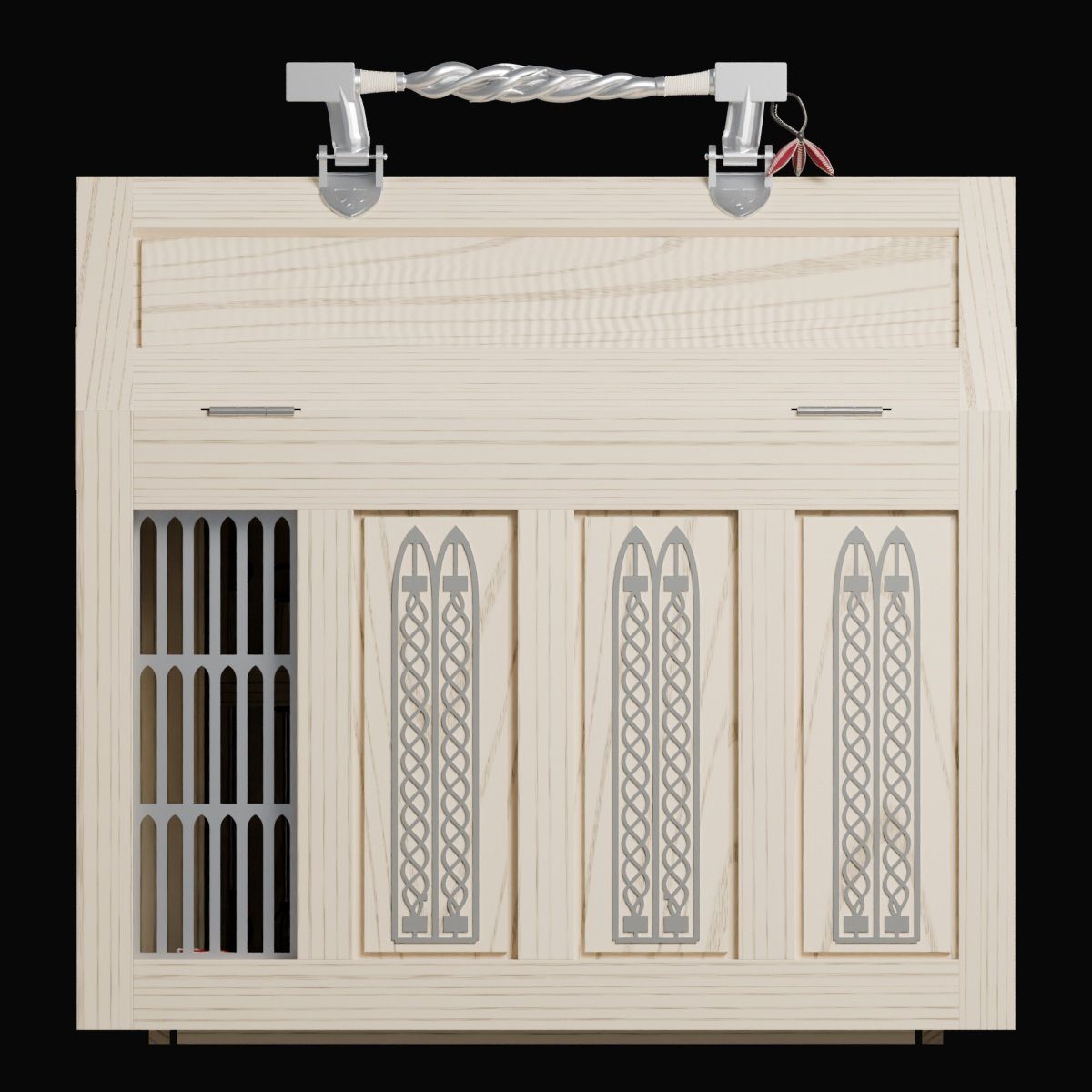
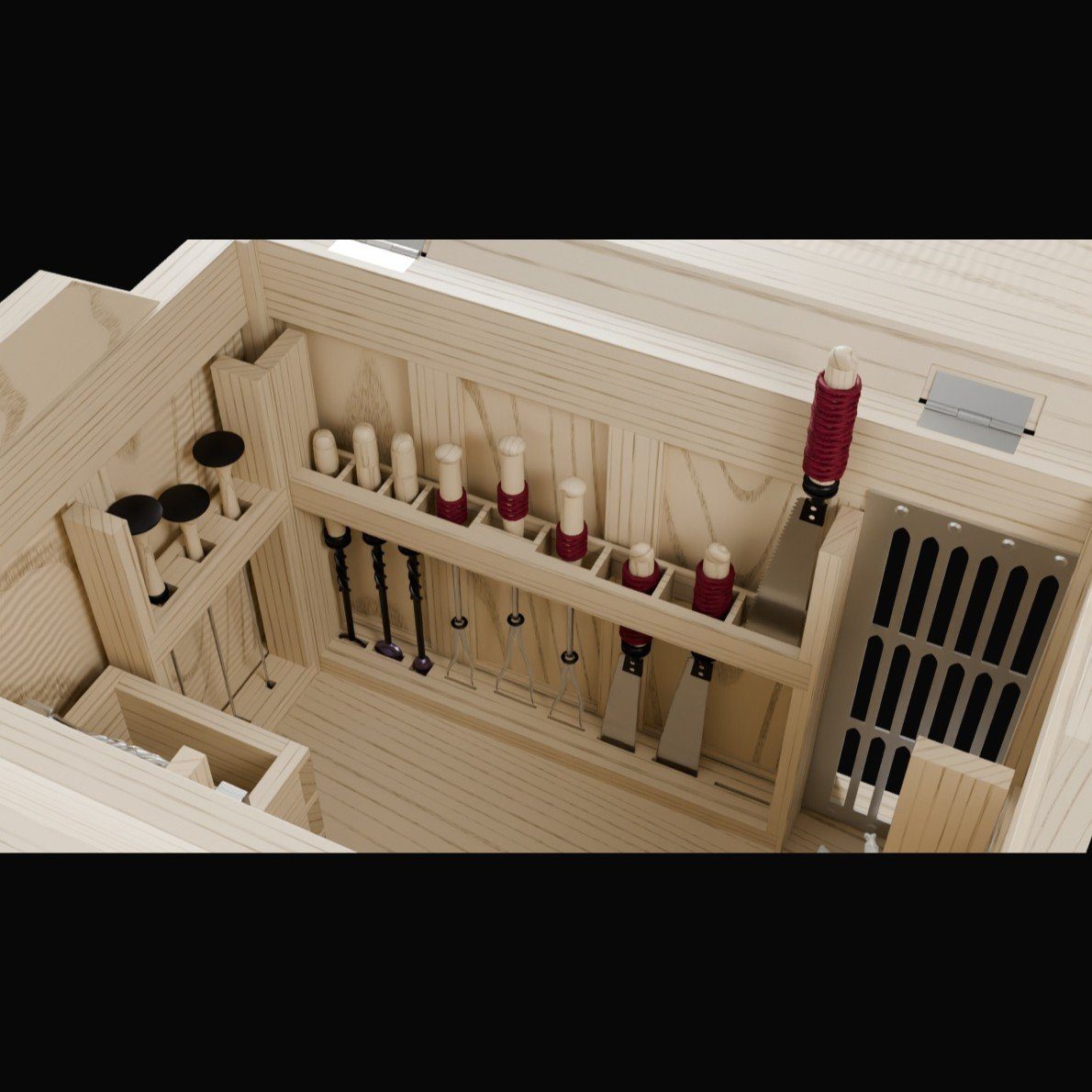
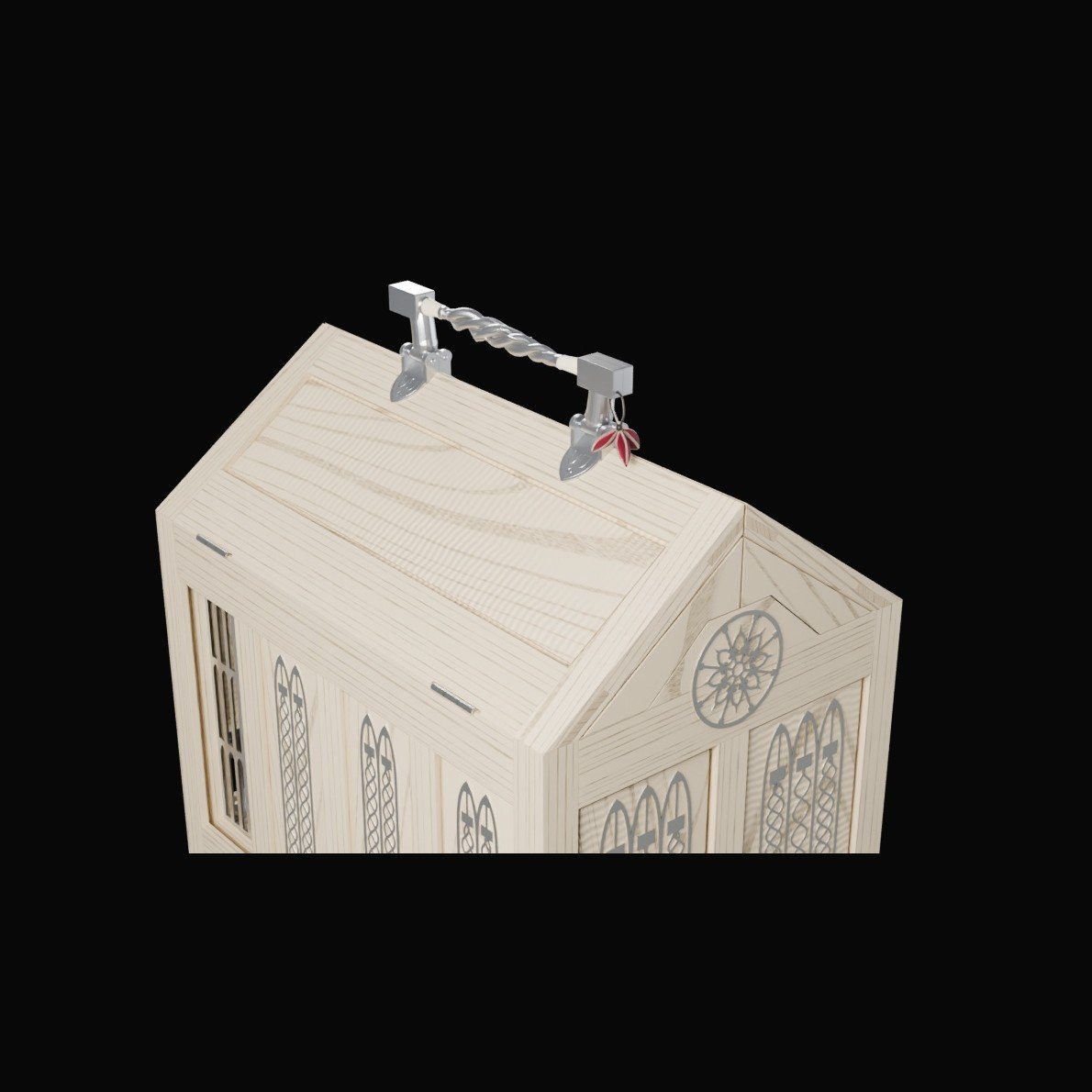
The case in bare ash, before the stainless goes on
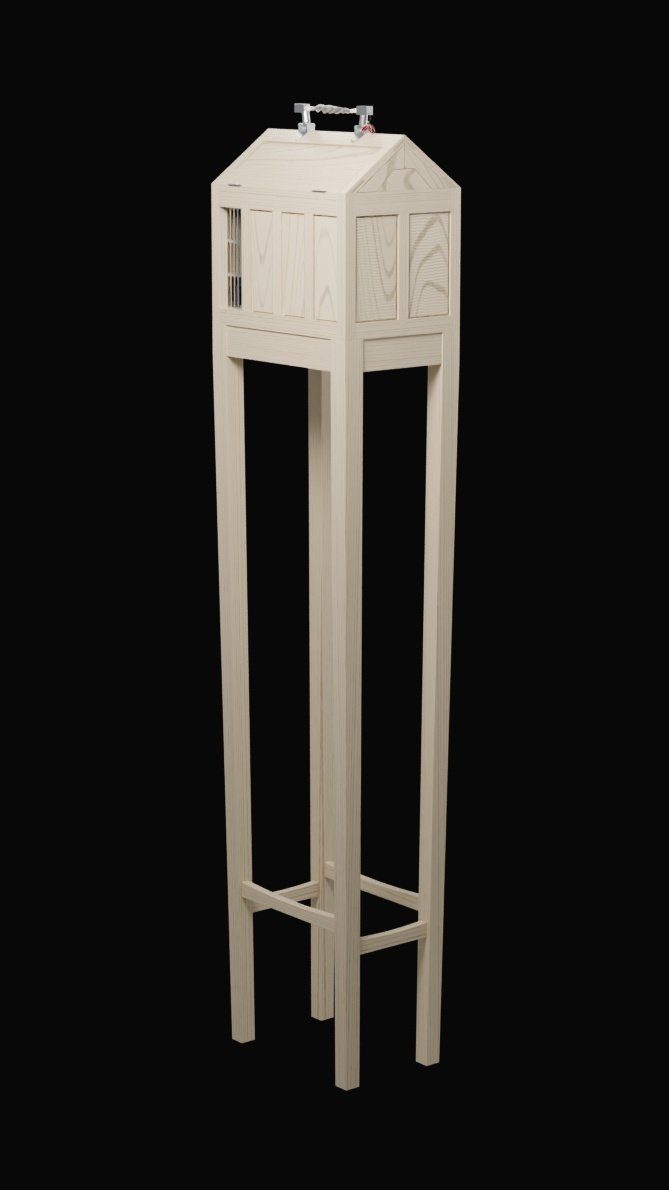
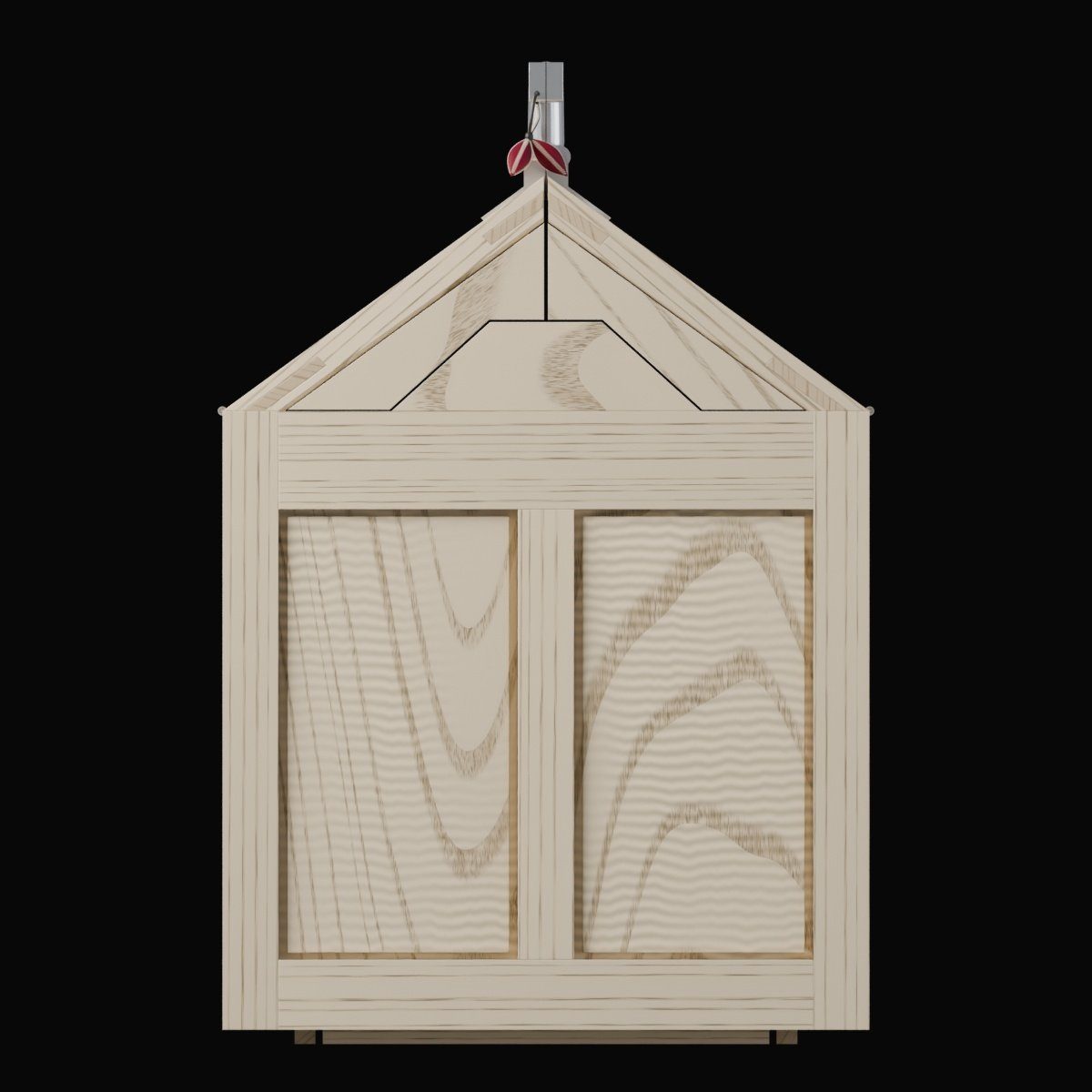
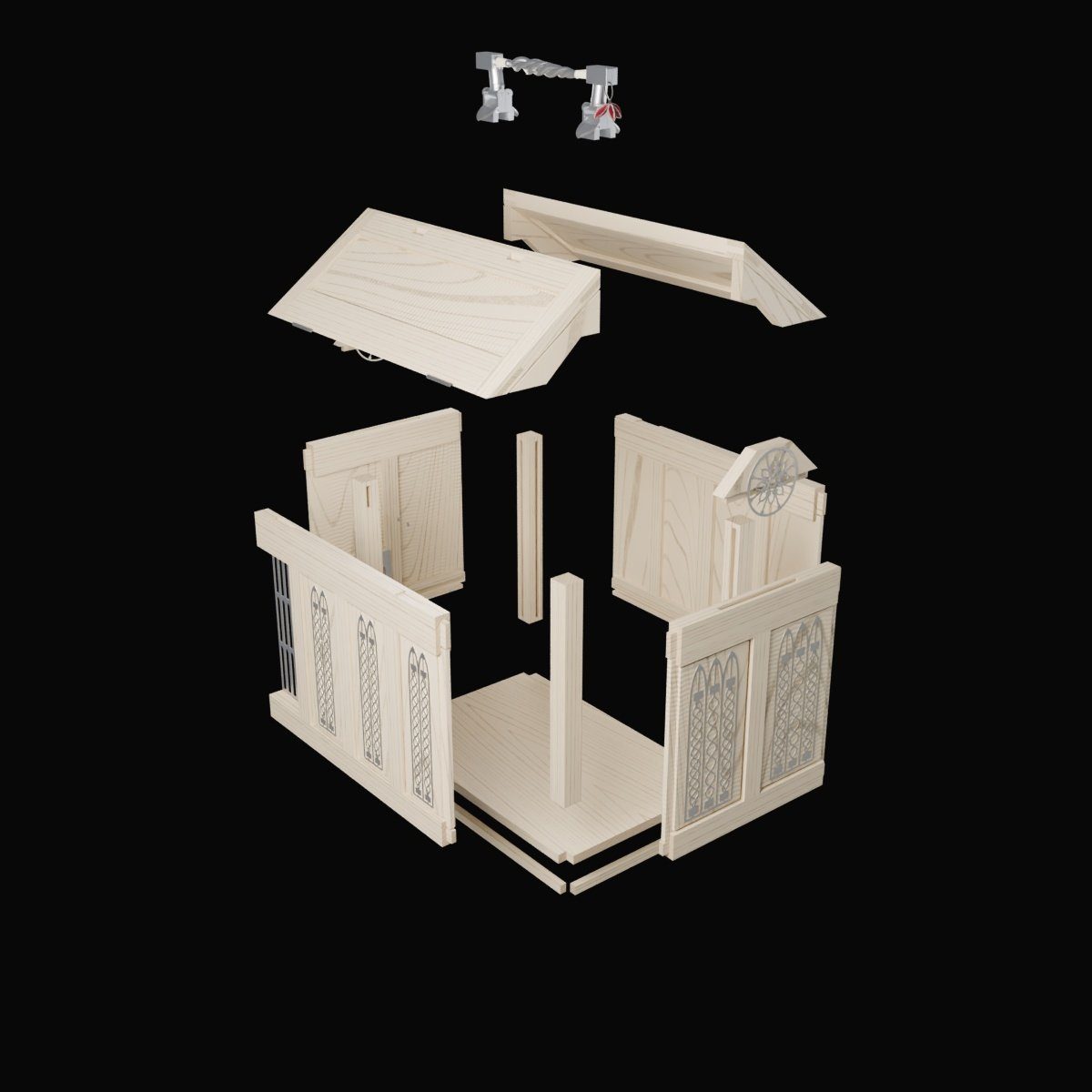
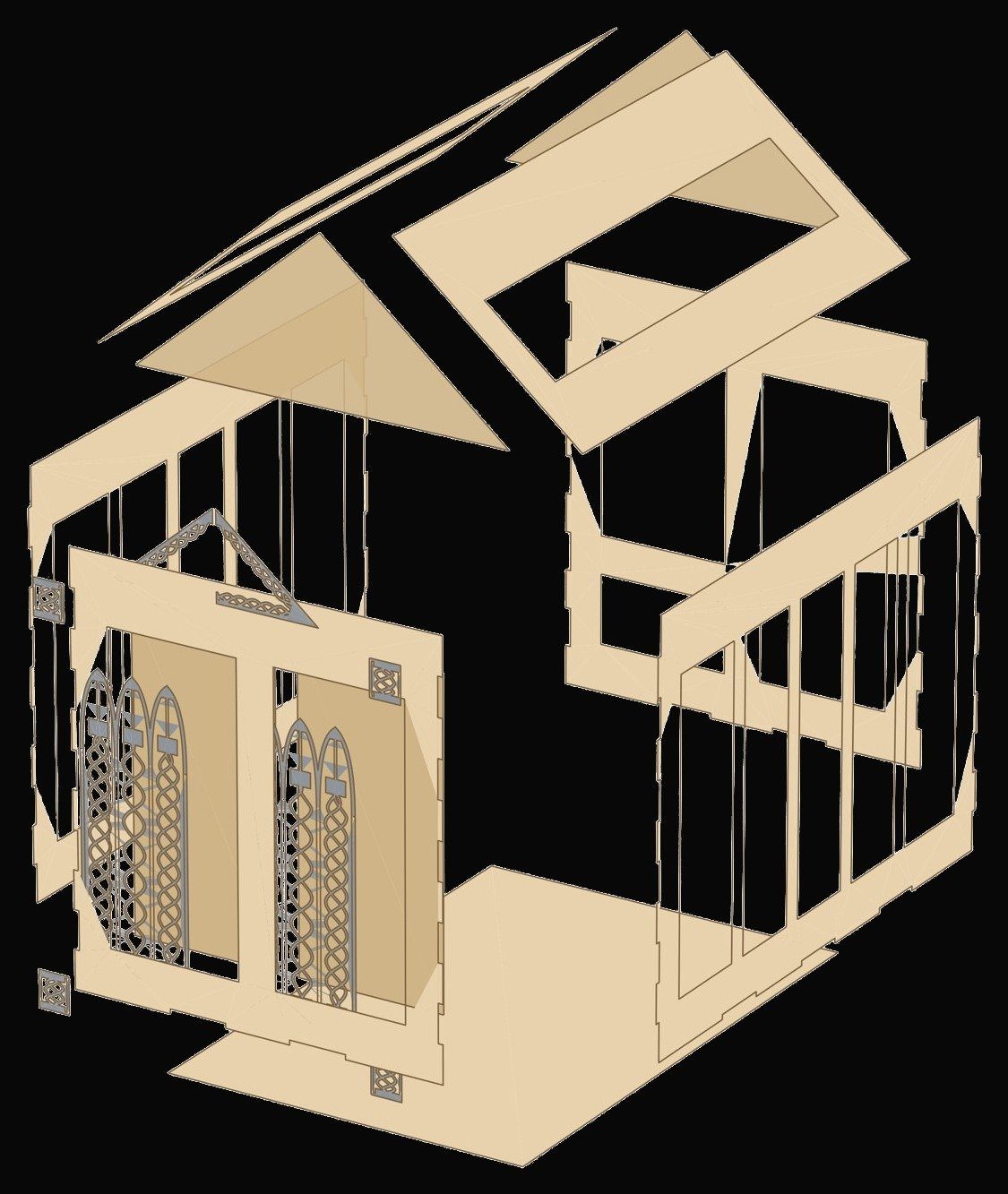
Exploded / raw white ash, stainless sheets
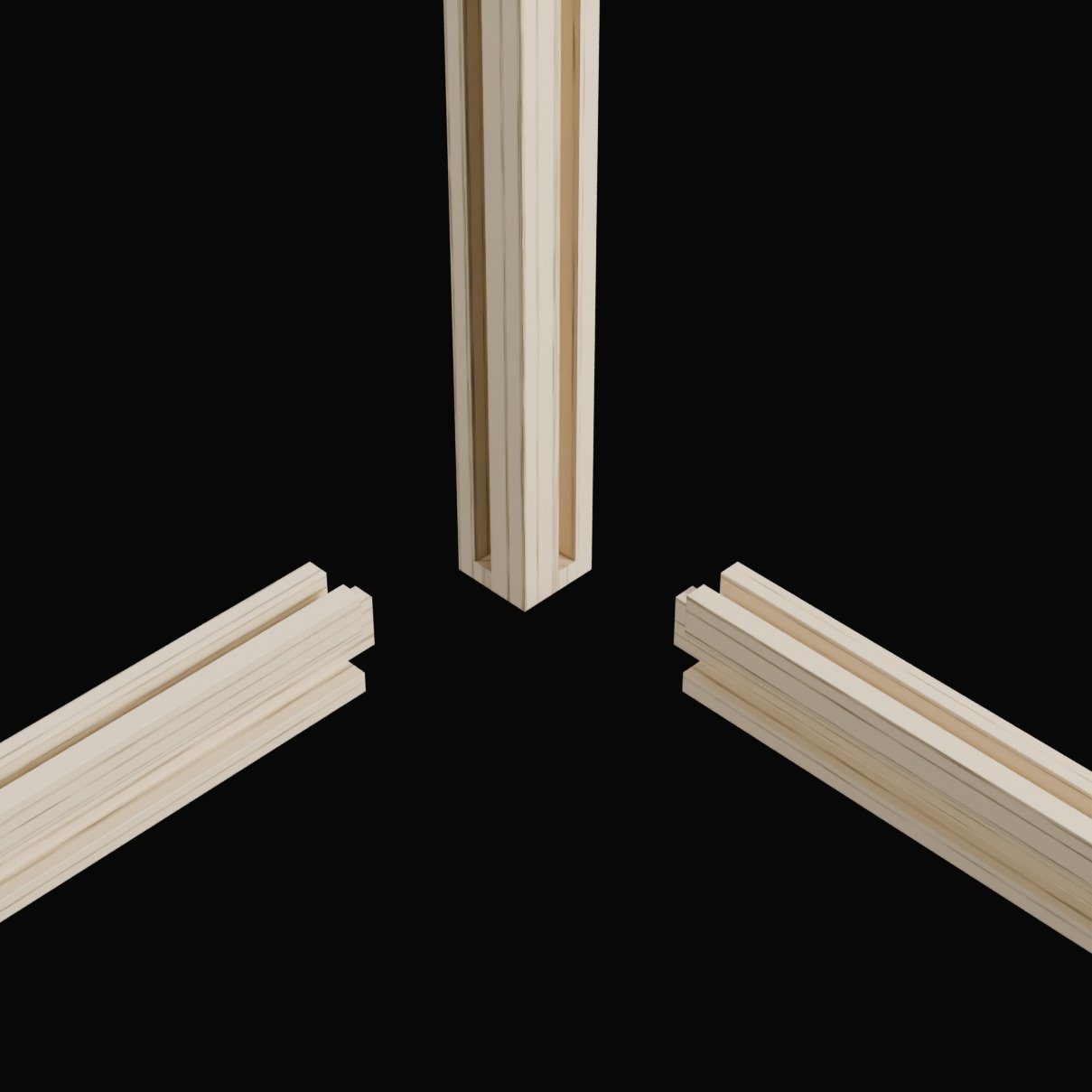
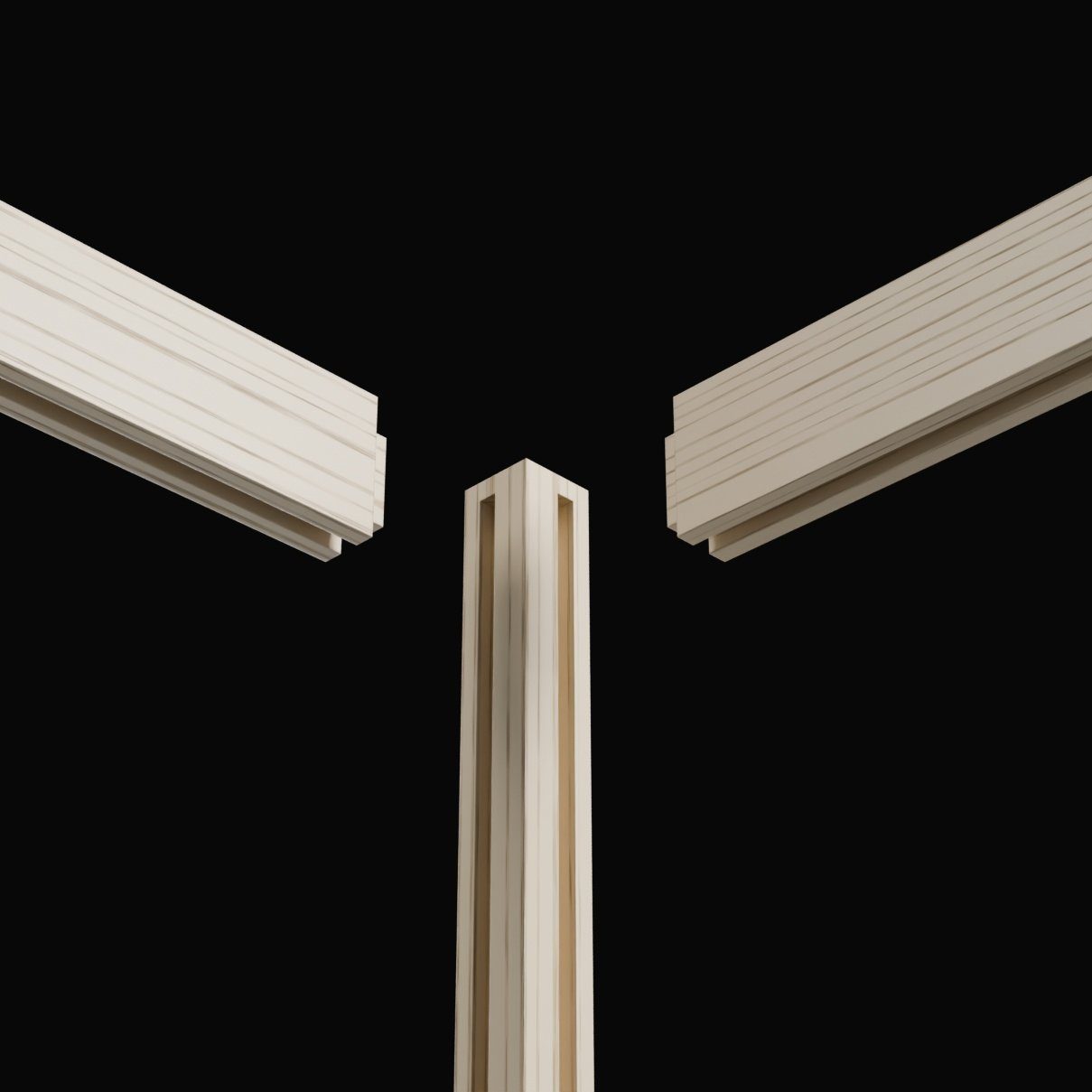
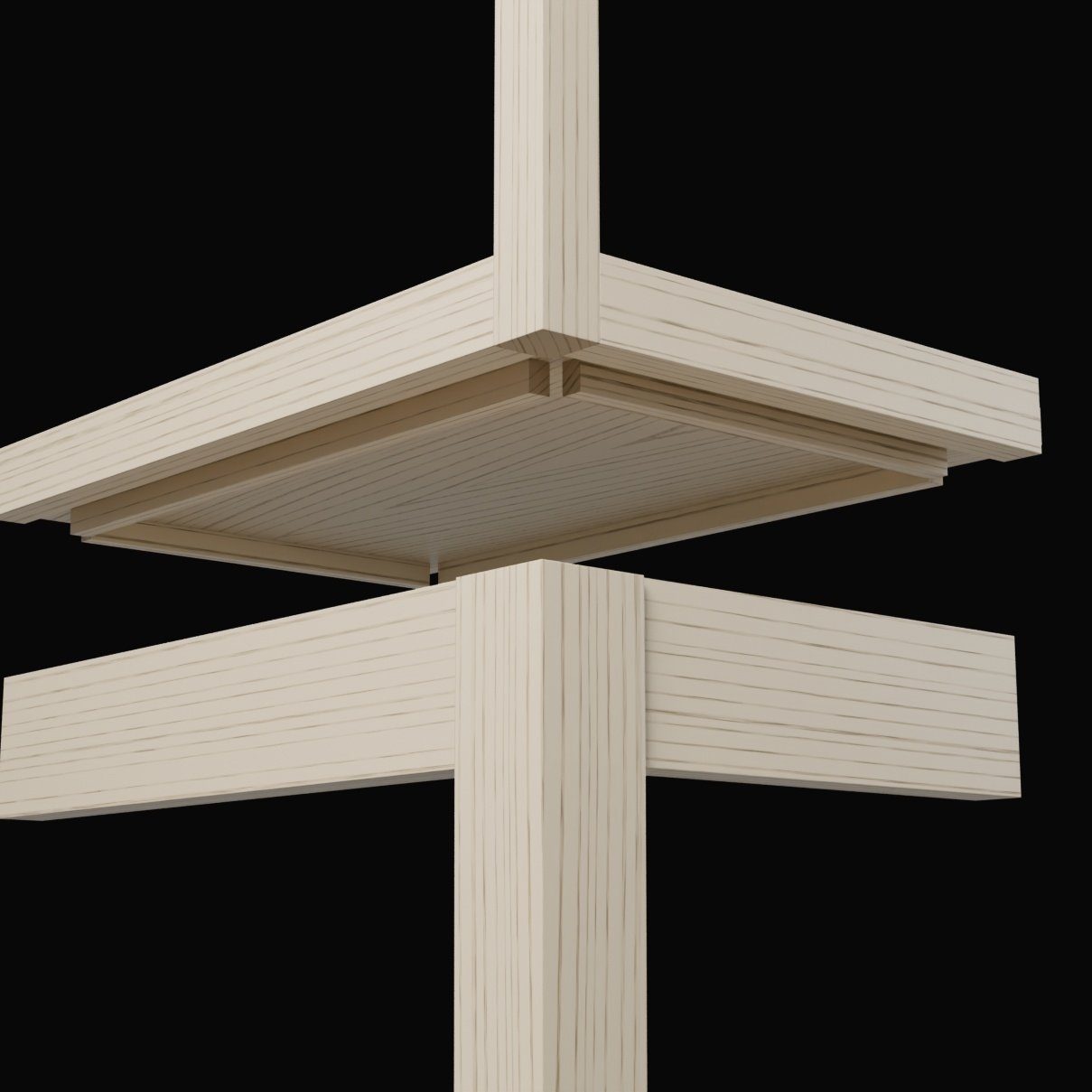
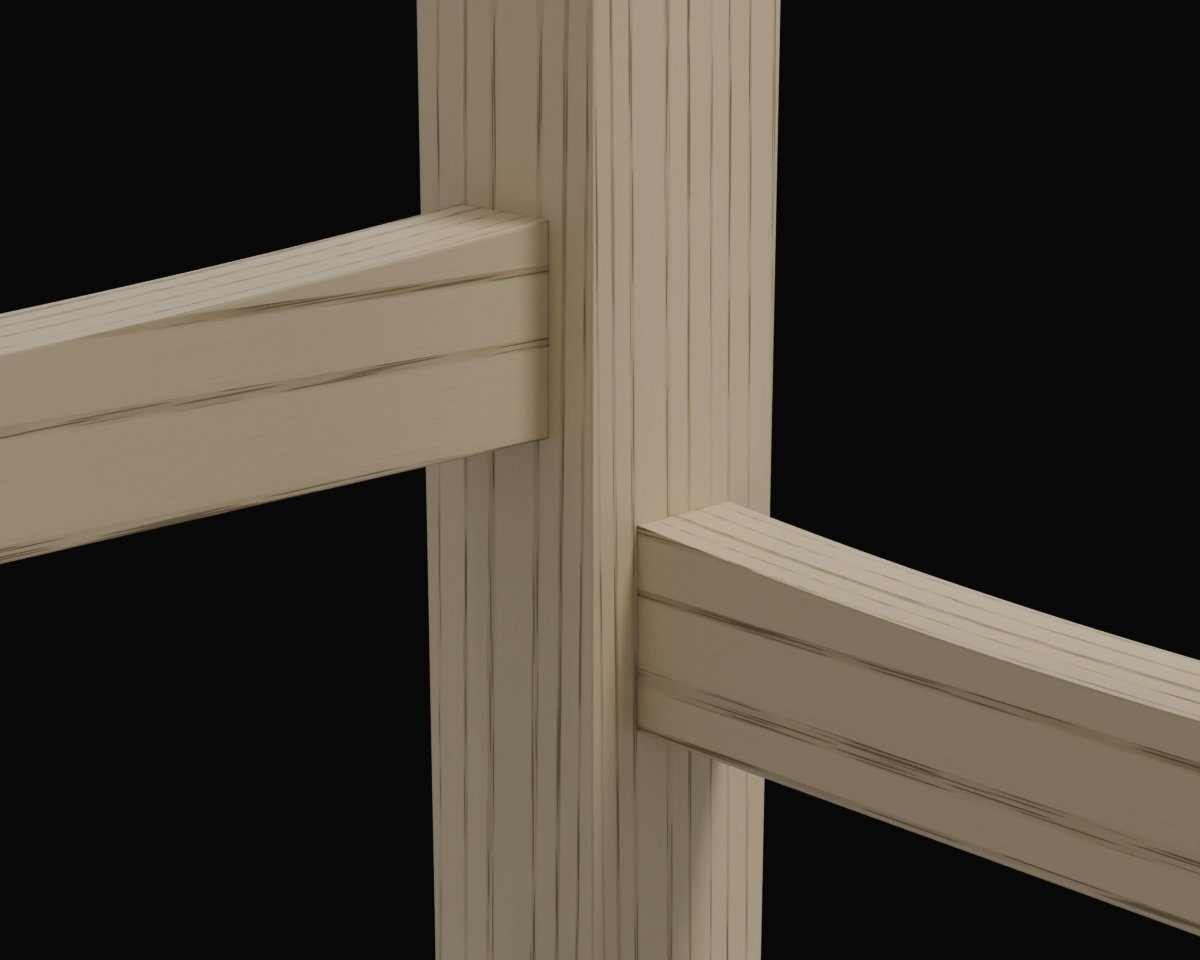
Plain square posts, with no routing on any face, so they read as one piece with the rails.
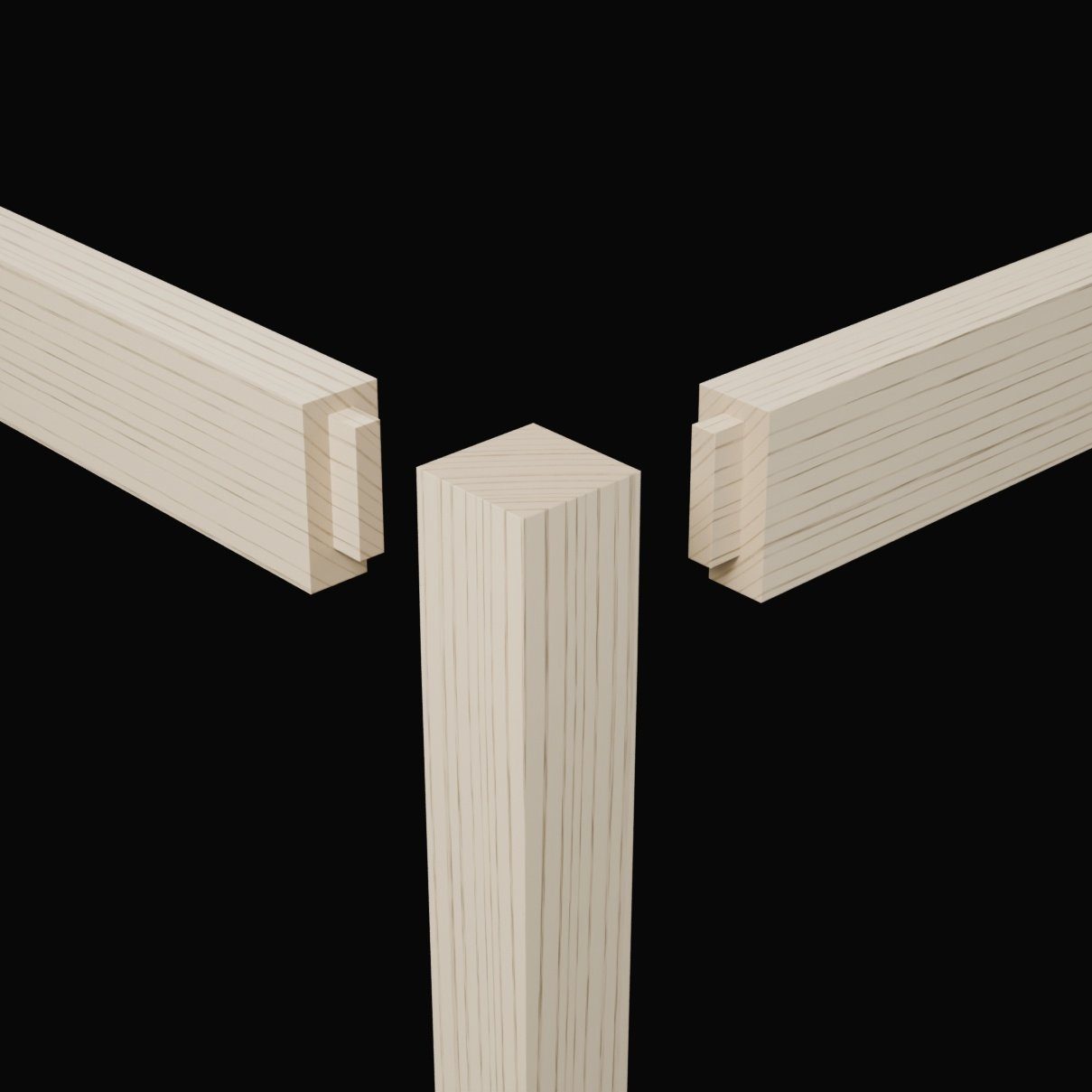
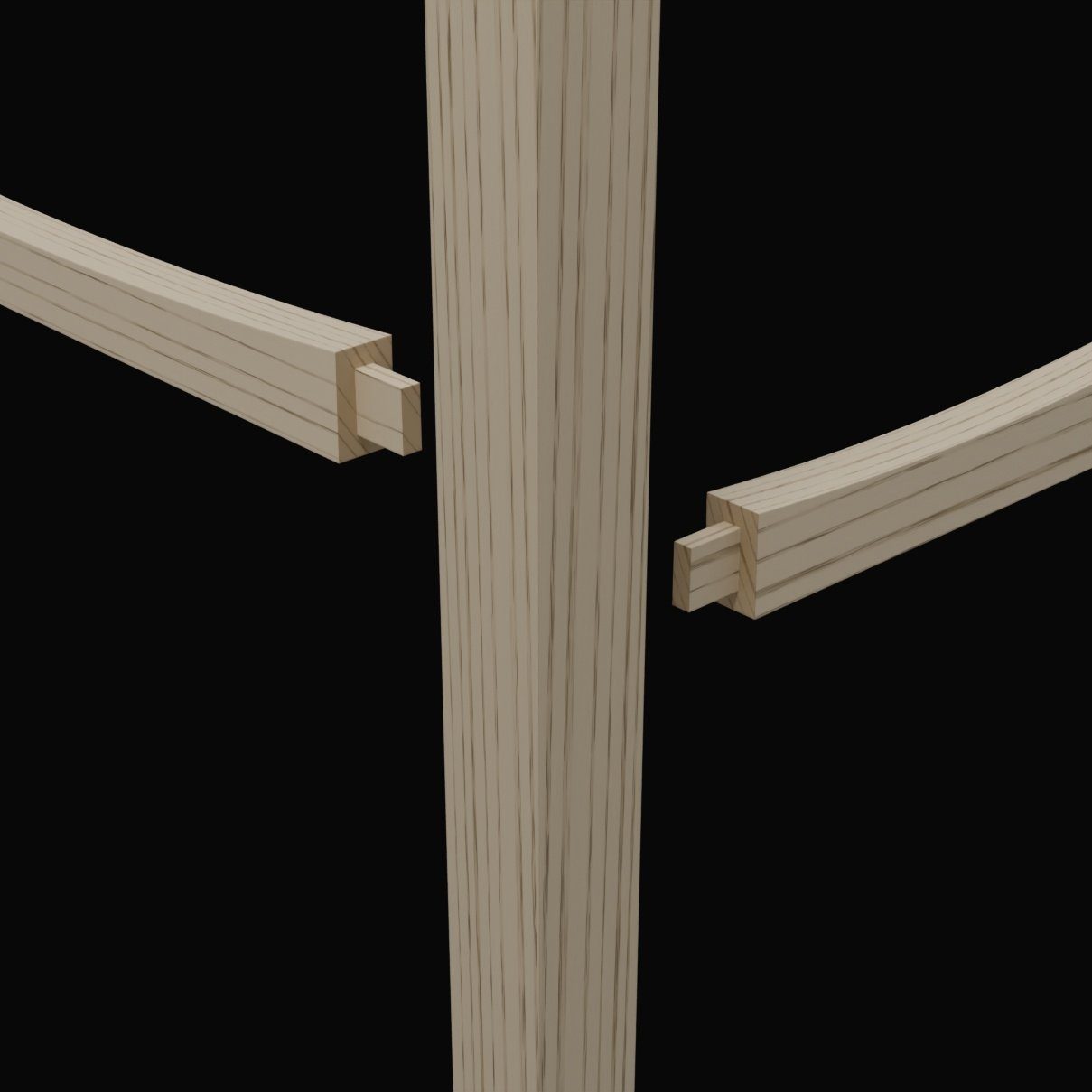
Each rail’s 1/4 in tenon runs 23/64 in into the 1 in post. Each inside face of a post has one 1/4 x 3/8 in slot that is both the rail mortise and the panel groove, and the two slots at a corner sit 1/8 in apart, so they never meet.
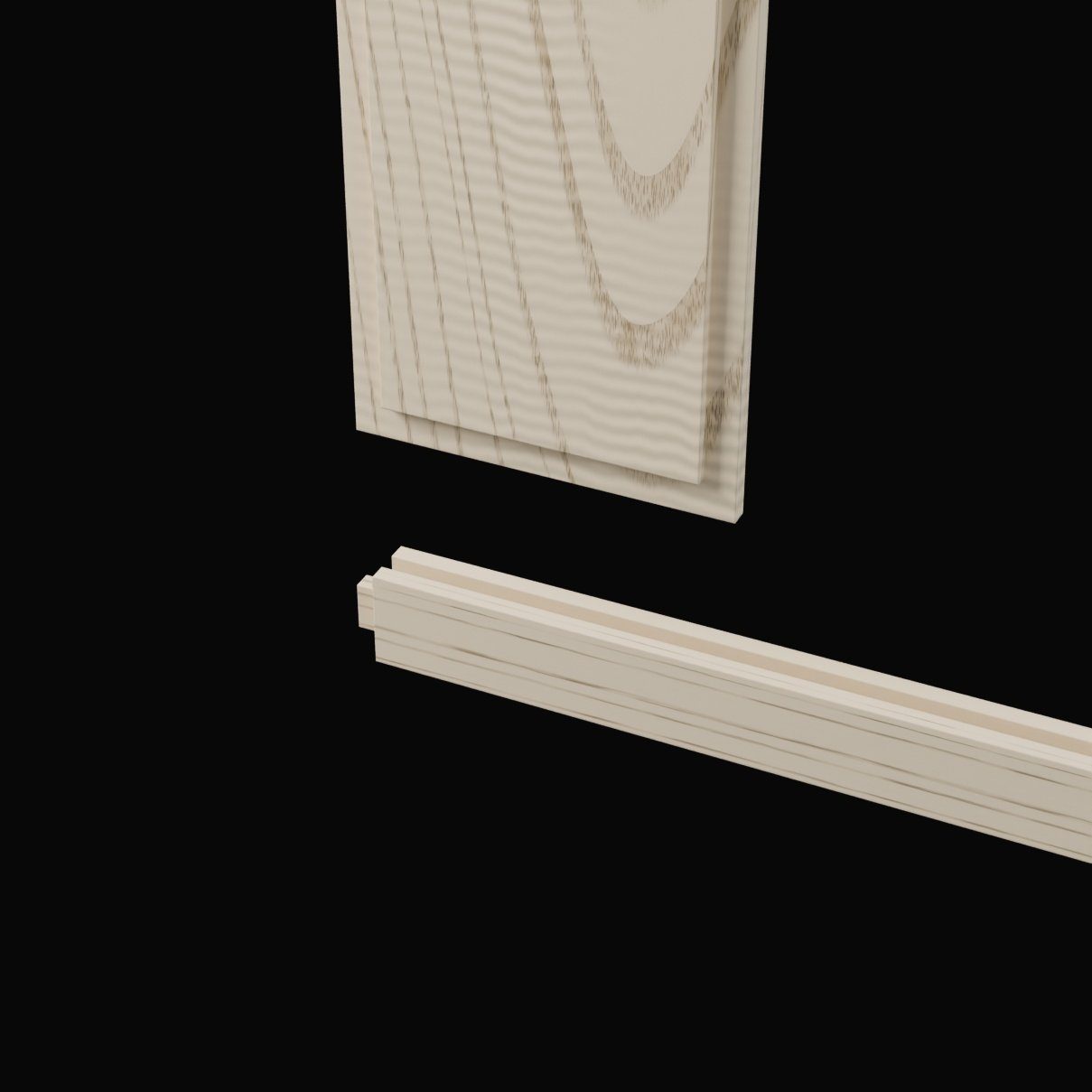
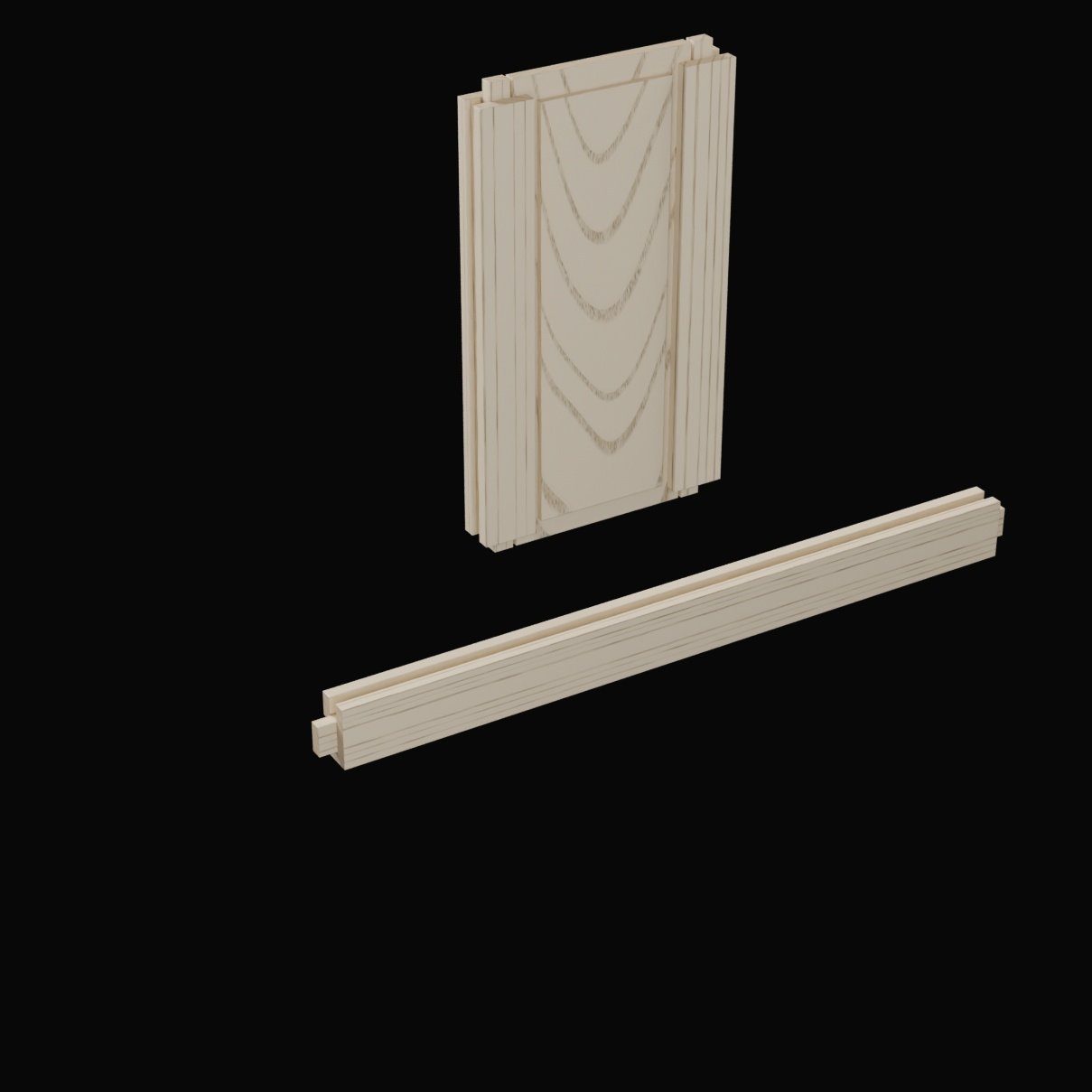
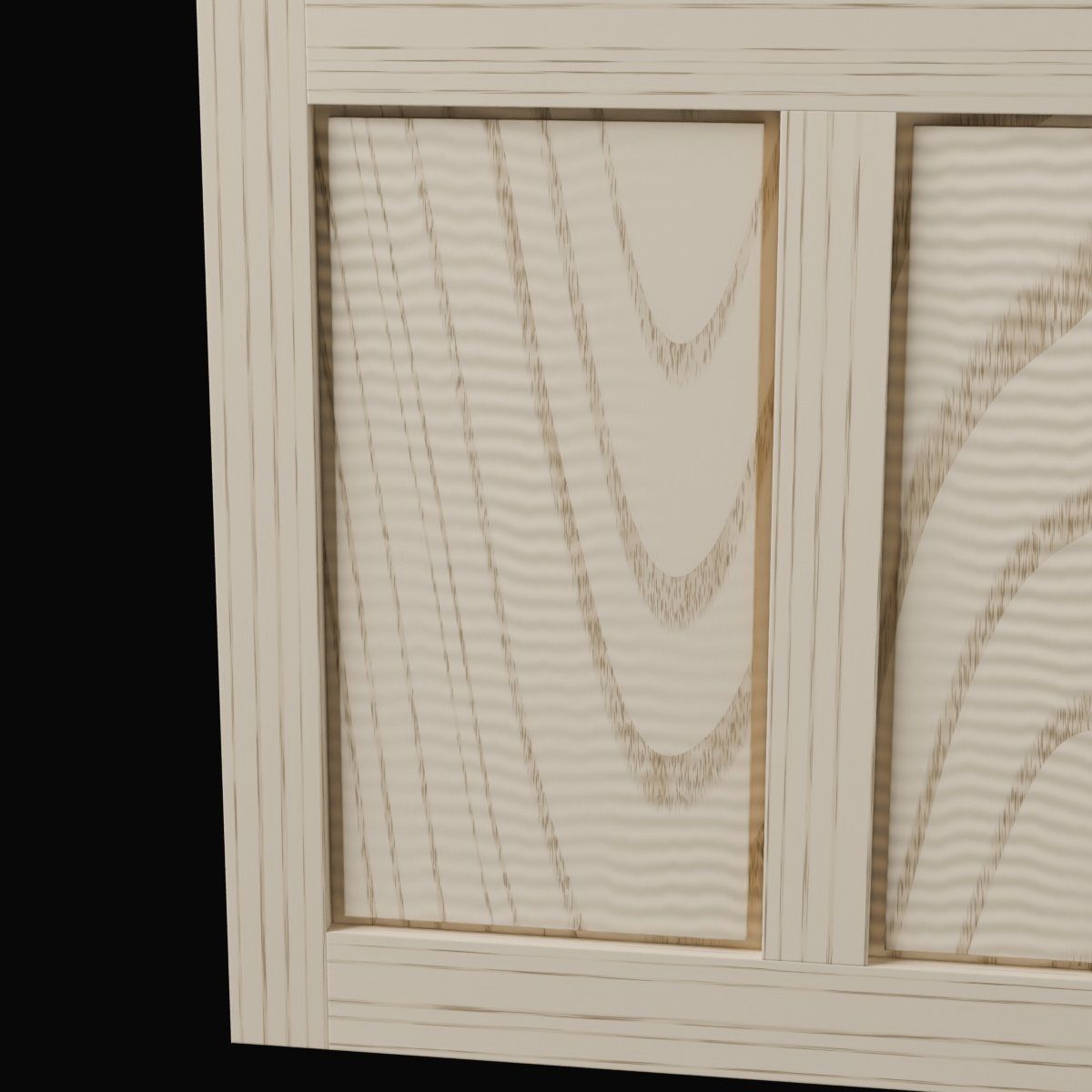
Every panel is raised: a 1/4 in tongue floats in the groove, the field stands 1/8 in shy of the frame, with a 1/8 in shadow groove all round. The same on the flanks, the back and the roof.
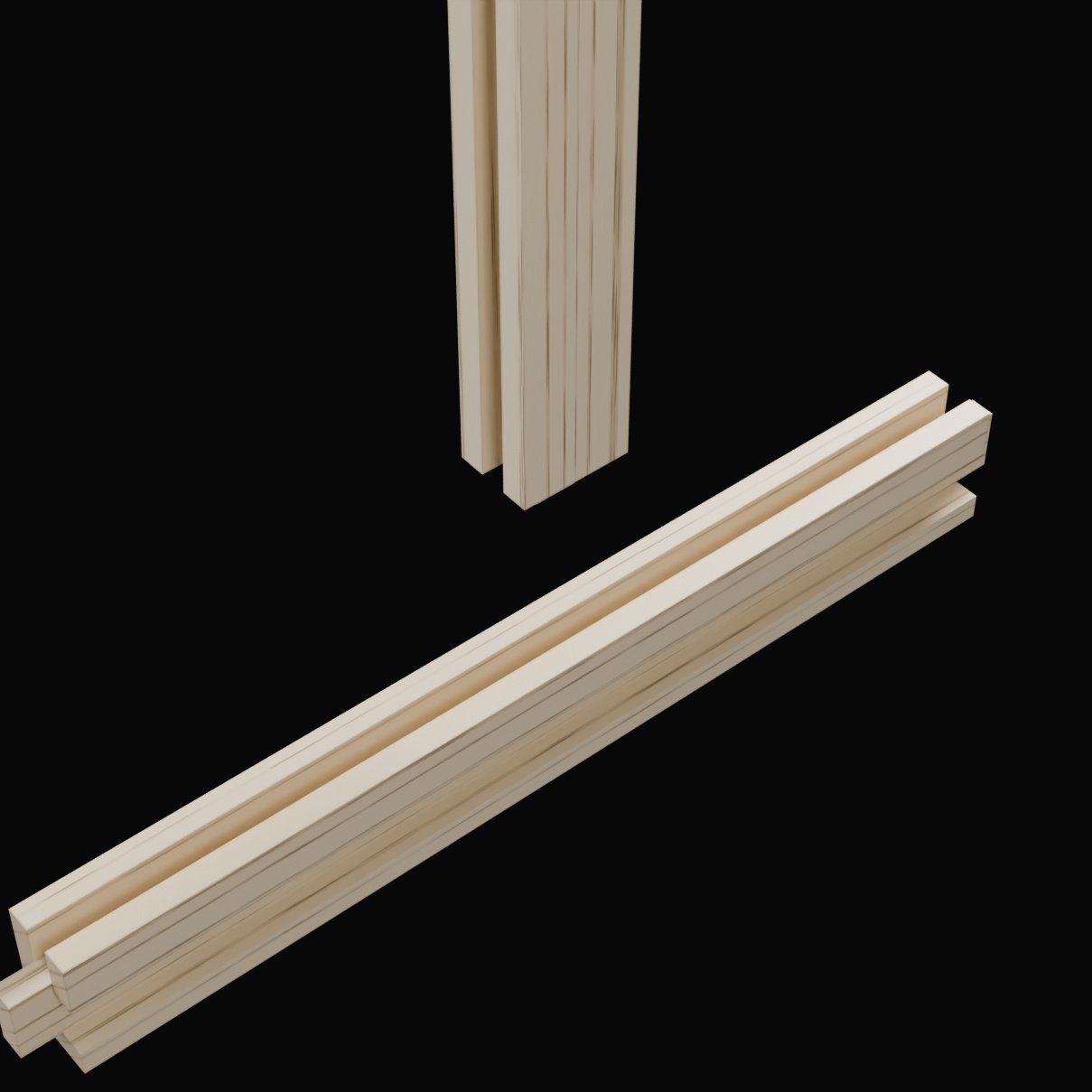
1 in wide, stub-tenoned into the rail grooves, plain on every face.
Each side has three 1 in muntins and four bays of floating raised panels. The muntins’ stub tenons, 3/8 x 1/4 x 5/16 in, sit in the rail grooves. On the left side the back bay, by the back-left post, holds the stainless jail plate instead of a panel.
 12345678910
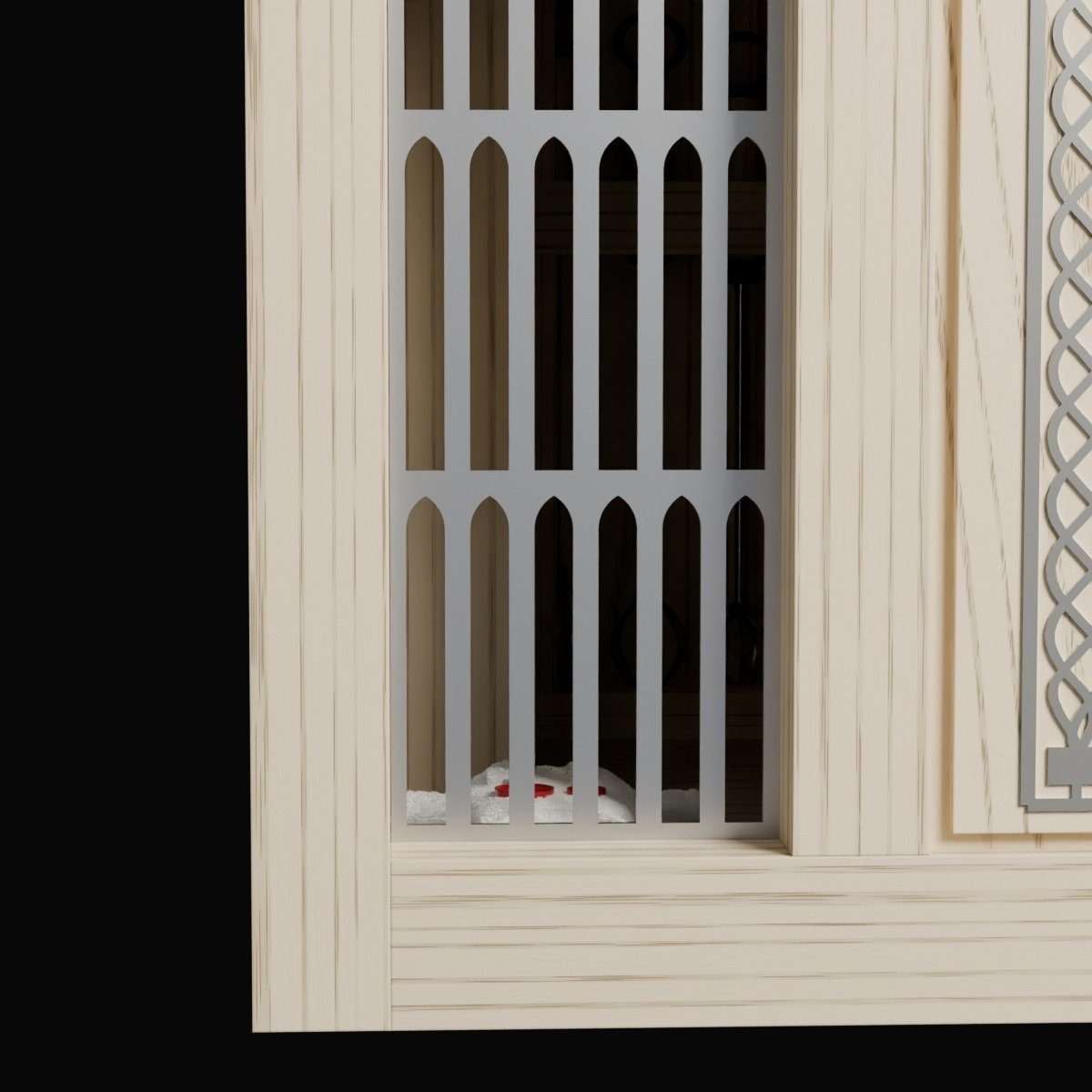
1/16 in stainless, laser cut. The bars are one stainless grille with lancet-topped slots, screwed to the inside of the frame (14 screws). One in the flank, one in the back, meeting at the corner.
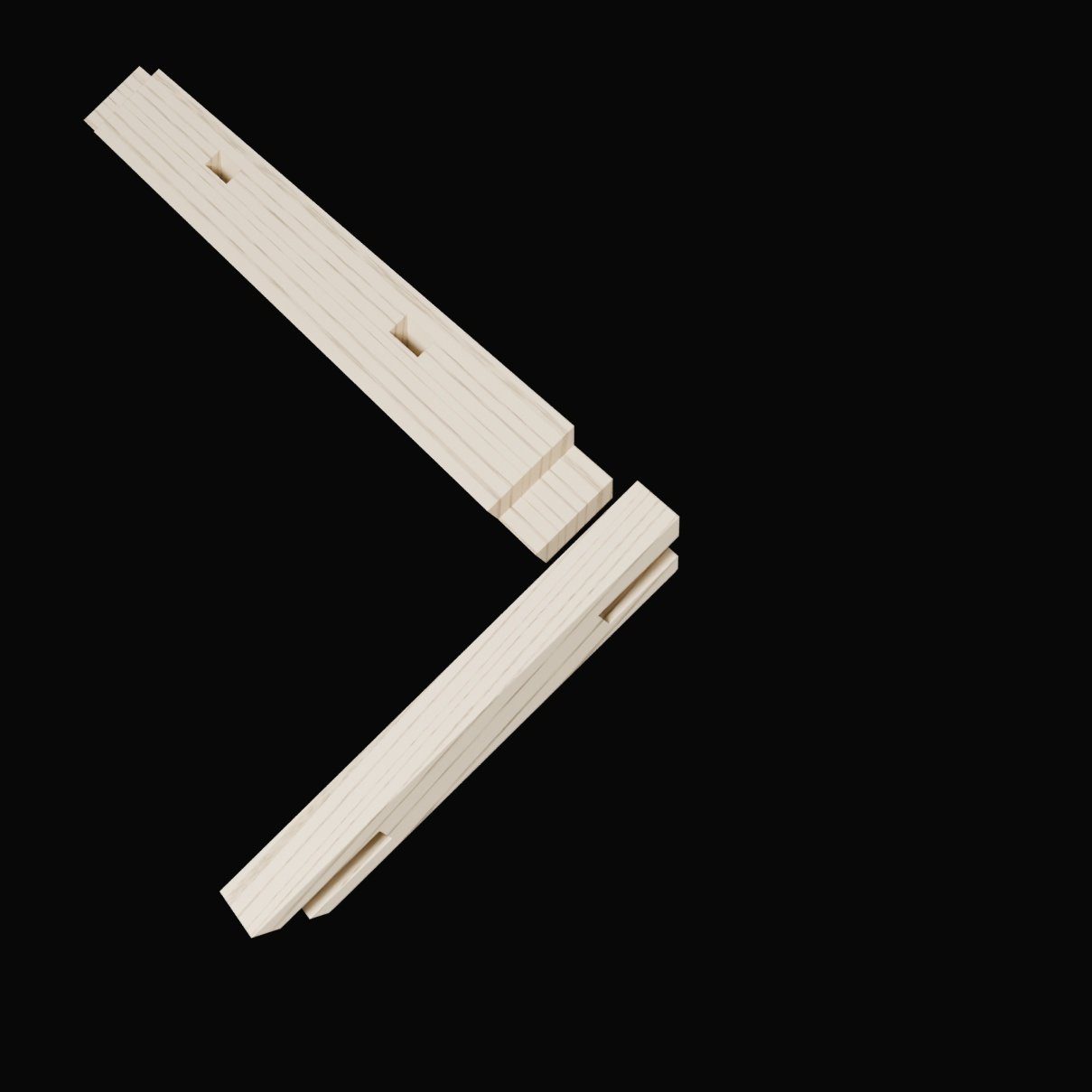
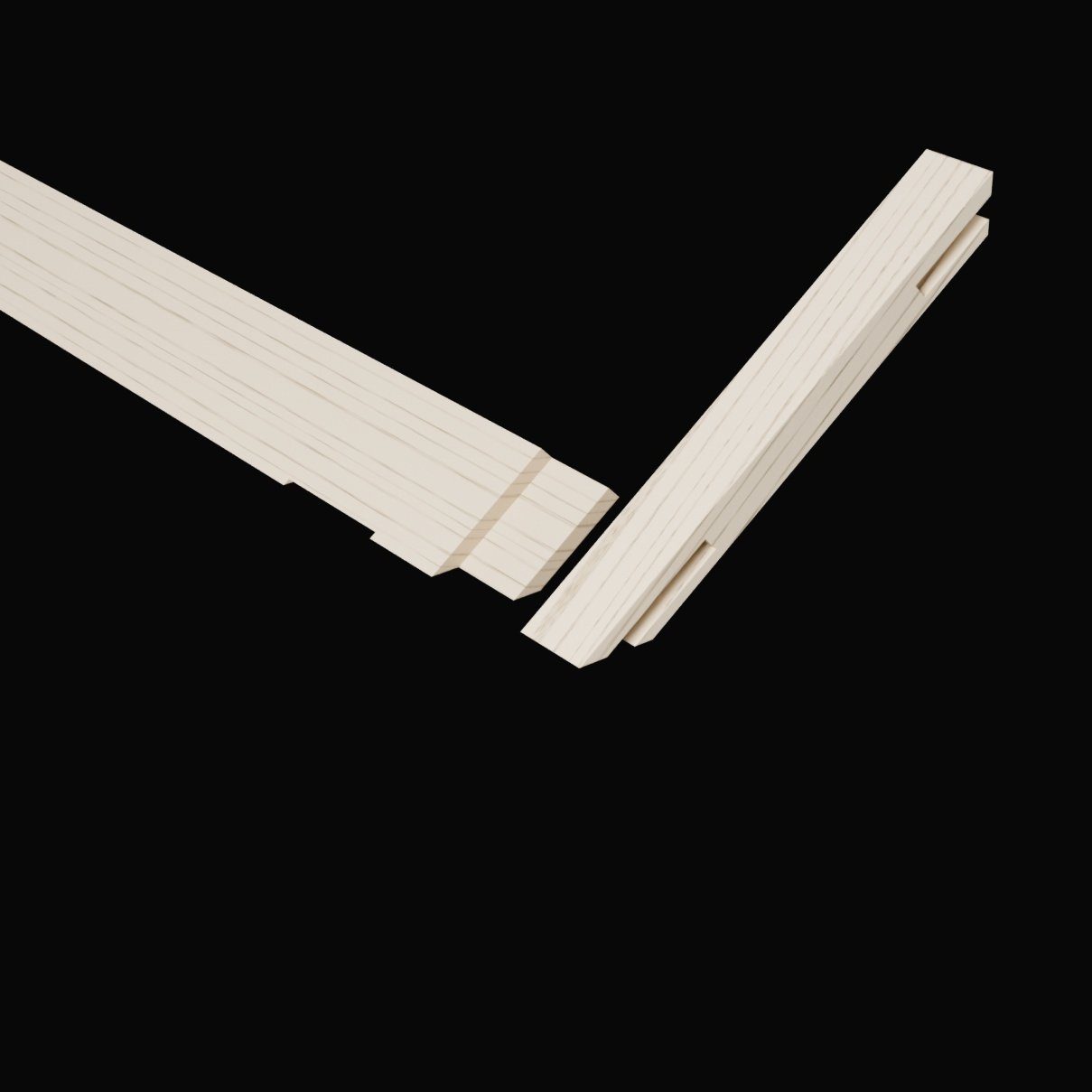
The gable-end rails run through to the eave and the ridge, each end slotted over a middle-third tenon on the stile.
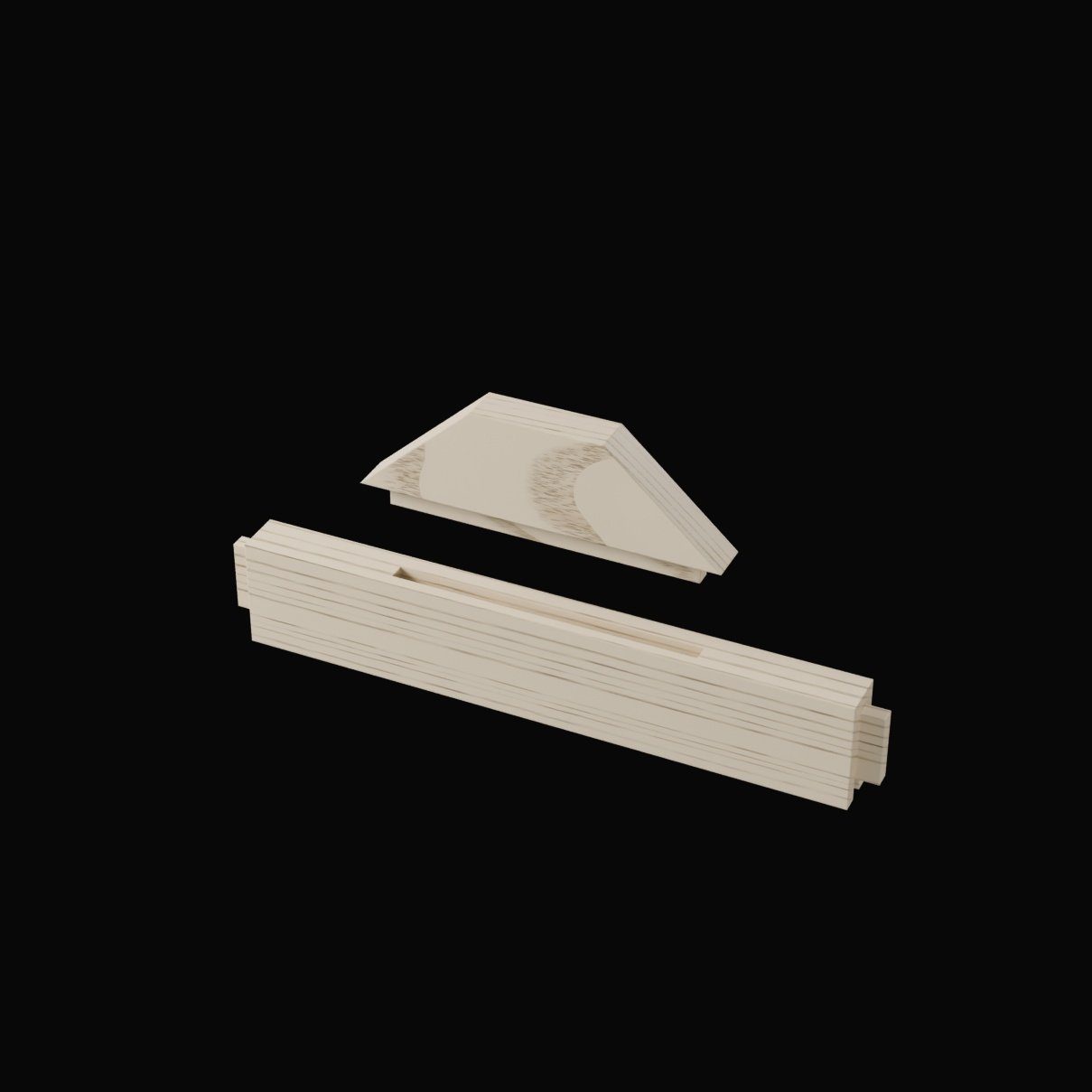
Solid white ash glued up with the grain level. A 1/4 x 3/8 in tongue on the bottom edge, long grain, glues into a stopped groove in the top rail. The roof’s solid ash gable caps, grain along the roof slope, glue under the gable-end rails and lift away with the roof.
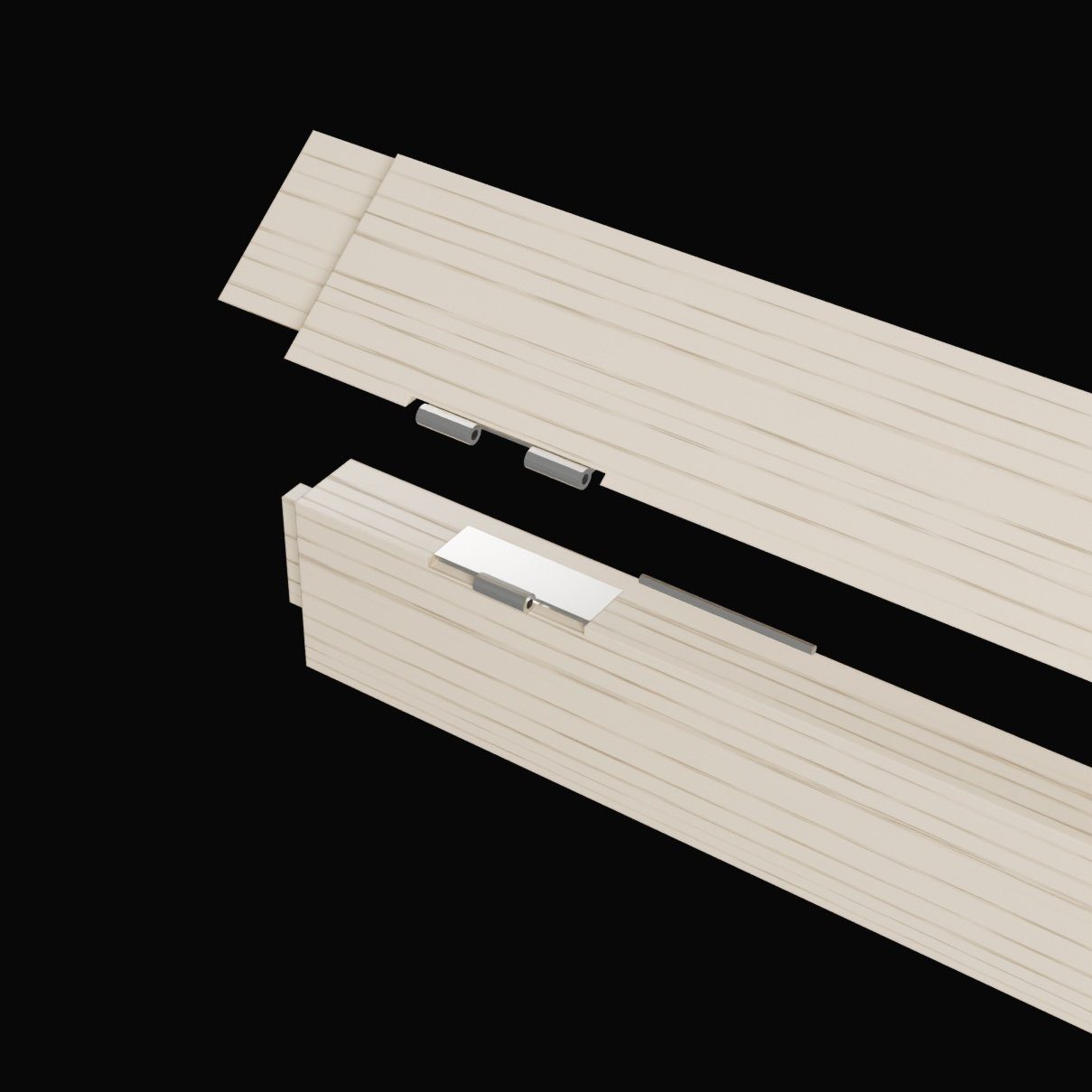
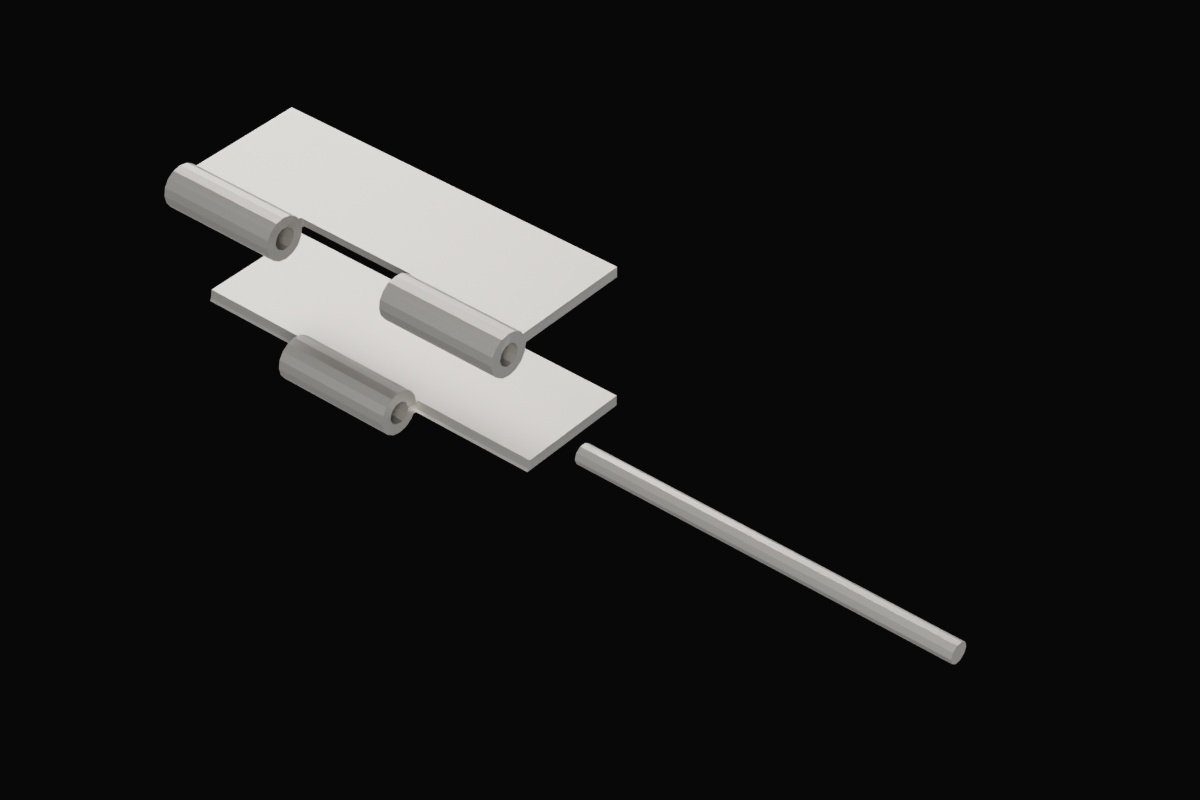
Stainless butt hinges, barrel on the eave corner, leaves mortised flush into lid rail and top rail. Two per wing.
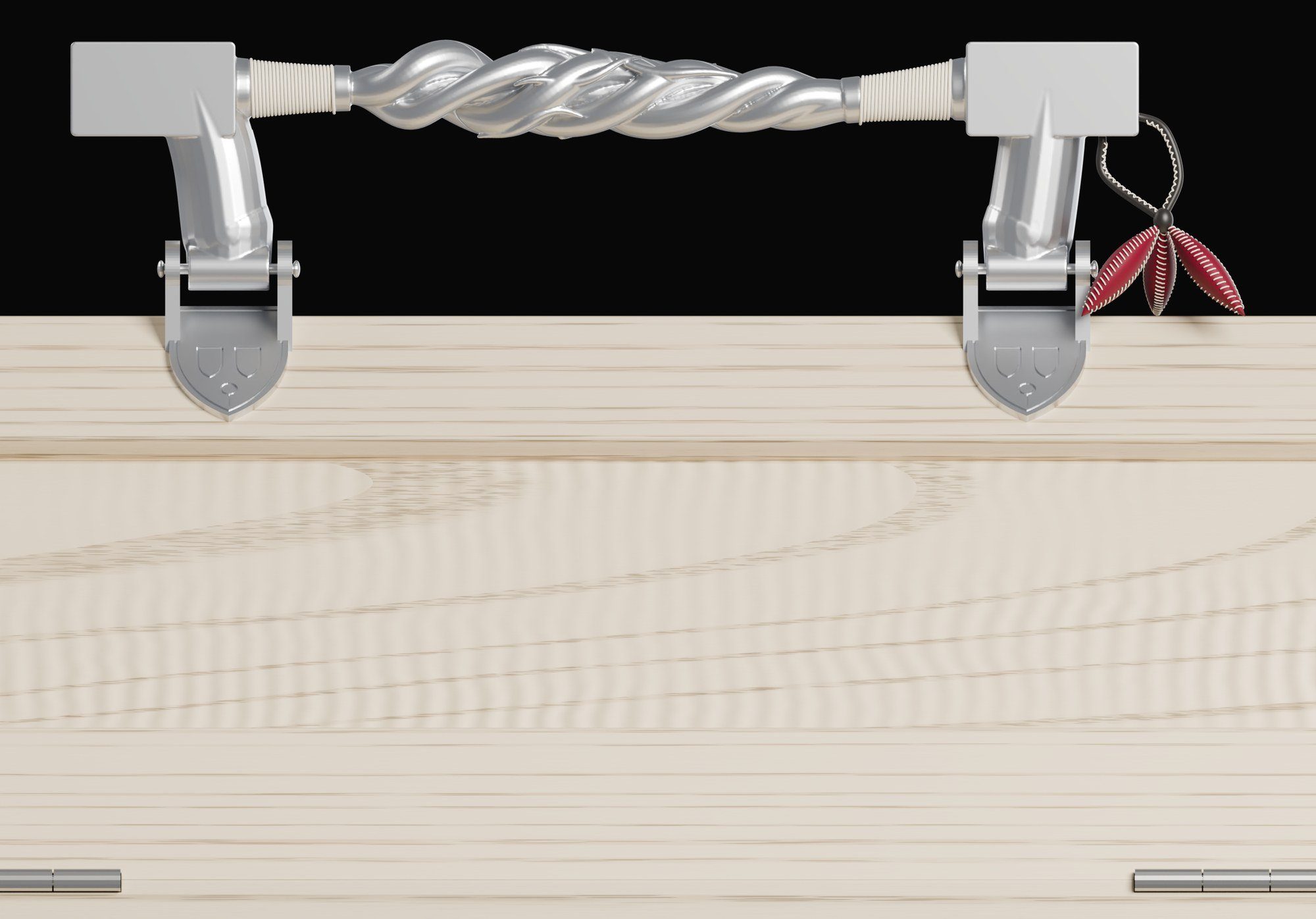
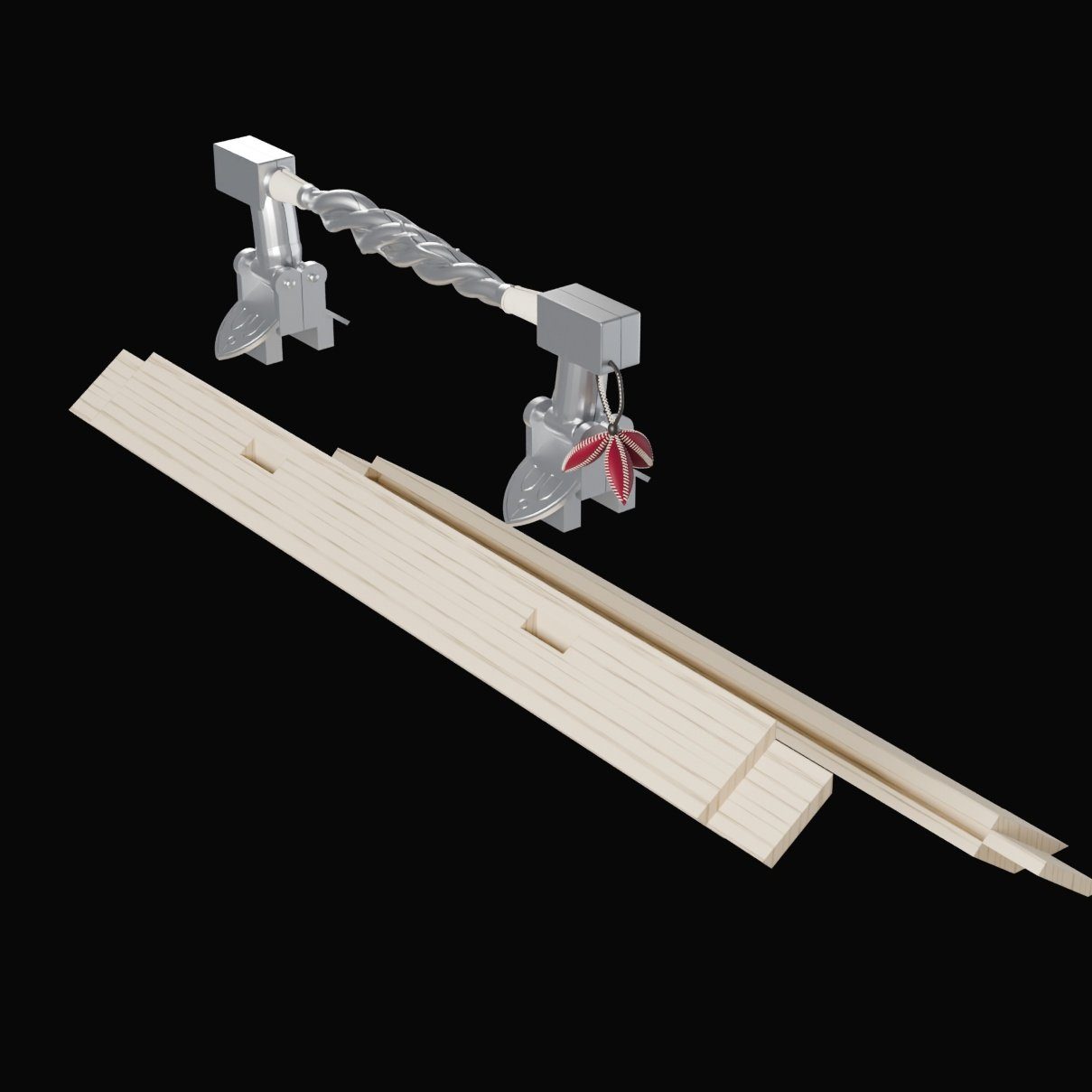
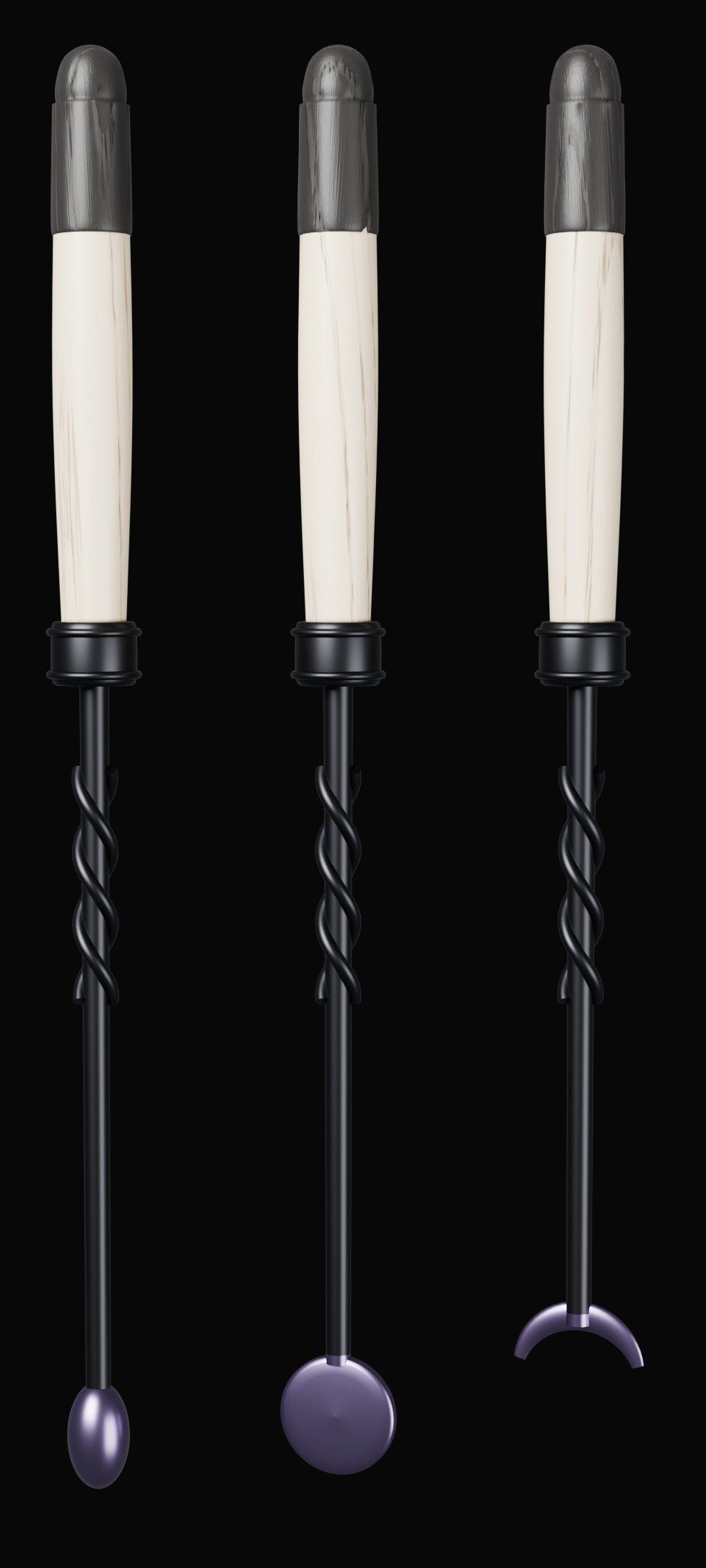
One half on each wing; the halves meet when the roof shuts. Bead-blasted 316L stainless, twisted grip. Each printed steel foot carries two steel tangs, epoxied into blind mortises in the ridge stile, so nothing comes through the lid.
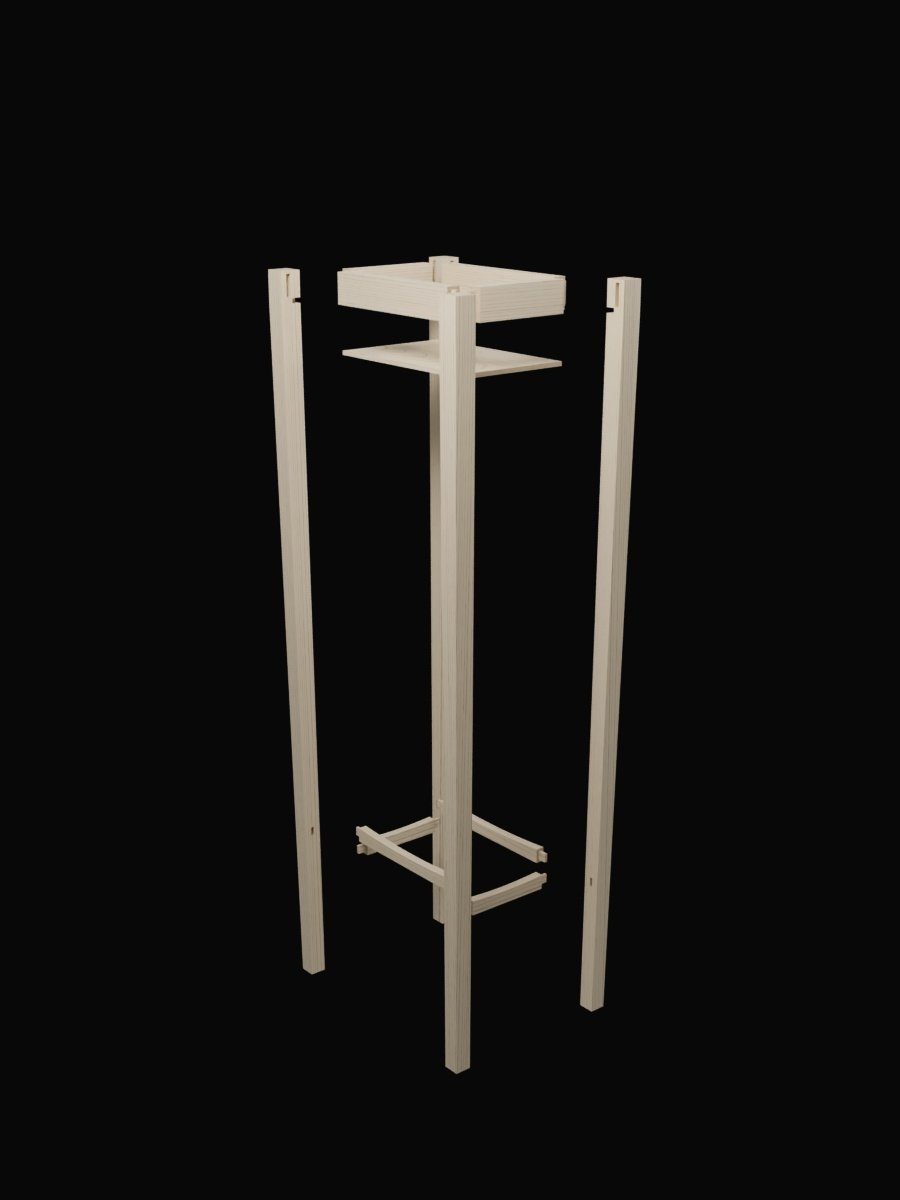
Four legs, tray aprons, stretchers, veneered ply tray
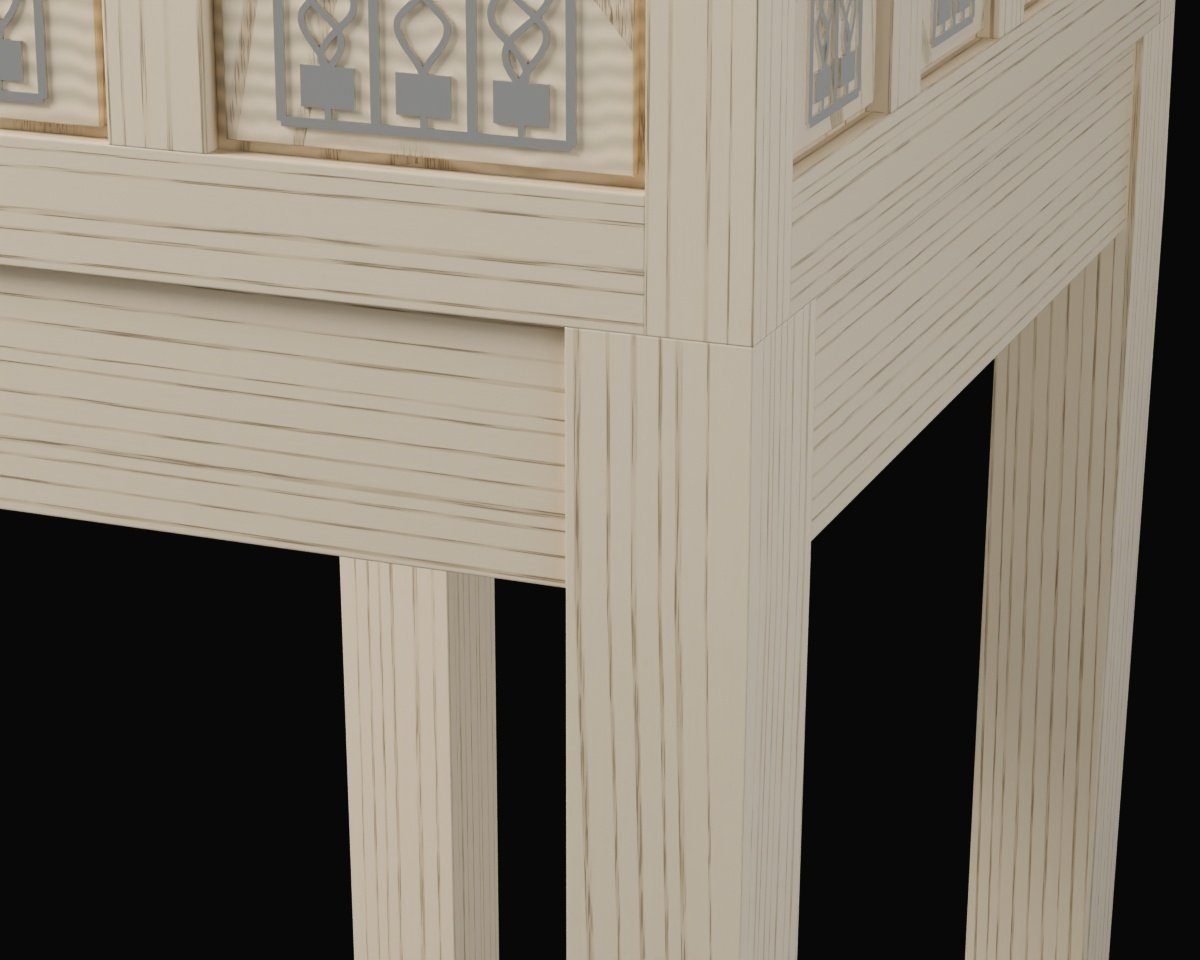
Solid ash, 1 3/4 in square at the top, tapered on the two inside faces to 1 3/8 in at the foot. Below the aprons each leg leans in 1 in on both axes.
1 1/8 in aprons, 2 9/16 in tall, set back 1/8 in from the leg faces. Their 3/8 in tenons are 5/8 in long on the sides and 1/2 in on the ends, so they never meet in the leg.
 12345
Pockets in the legs at the top of the aprons. The apron tops are flat, and the case rails rest on them.
3/8 in veneered ply (1/4 in Baltic birch with 1/16 in shop-sawn ash veneer on both faces), glued into a 1/4 x 3/8 in rabbet along the bottom of the aprons. It is a full 9 1/2 x 14 11/16 in rectangle whose corners sit in pockets in the legs, so it goes in during the stand glue-up. The recessed tray under the case.
3/4 x 1 1/4 in ash, centred on the legs, with 1/4 x 3/4 in tenons 3/4 in long, on square shoulders that seat on the legs. The end pair sits 10 15/16 in off the floor and the side pair 12 23/32 in, 1 3/4 in higher with 1/2 in of leg showing between them, so the stretchers never touch and the two mortises in a leg miss each other.
No lid. The case sits straight on the flat apron tops. Lift it off and the recessed tray is open. Locating strips. Four 3/8 x 1/2 in ash strips glued under the case bottom drop 1/4 in into the stand’s apron opening with 1/32 in clearance all round. They stop short of the legs, whose corners stick into the opening, so there are no corner joints. The case rails rest on the flat apron tops. Lift the case straight off. Case bottom. 1/2 in veneered ply (3/8 in Baltic birch with 1/16 in shop-sawn ash veneer on both faces), glued into a 1/2 x 1/4 in deep groove all round.
Fifteen joints, pulled apart / every part named
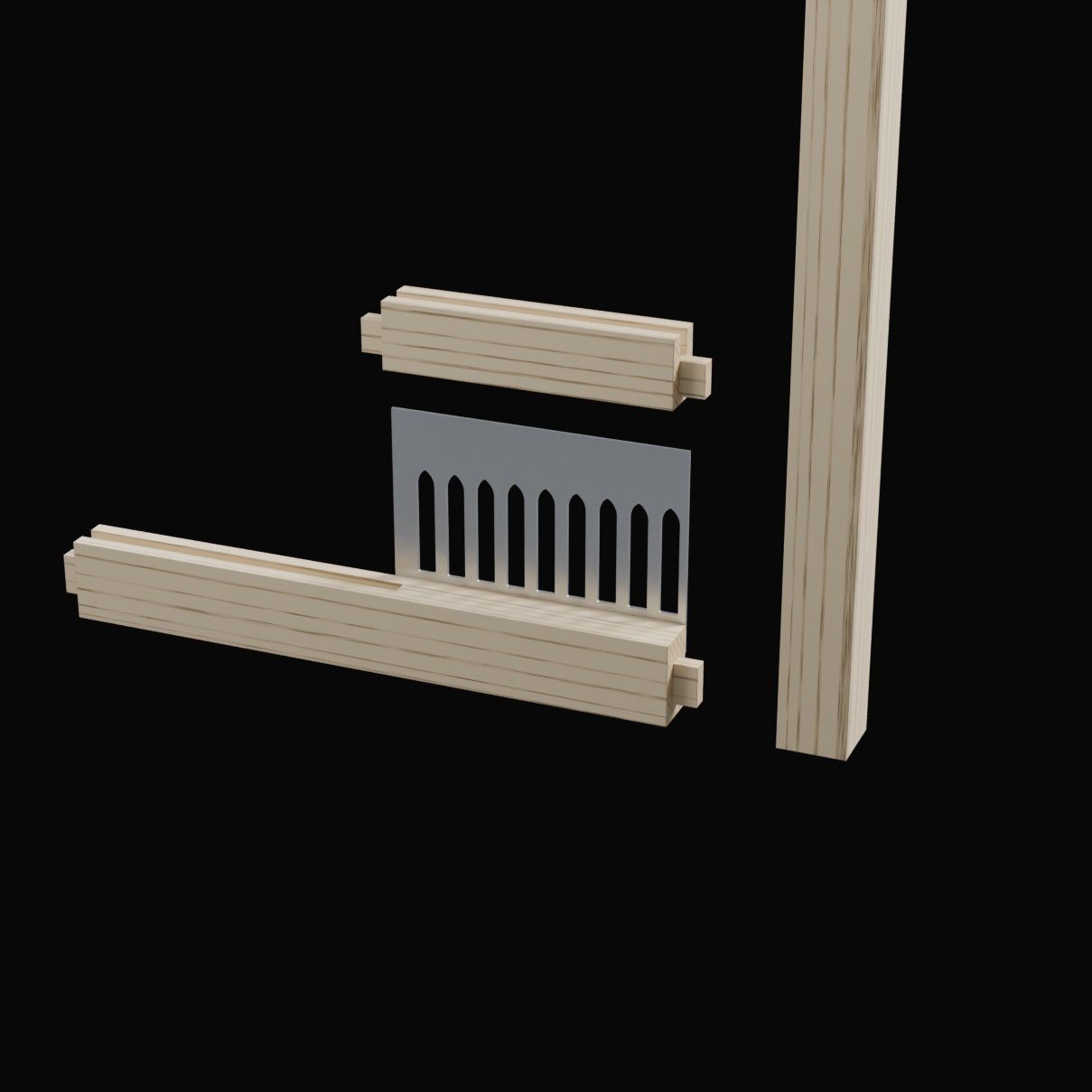
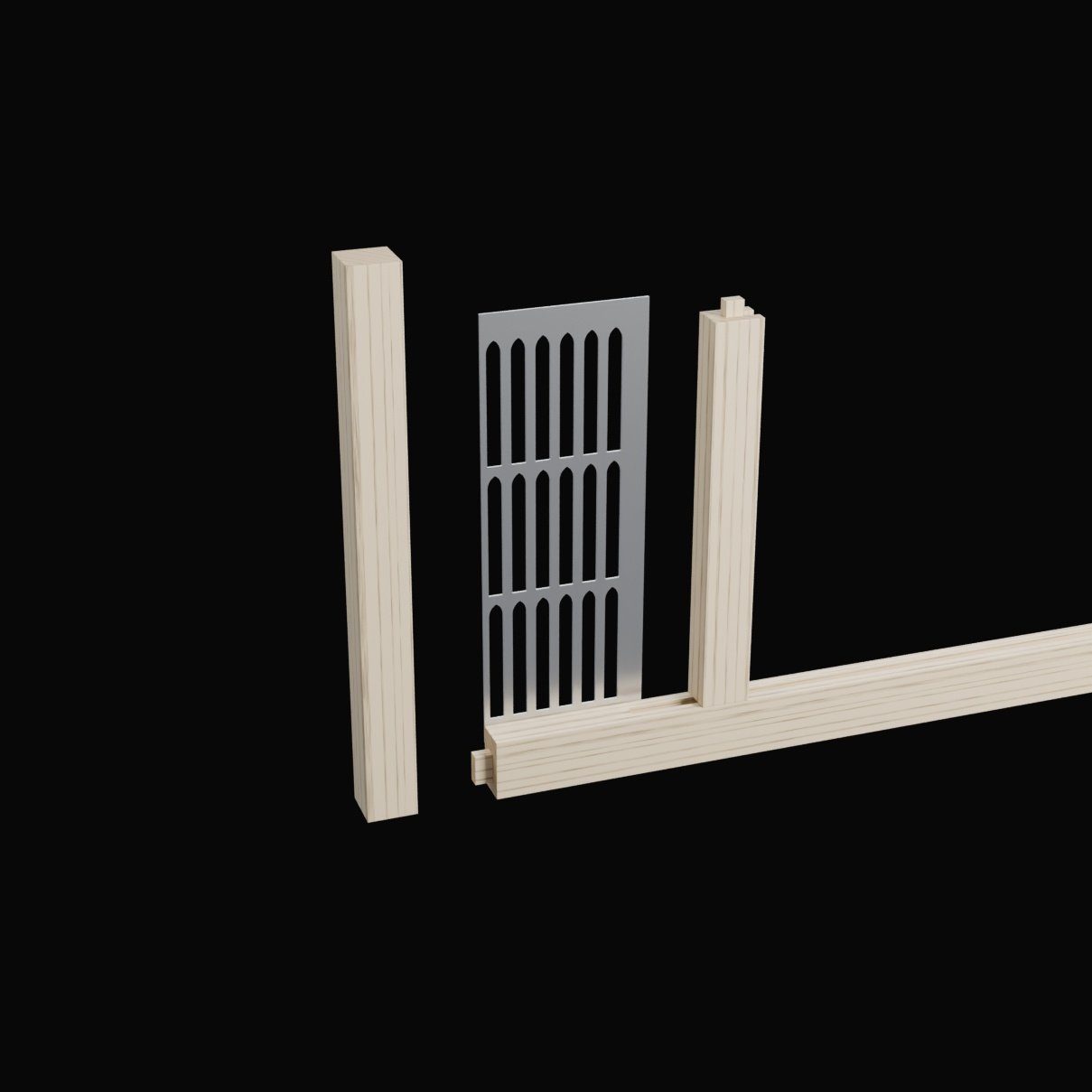
In the back-left corner, one bay of the flank and one bay of the back hold no panel. In their place sit two plates of 1/16 in laser-cut stainless, one in each bay, meeting at the corner post. The bars are one stainless grille with lancet-topped slots, screwed to the inside of the frame (14 screws). Behind them, on the cell floor, the moth monster lies on its cushion.
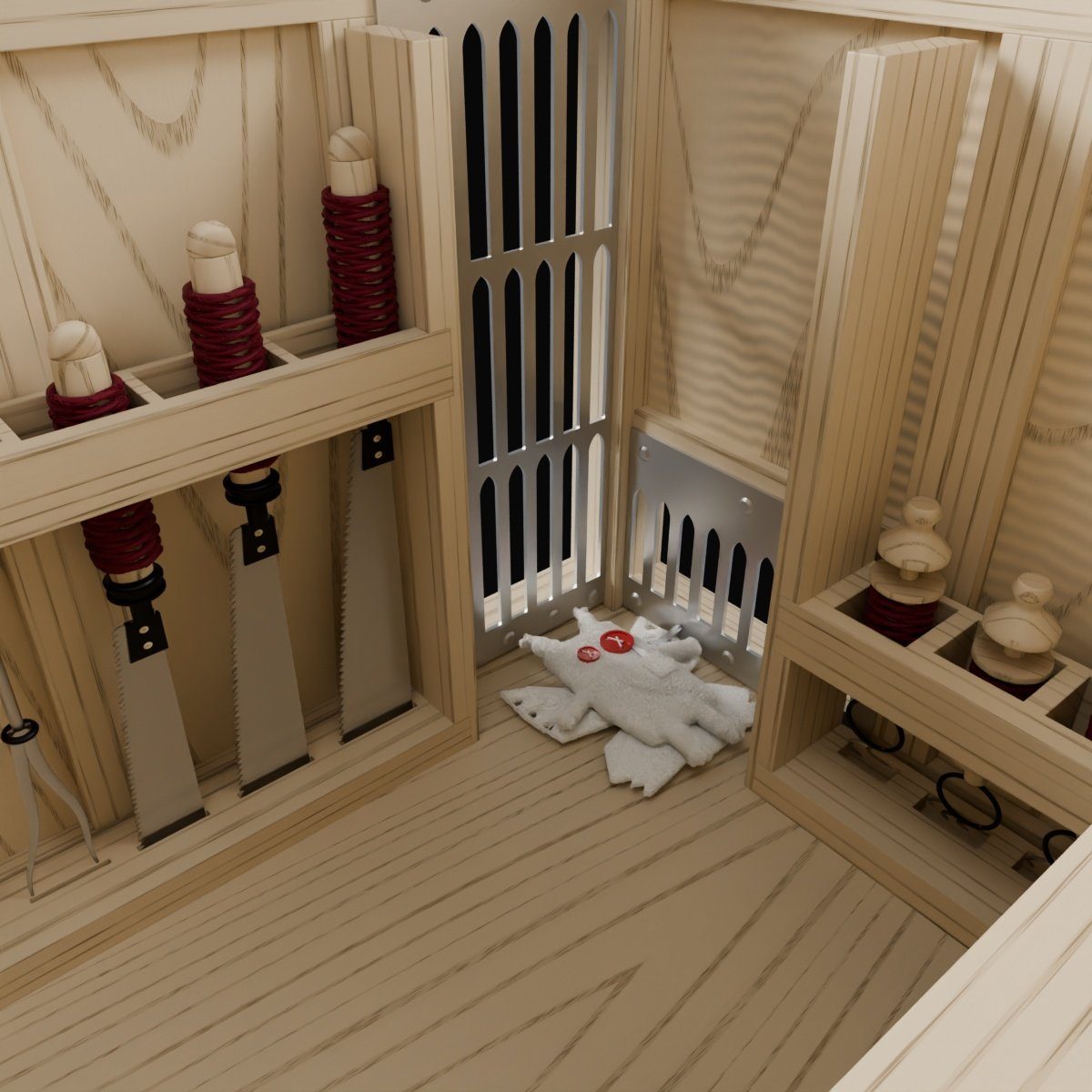
The plush in the cell, element by element / from above, lying on his back on the cell floor / white felt, white thread, red buttons, stainless
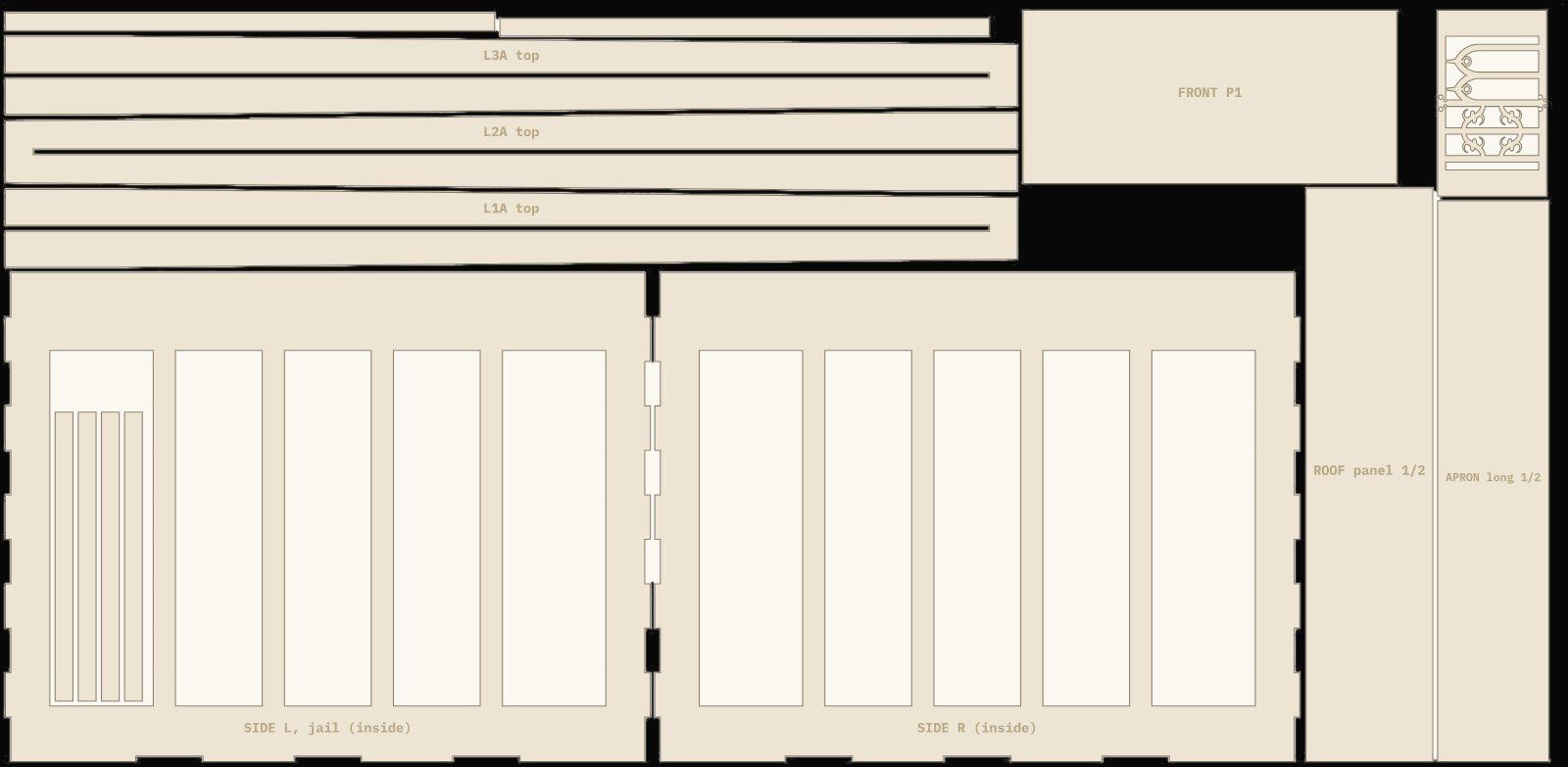
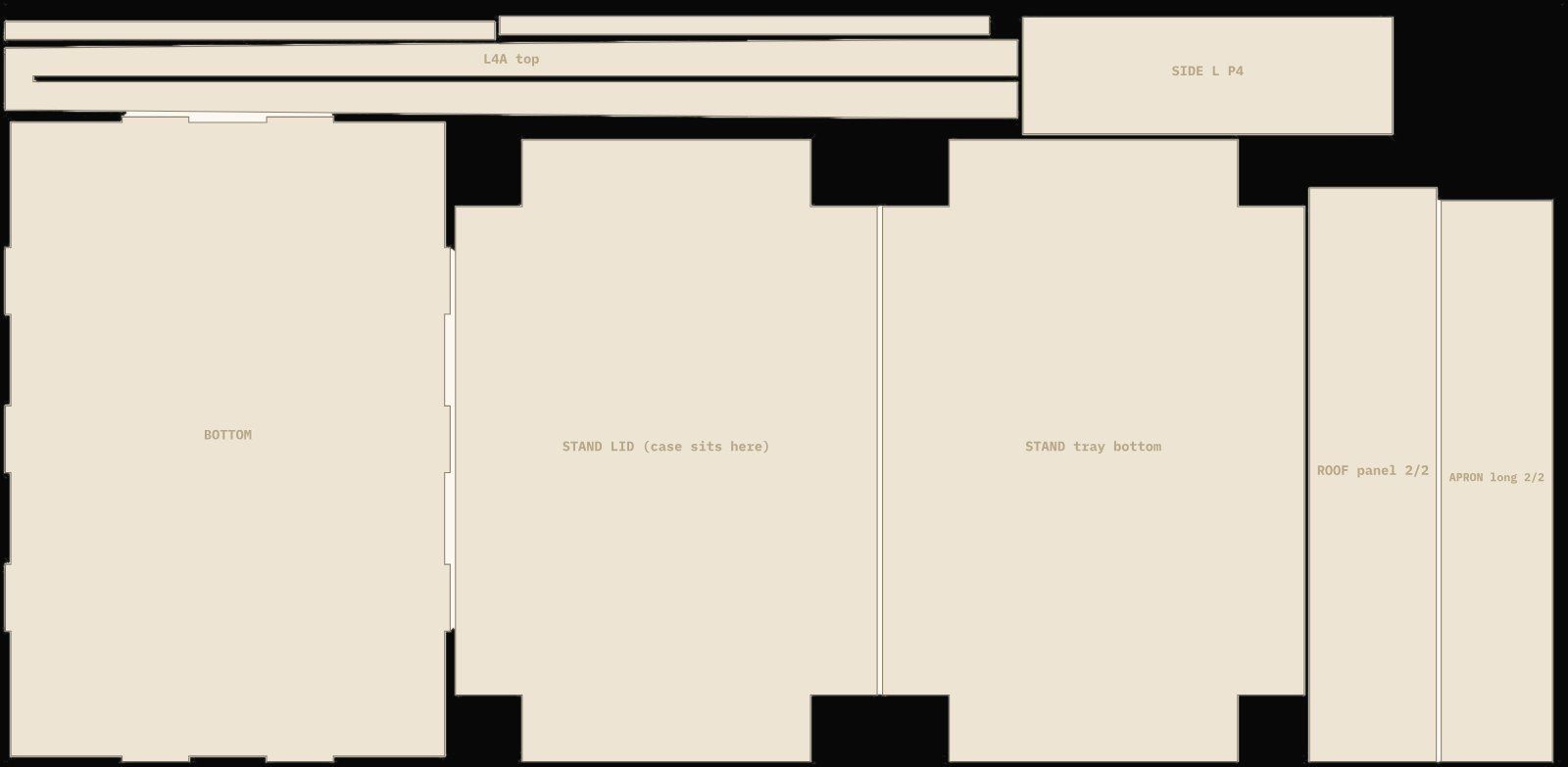
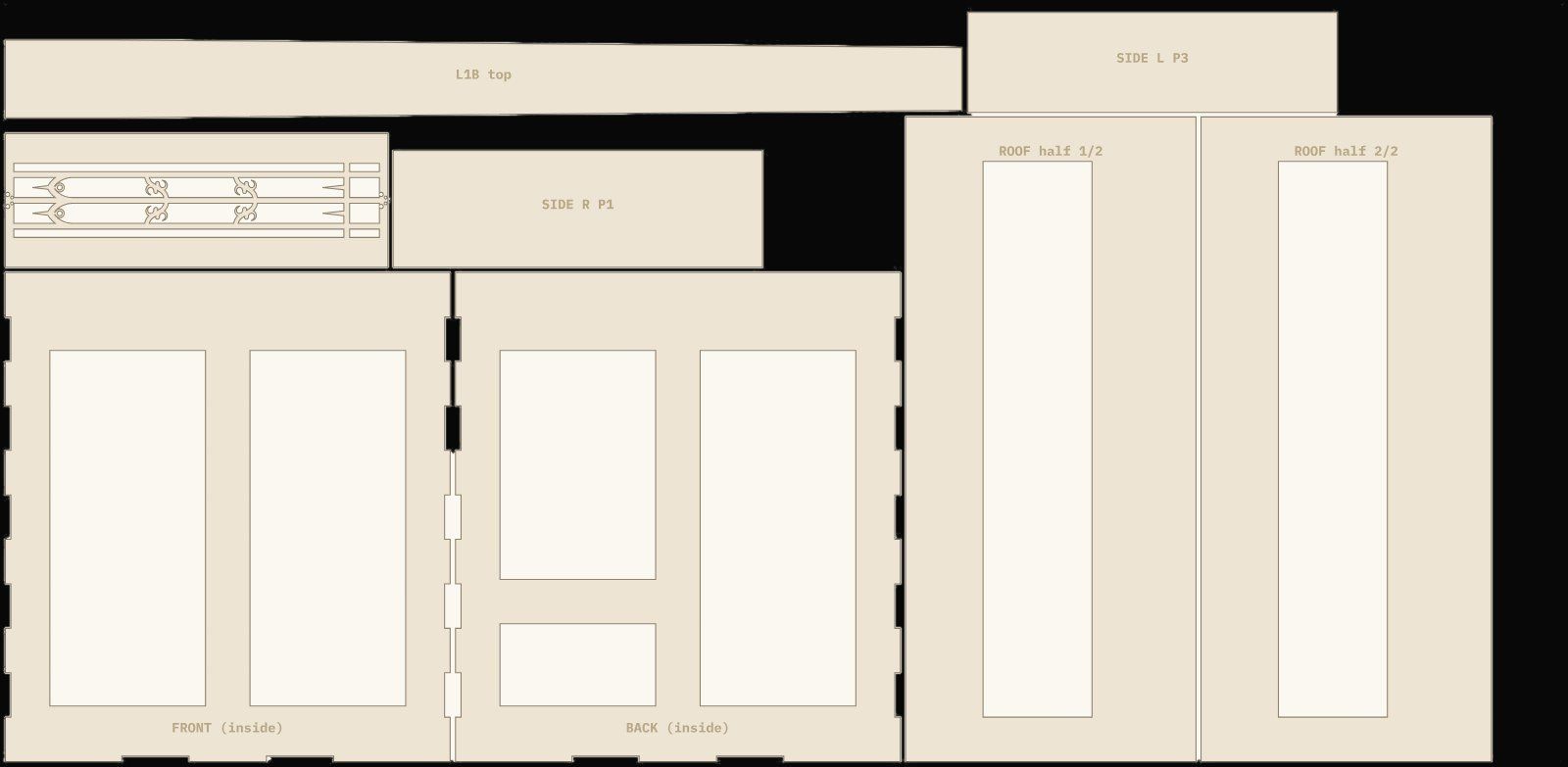
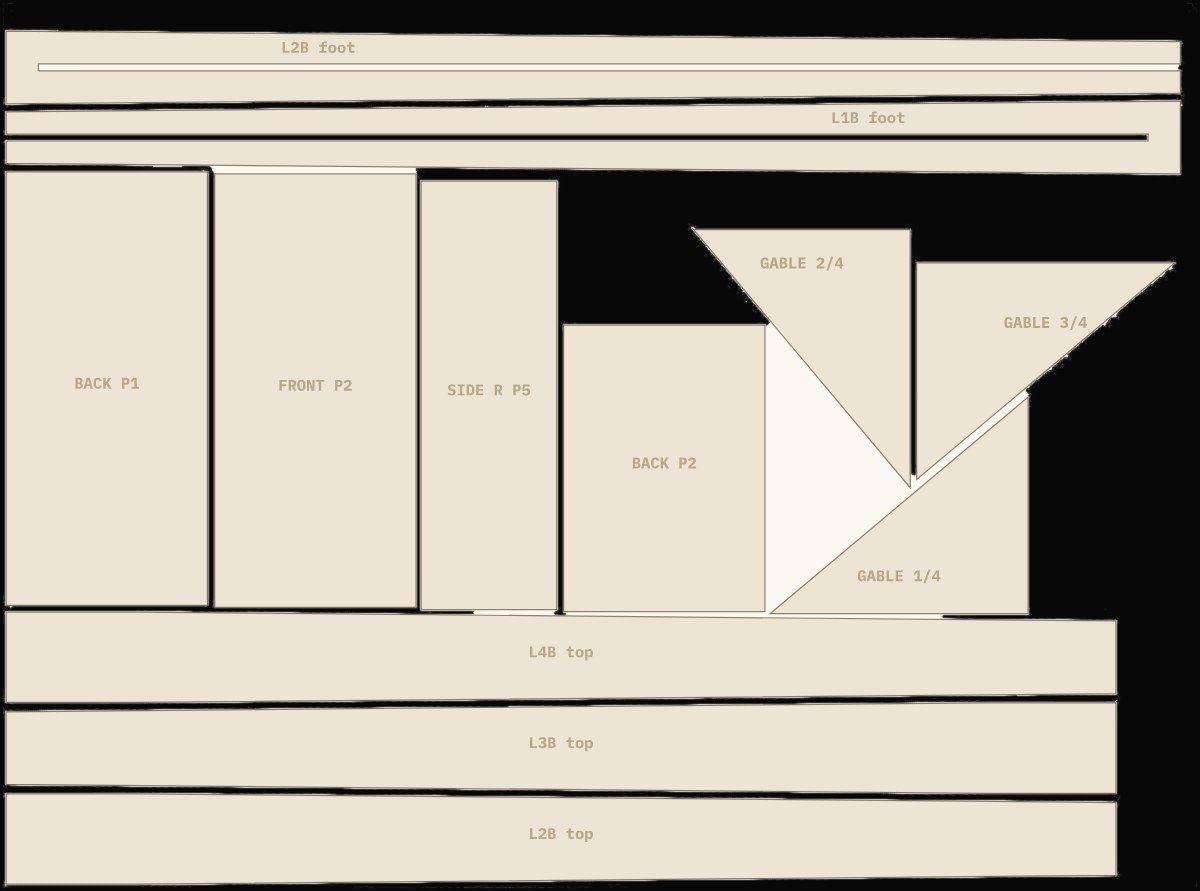
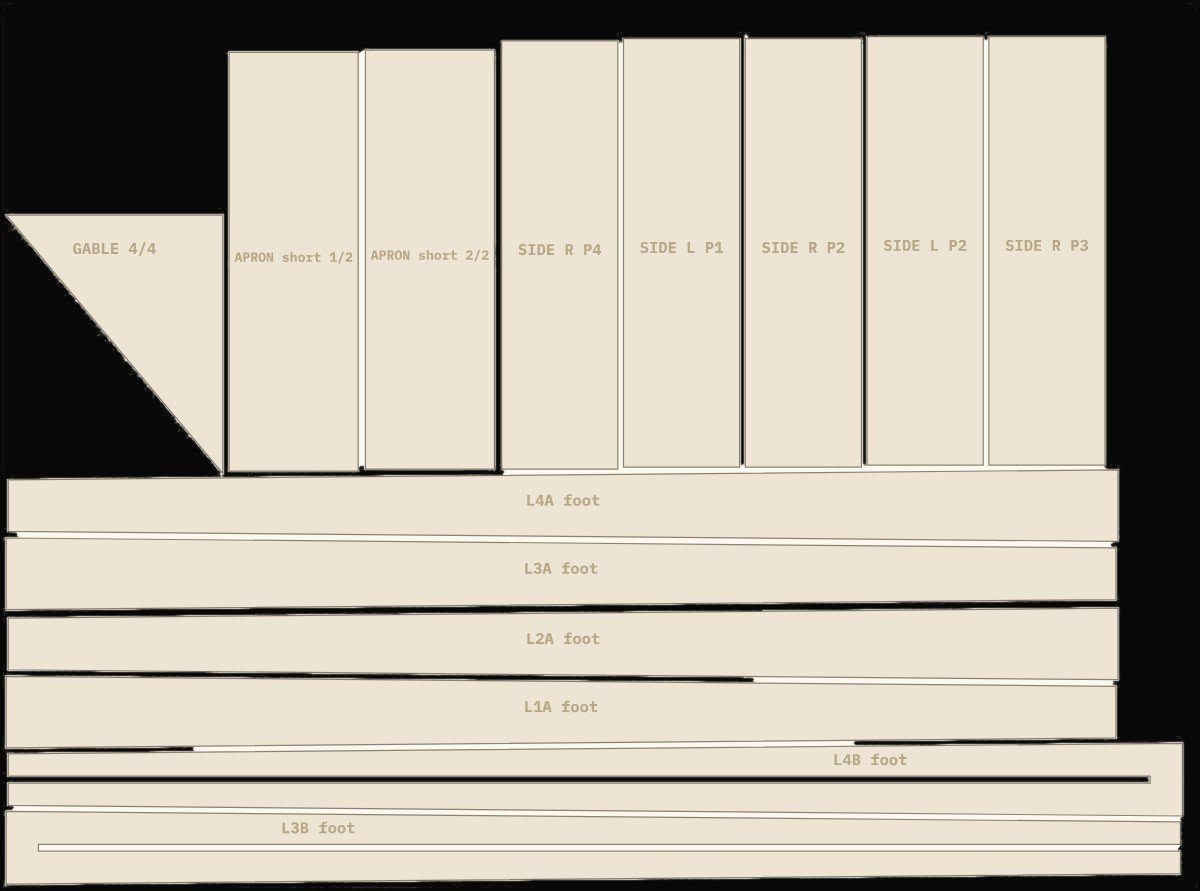
The whole case at 1:1 / 1/8 in birch ply on the xTool
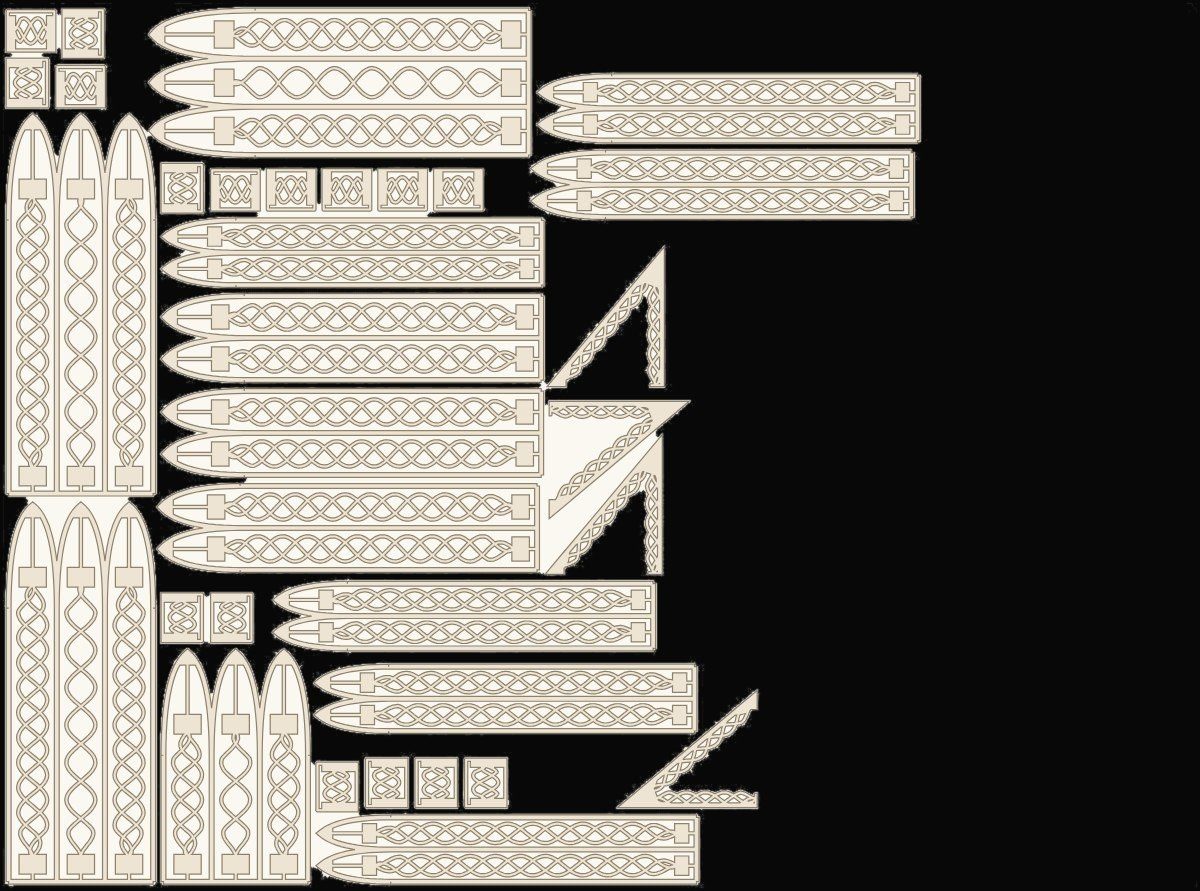
To check the proportions, the case was drawn for cutting full size from one 5 × 5 ft panel of 1/8 in Baltic birch and hot-glued together: box-jointed body, panels set one ply behind their windows, the split roof, the jail plates, and the cross-lap stand. The braids and lancets get their own sheet of 33 inlay pieces, so they can be cut from something thin and silver to stand in for the stainless.
Sixteen ways to swoop the gable / front view, red dashed: the left roof half opening 15° and 40° / red rings: where it goes wrong
dip 3/4 in · rail 1 in at centre · seam V 1/16 in a side
rail 1 3/4 in at centre
dip 1/2 in · rail 1 1/4 in at centre · seam V 0 in a side
dip 1 1/2 in · rail 1/4 in at centre · seam V 1/4 in a side
dip 3/4 in · rail 1 in at centre · seam V 1/16 in a side
dip 3/4 in · rail 1 in at centre · seam V 1/16 in a side
dip 7/8 in · rail 7/8 in at centre · seam V 1/16 in a side
dip 3/4 in · rail 1 in at centre · seam V 1/16 in a side
dip 1 1/8 in · rail 5/8 in at centre · seam V 1/8 in a side
dip 5/8 in · rail 1 1/8 in at centre
rises 0.6 in · rail 2 3/8 in at centre
dip 13/16 in · rail 15/16 in at centre · seam V 1/16 in a side
dip 3/4 in · rail 1 in at centre · seam V 1/16 in a side
dip 3/4 in · rail 1 3/4 in at centre
dip 3/4 in · rail 1 3/4 in at centre
dip 7/8 in · rail 1 3/4 in at centre · seam V 1/16 in a side
Counts for the whole piece
| Part | Material | Count |
|---|---|---|
| Front and back stainless sheets | 0.03 in 304 stainless, 2B, laser cut | 2 |
| Side stainless sheets | the jail side leaves off the strip over the bars | 2 |
| Gable stainless sheets | 0.03 in 304 stainless | 4 |
| Jail grilles | 1/16 in 304 stainless, laser cut in one piece with lancet-topped slots, flank and back | 2 |
| Handle halves | 316L stainless, bead blasted, linen whipping | 2 |
| Locating strips | 3/8 x 1/2 in ash, glued under the case bottom: two 13 1/16 in, two 7 15/16 in | 4 |
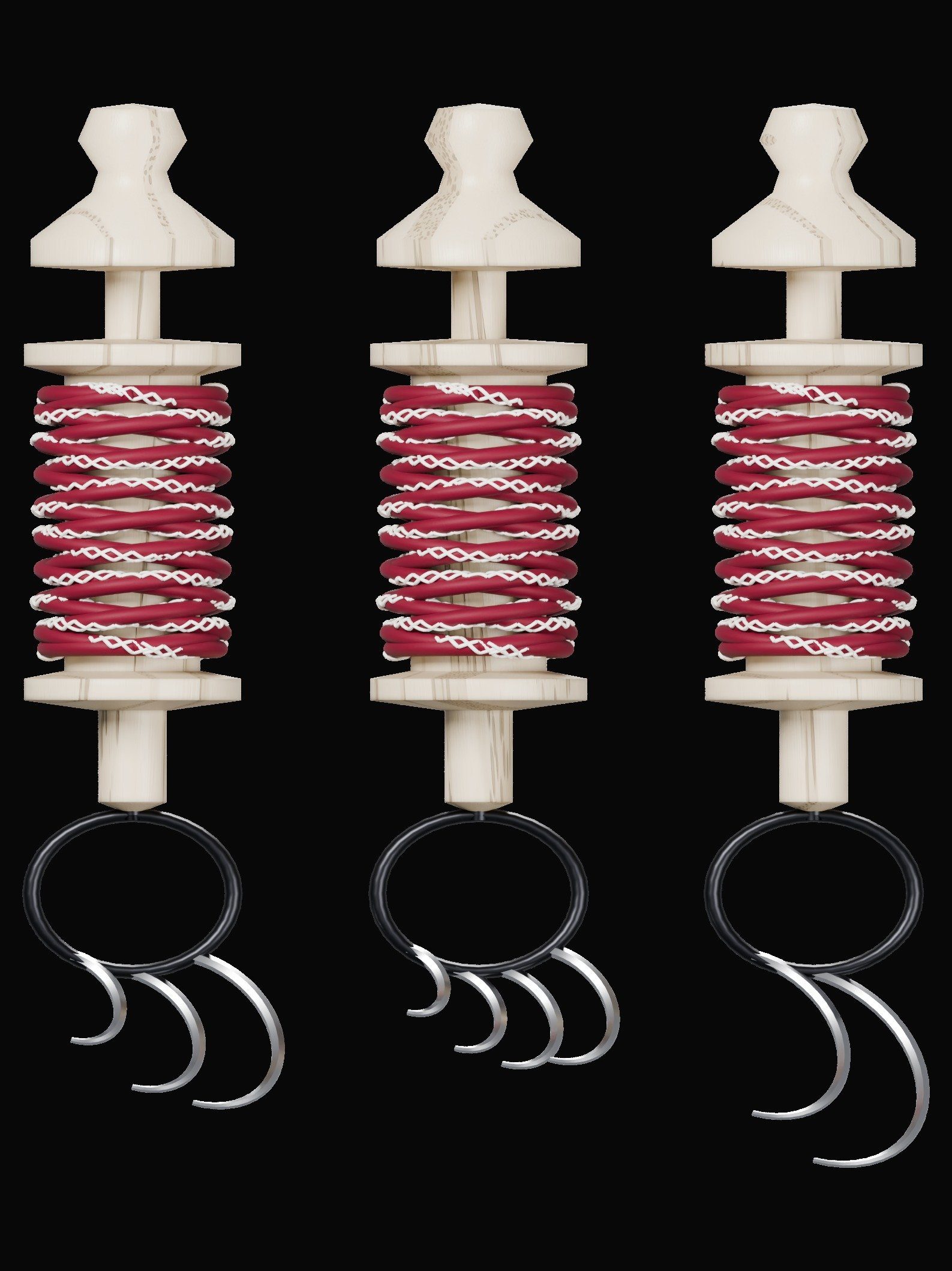
| Handle fob | black leather cord, three red leather pods | 1 |
| Handle tangs | steel, printed on the handle feet, epoxied into blind mortises in the ridge stiles | 4 |
| Eave hinges | stainless butt hinge, 1 1/2 in | 4 |
| Flat-head screws | 316 stainless, 82° head, slotted, 32 tpi | 130 |
| Clothespin | stainless | 1 |
| Lancet | stainless | 1 |
Each casket door carries the mark of the tool inside
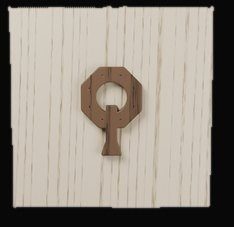
Ten families of instruments for the Moth Doctor, three of each. Every family has a mark. It is cut through the casket door as a pull standing 1/8 in proud, and inlaid in the door’s upper panel.
Case 01
The tapered plate with its teeth and the two ash pins at the neck.
Case 02


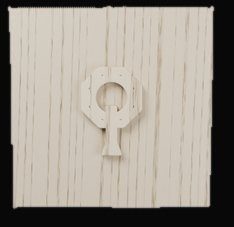
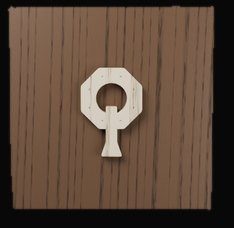
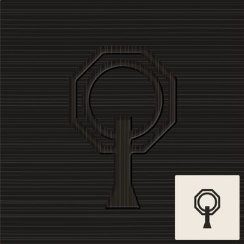
The octagonal grip seen end-on inside its hoop, the blade dropping through.
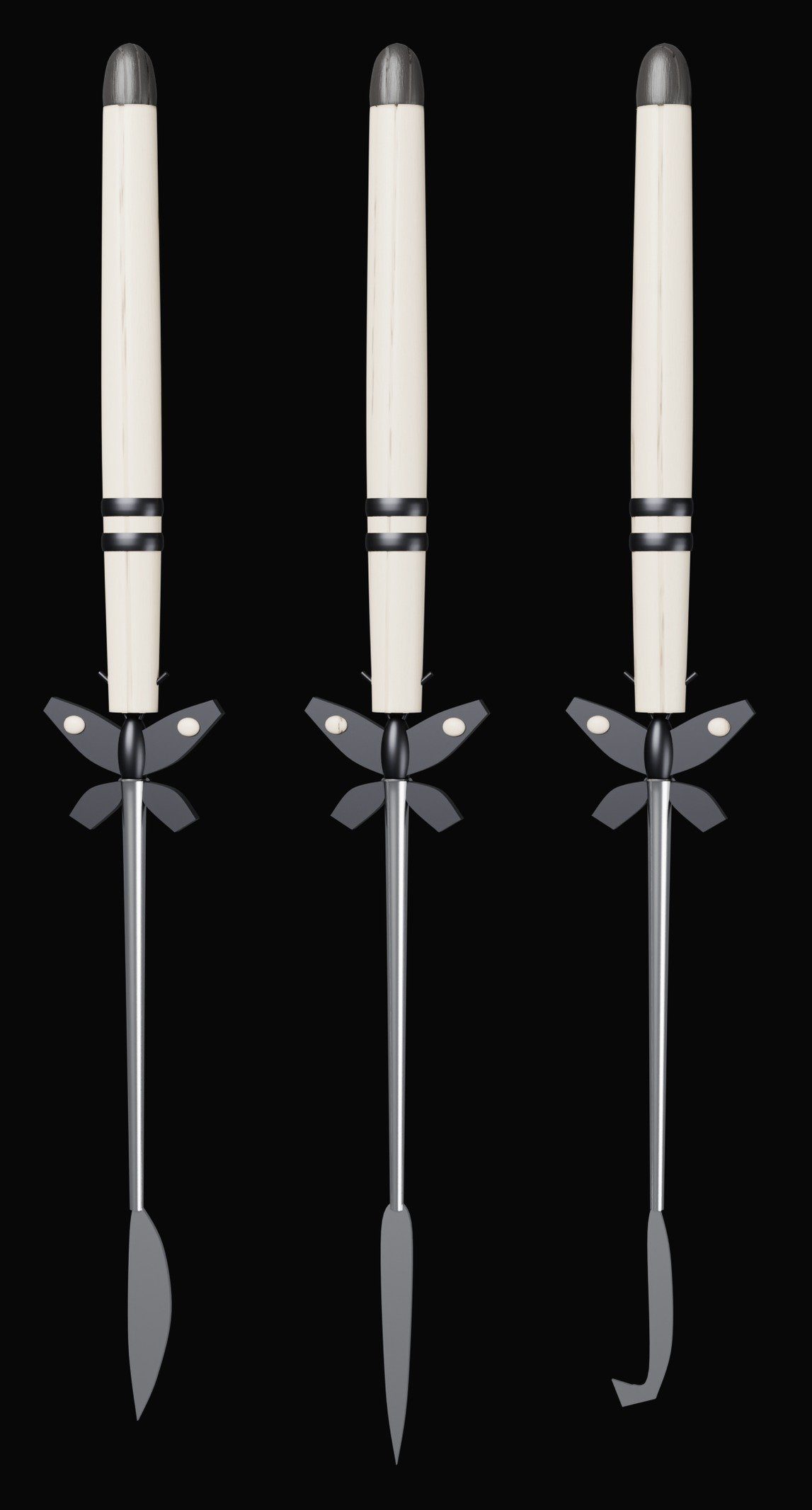
Case 03


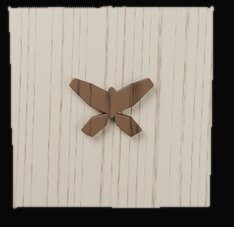
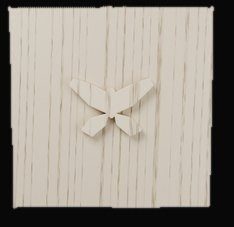
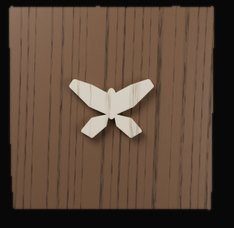
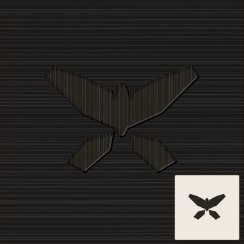
The guard itself.
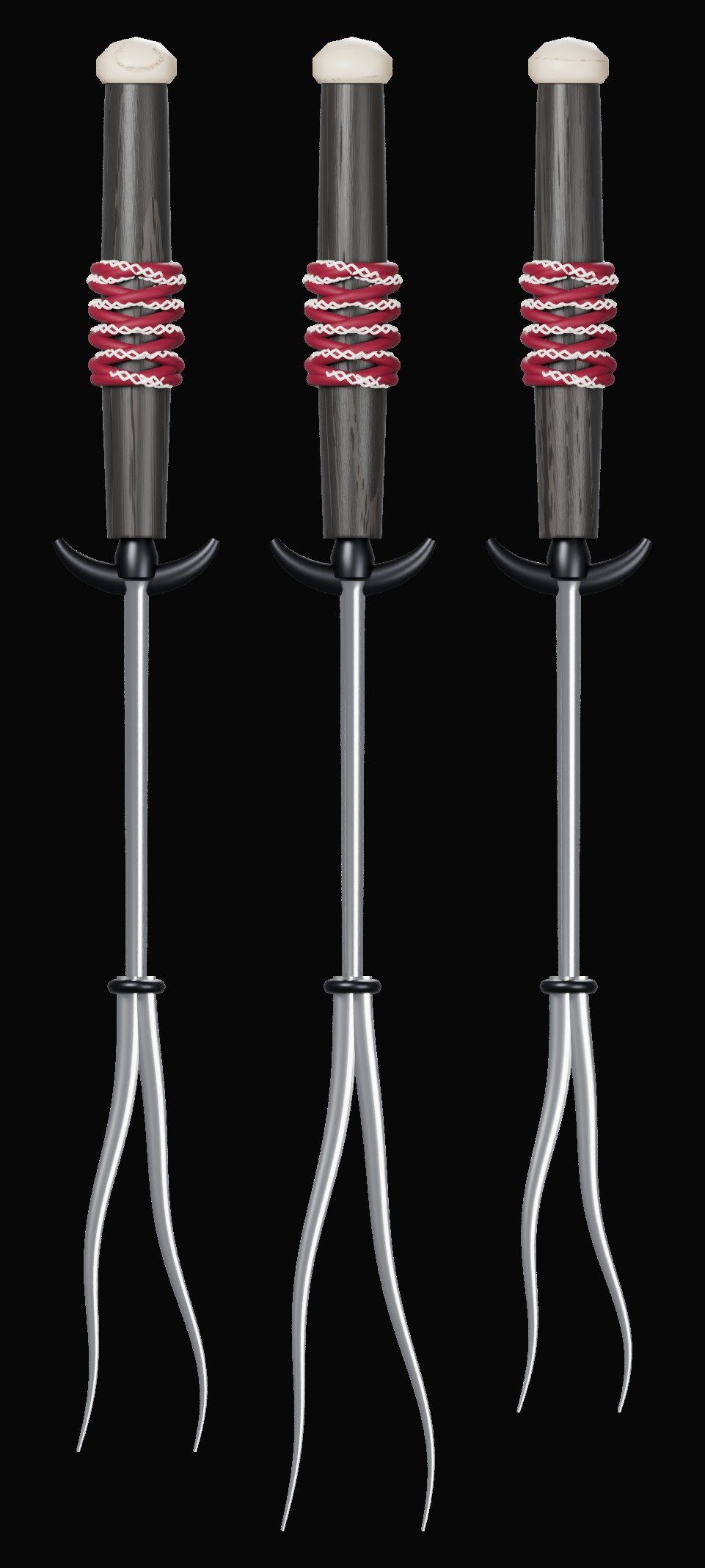
Case 04


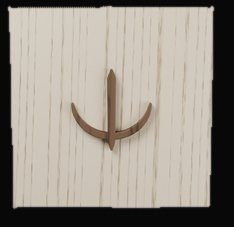
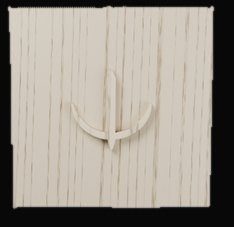
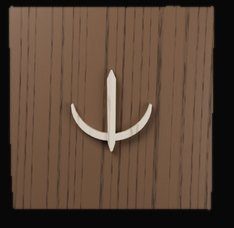
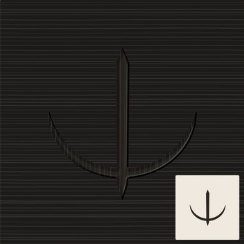
The crescent guard on its shaft.
Case 05


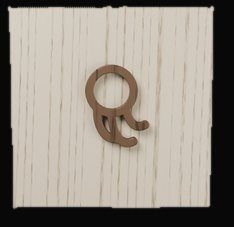
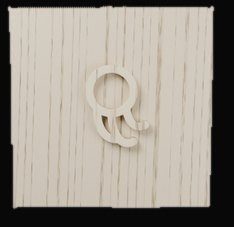
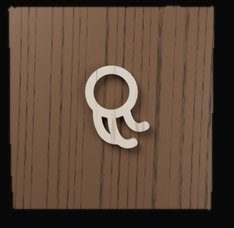
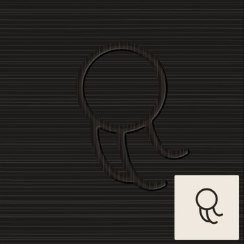
The ring with three curved needles.
Case 06

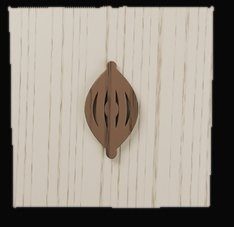
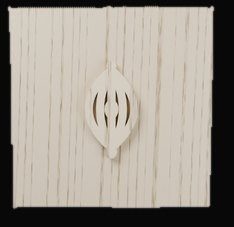
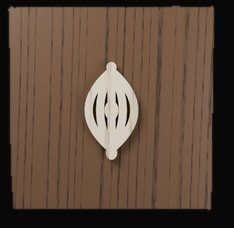

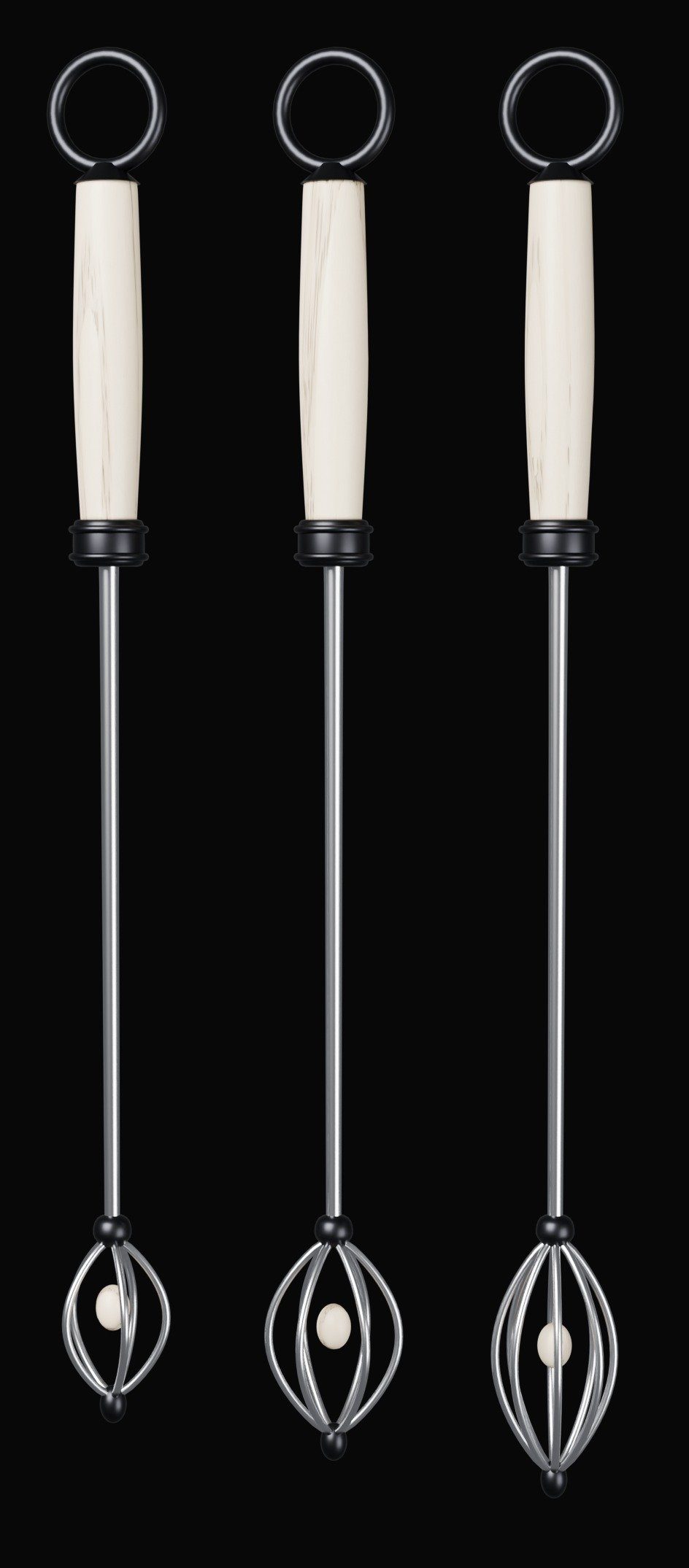
The cage as a cocoon.
Case 07


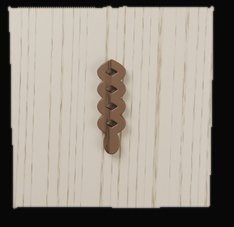
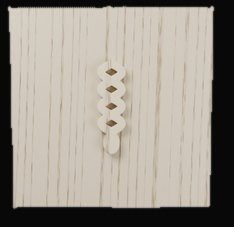
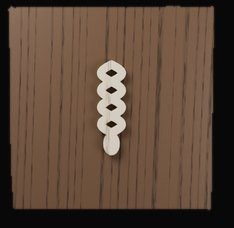
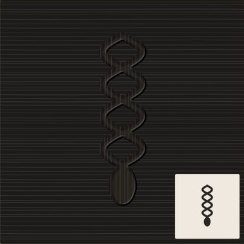
The twisted heat break and olive.
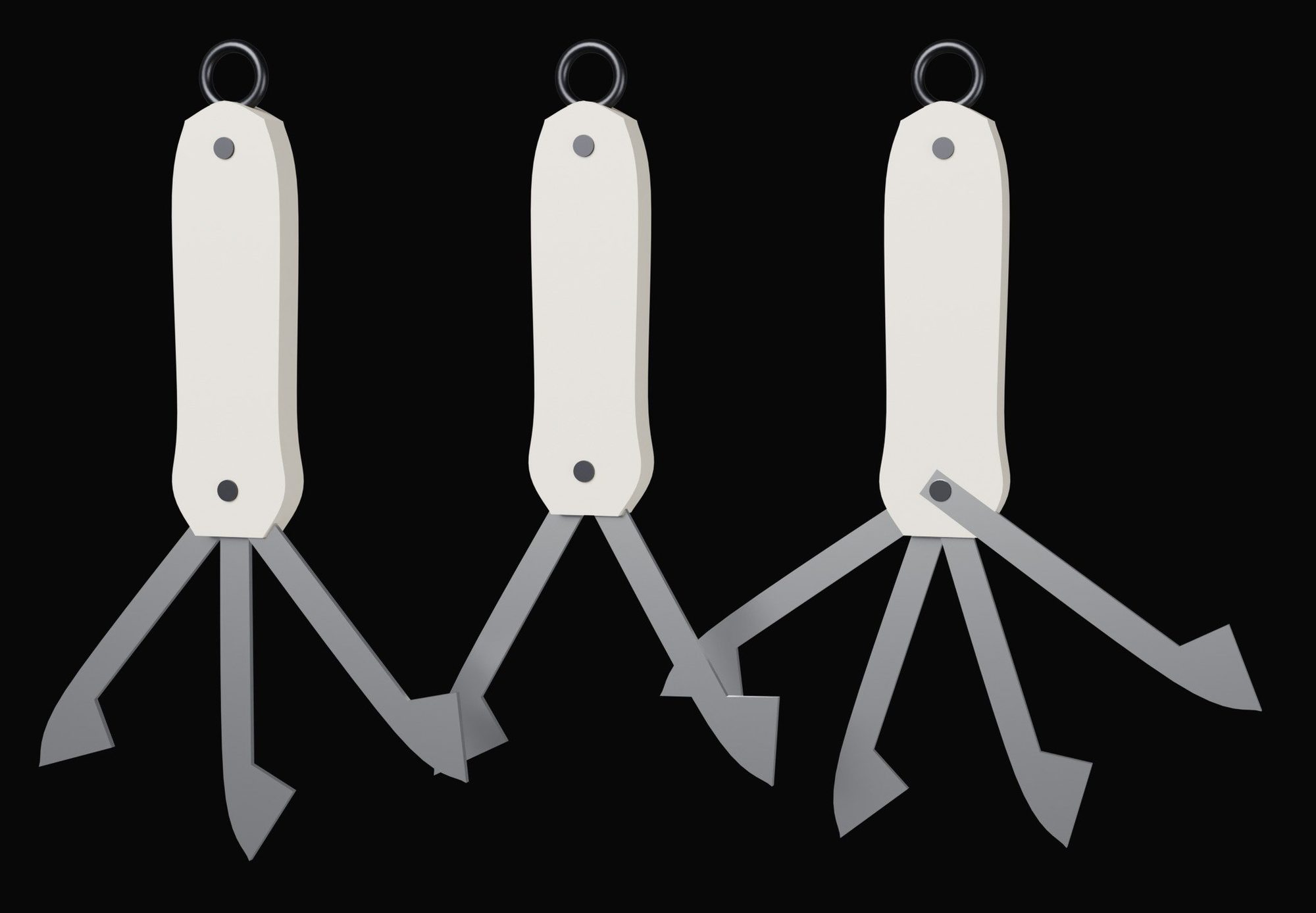
Case 08


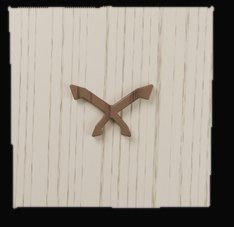
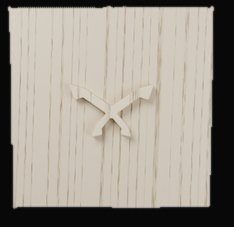
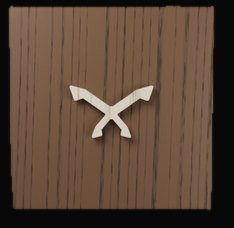
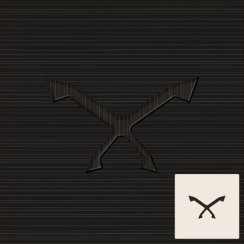
Thorn blades round the pivot.
Case 09


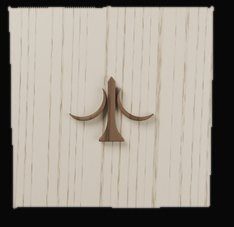
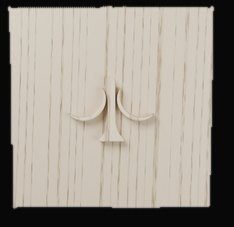
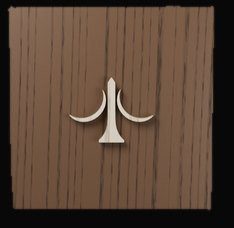
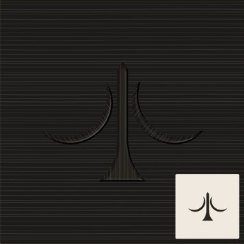
Crescent wings, ball body.
Case 10


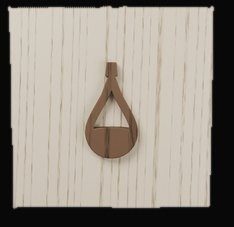
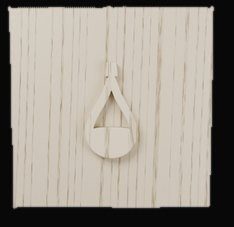
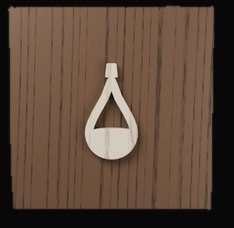
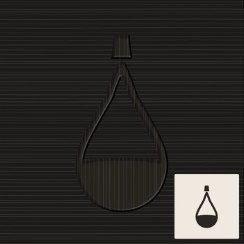
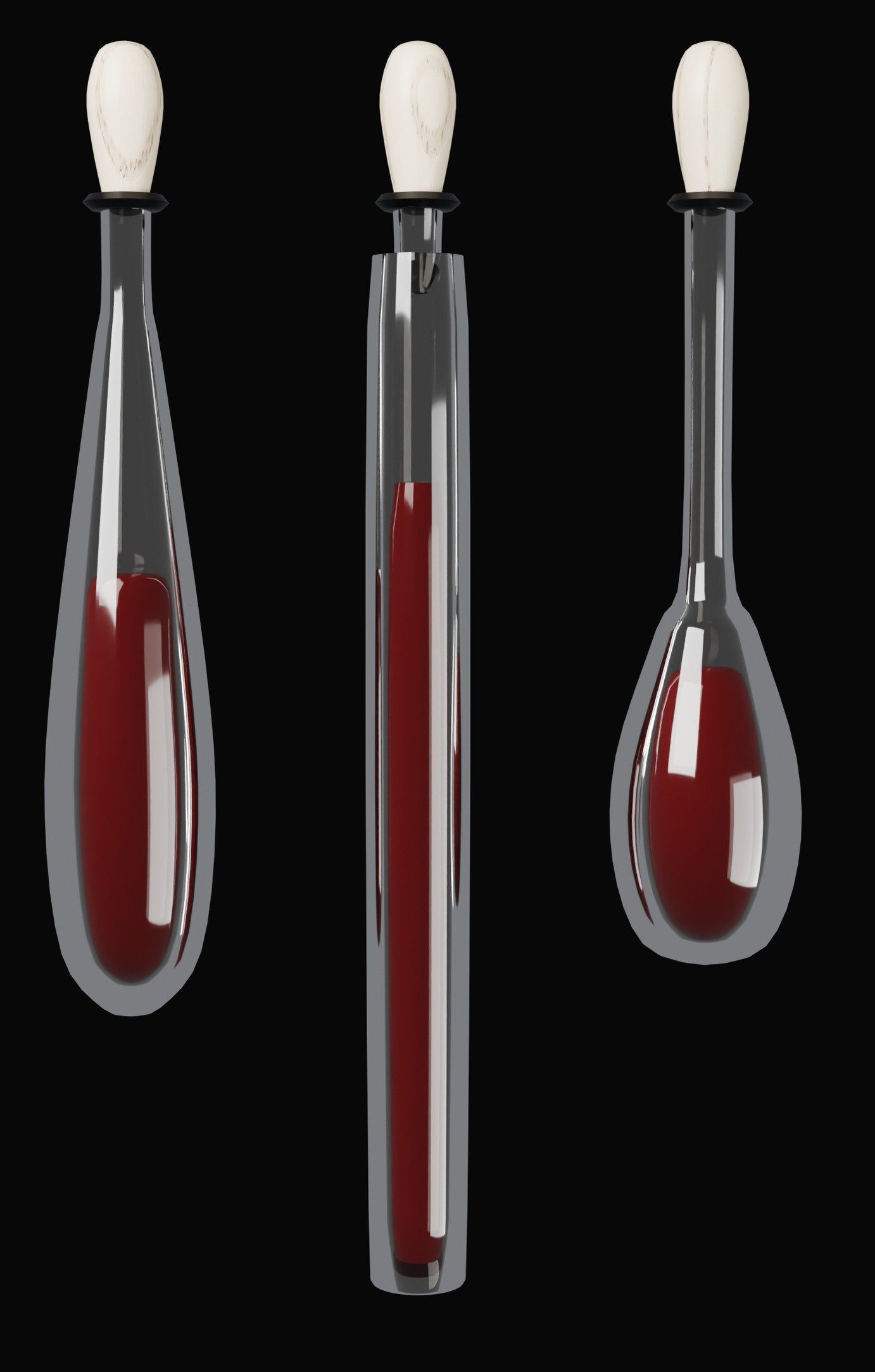
The teardrop flask, its stopper, and the tincture as the solid part.
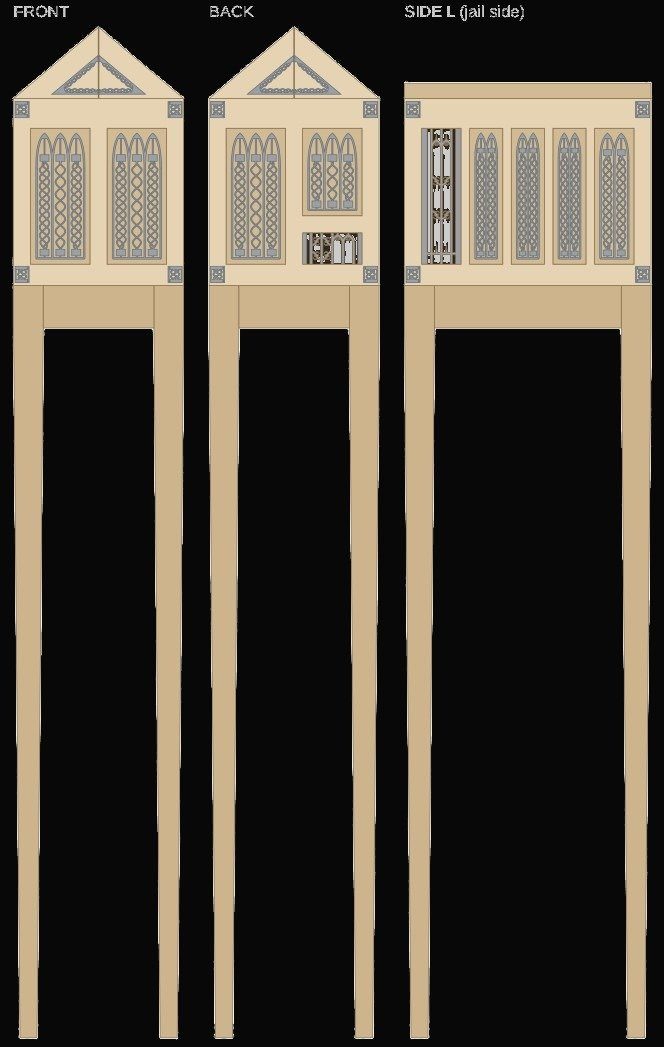
How the case got its face / flat elevations, to scale, drawn in raw ash
Eight ways to set fish scales against the tracery, and eight gables, before the carving gave way to inlay.
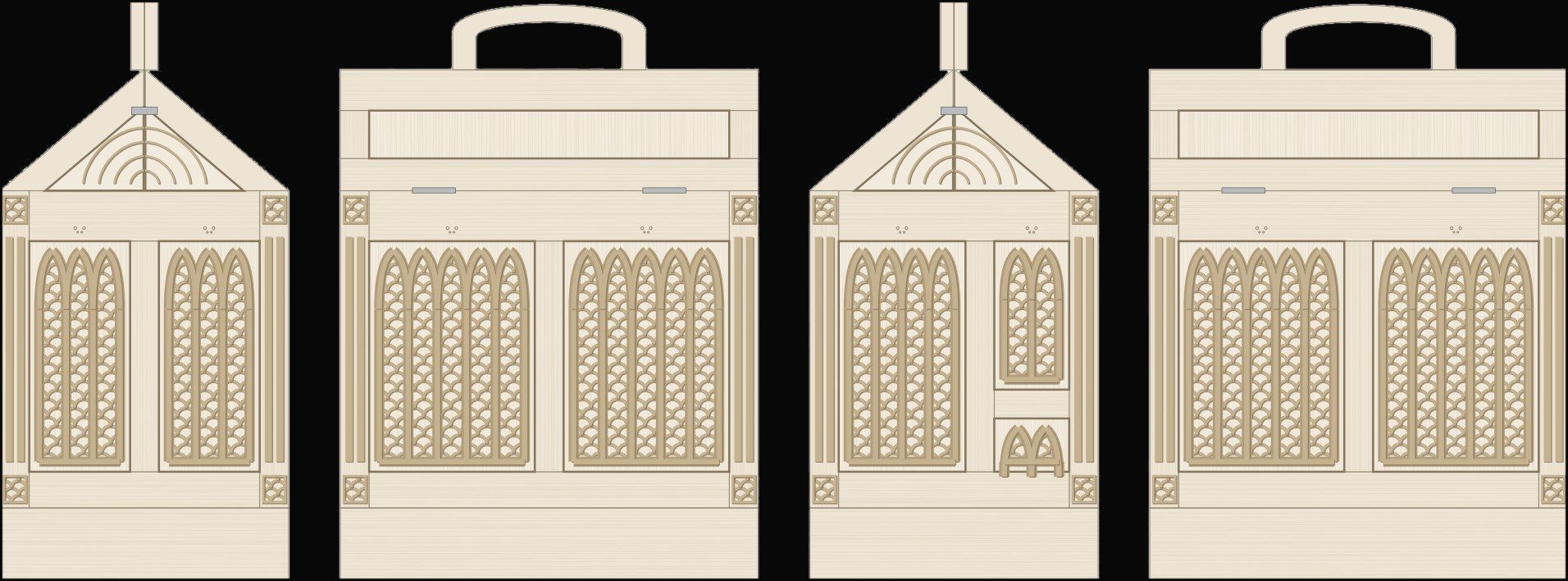
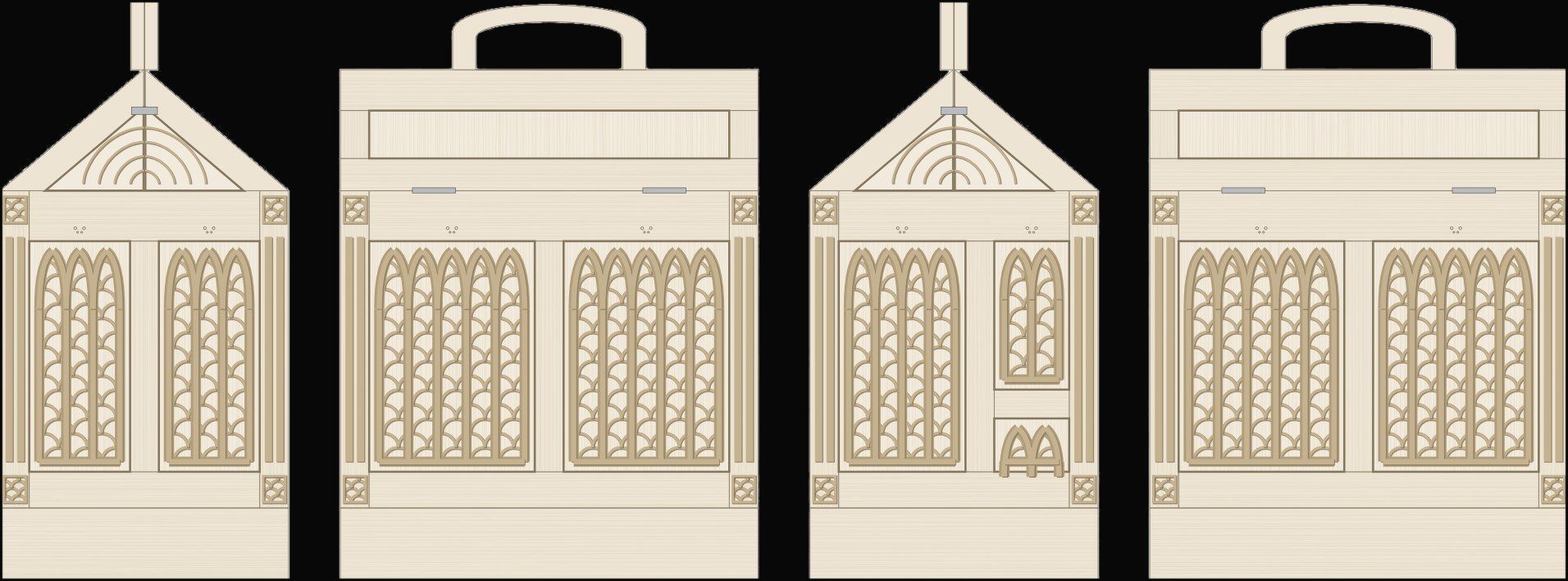
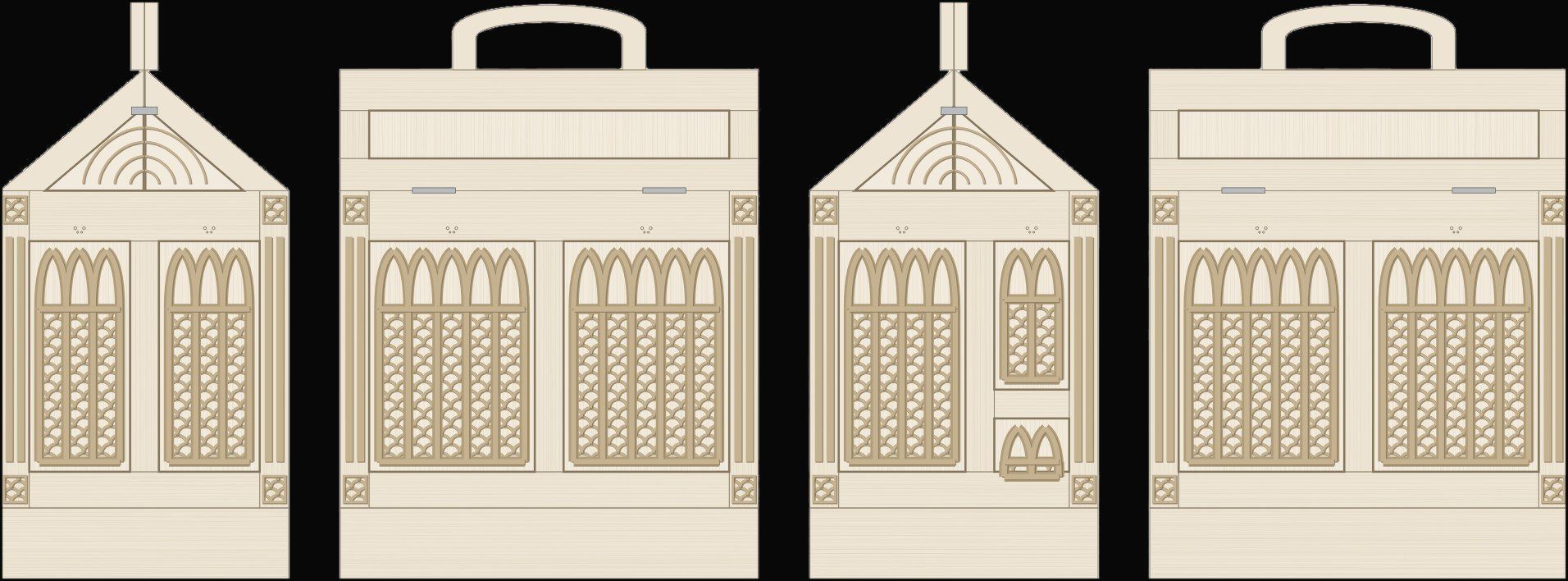
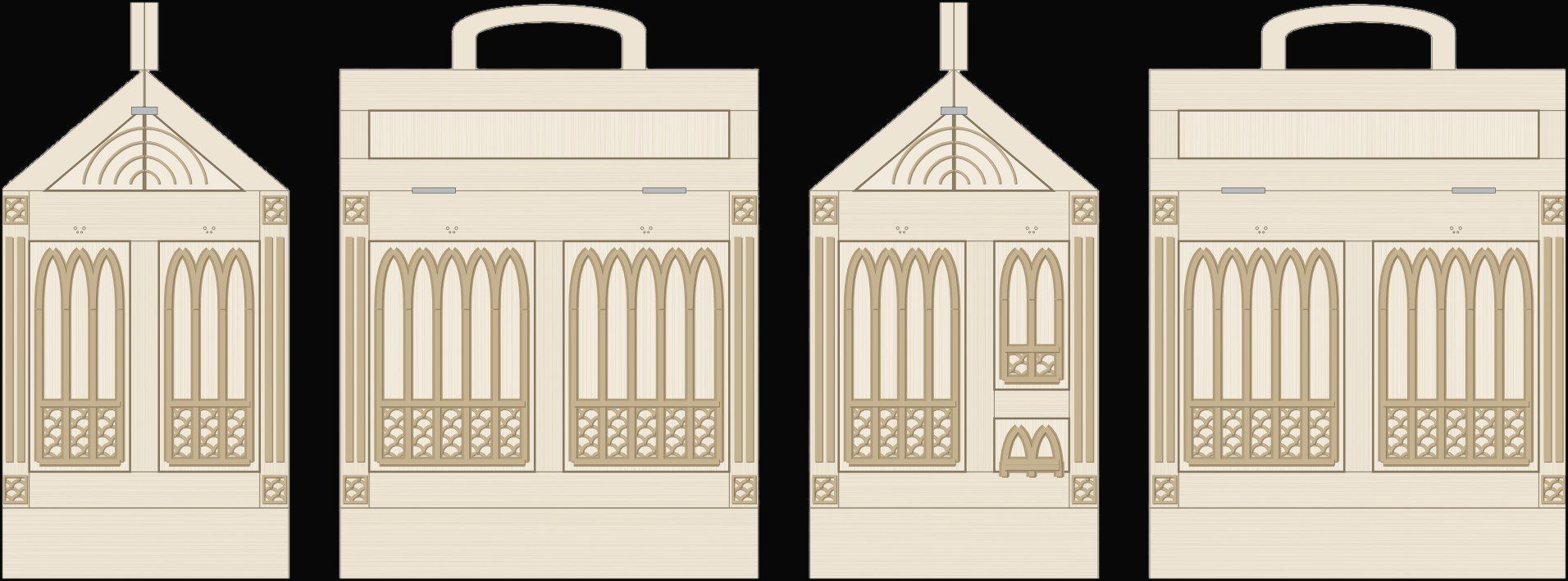
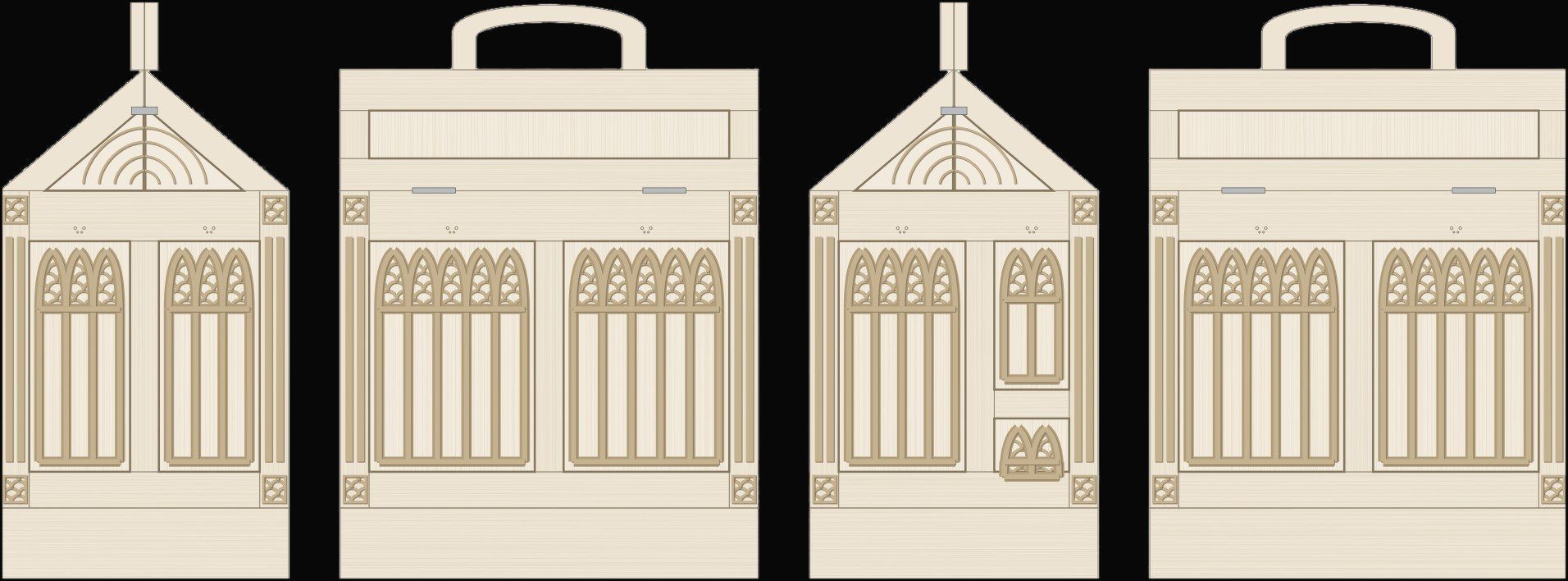
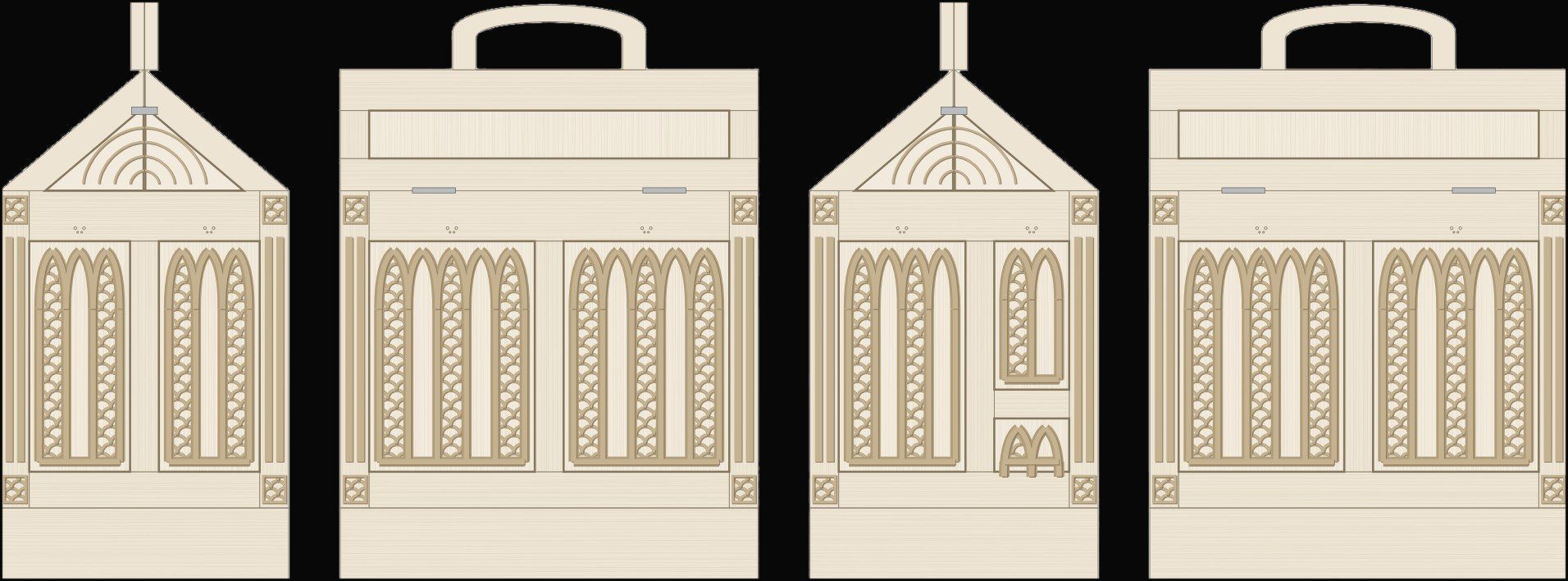
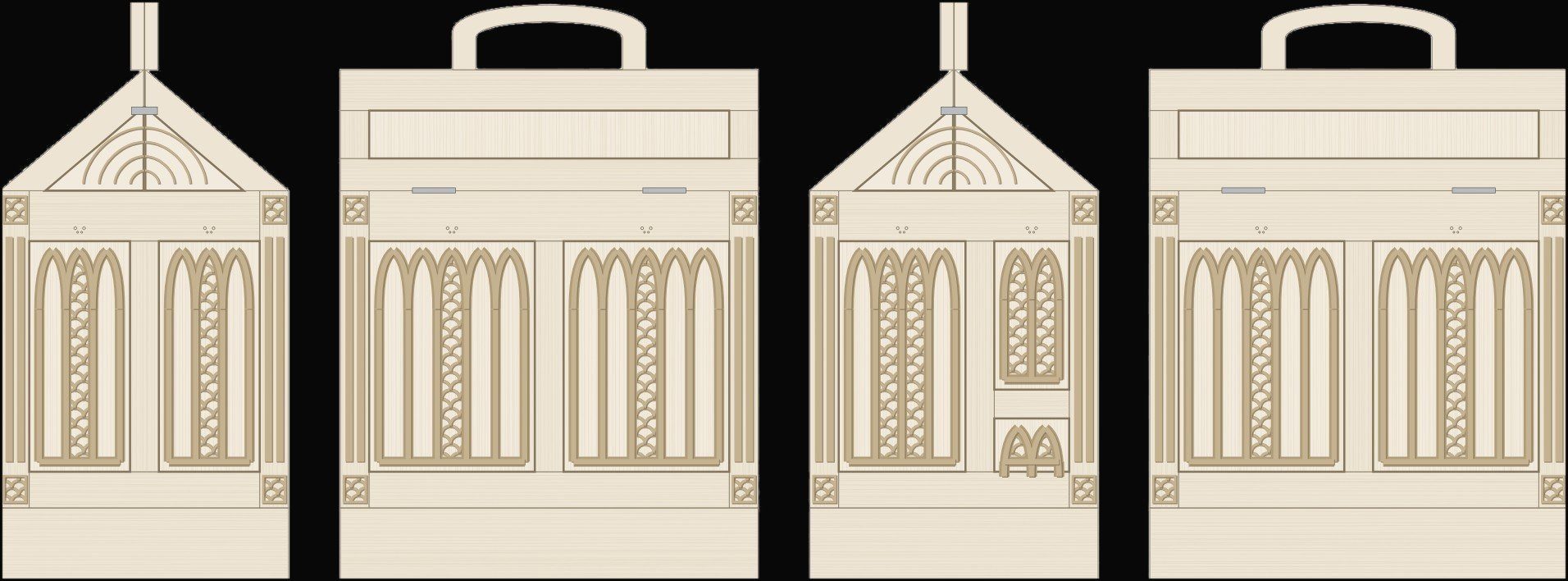
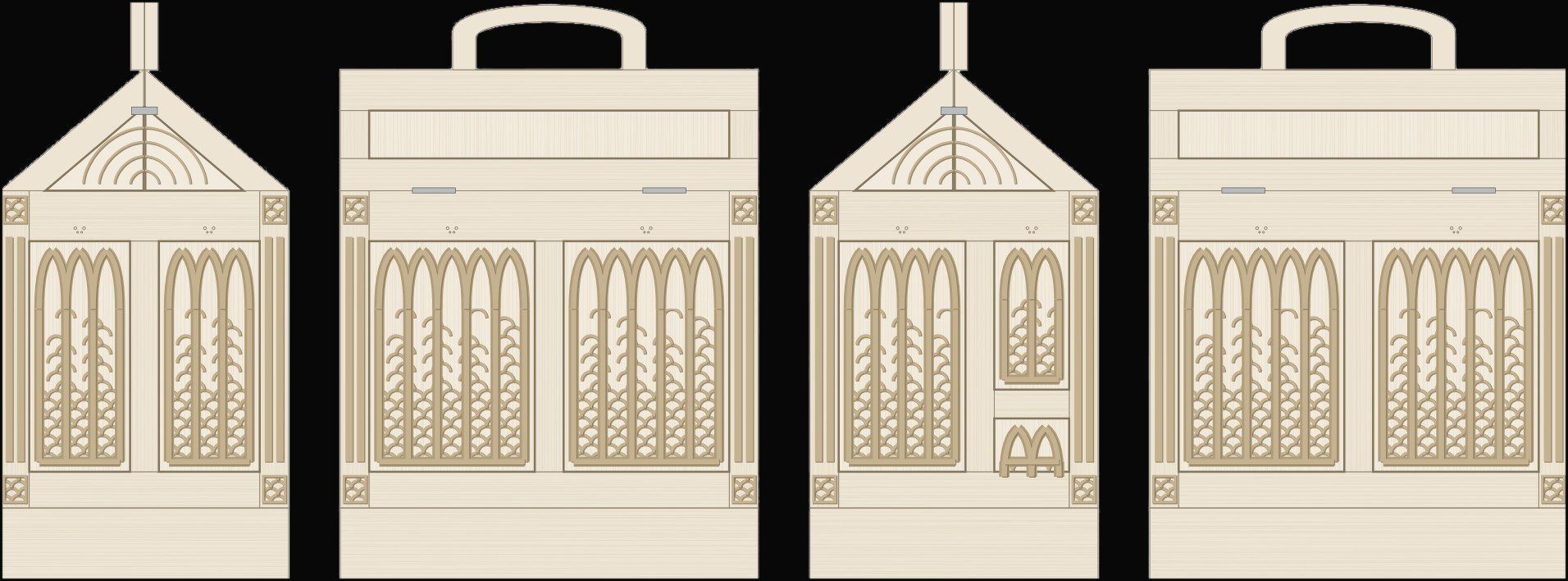
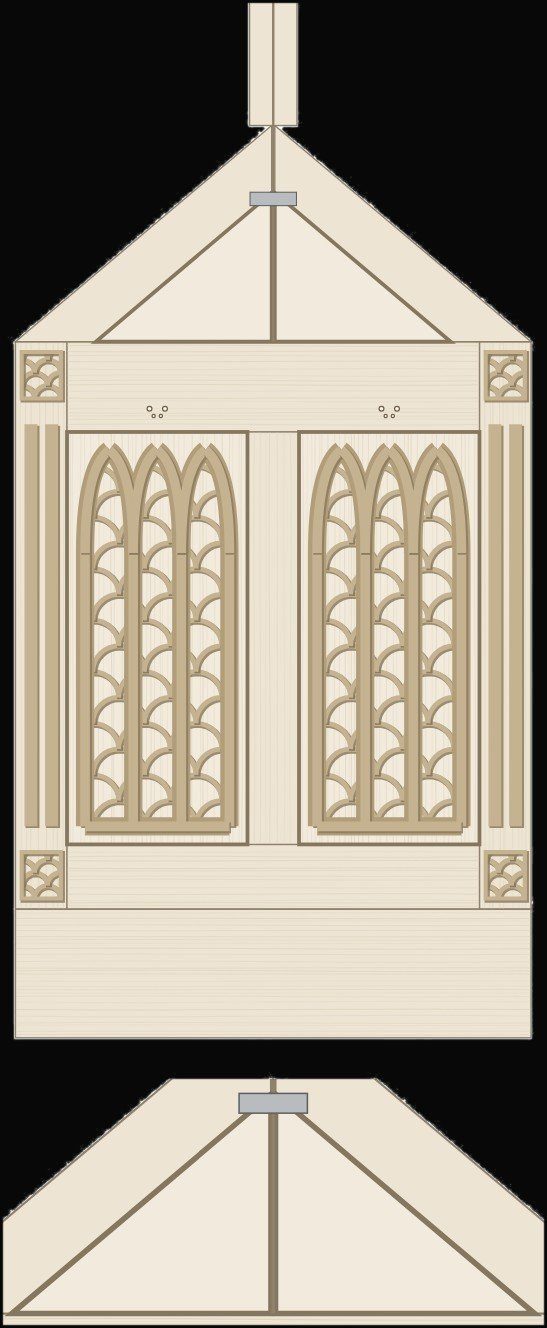
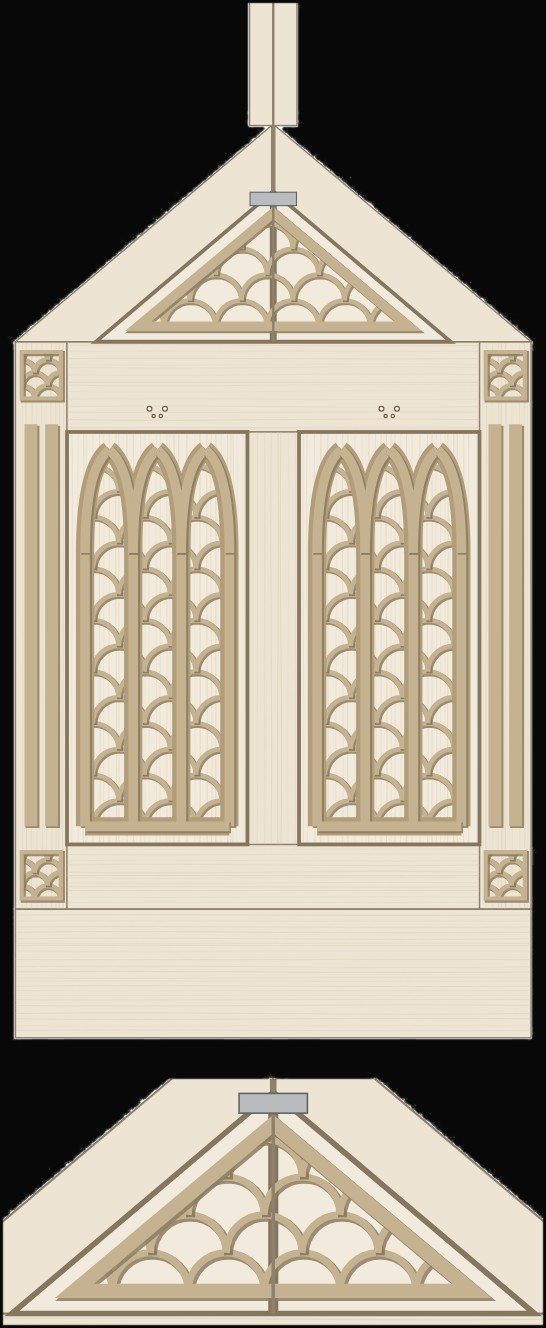
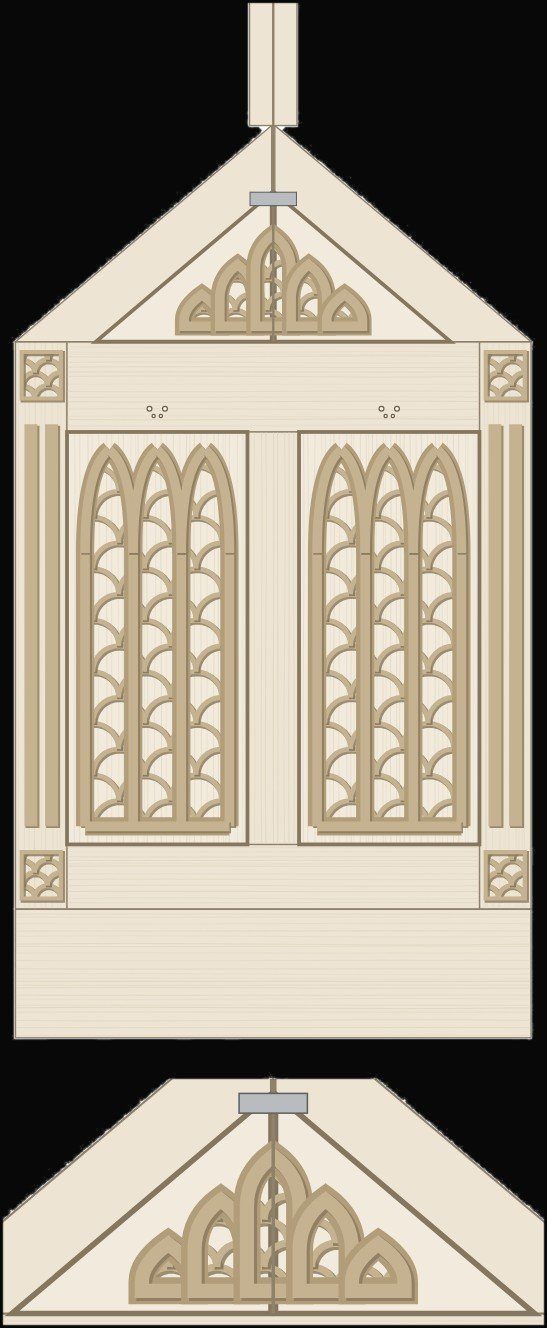
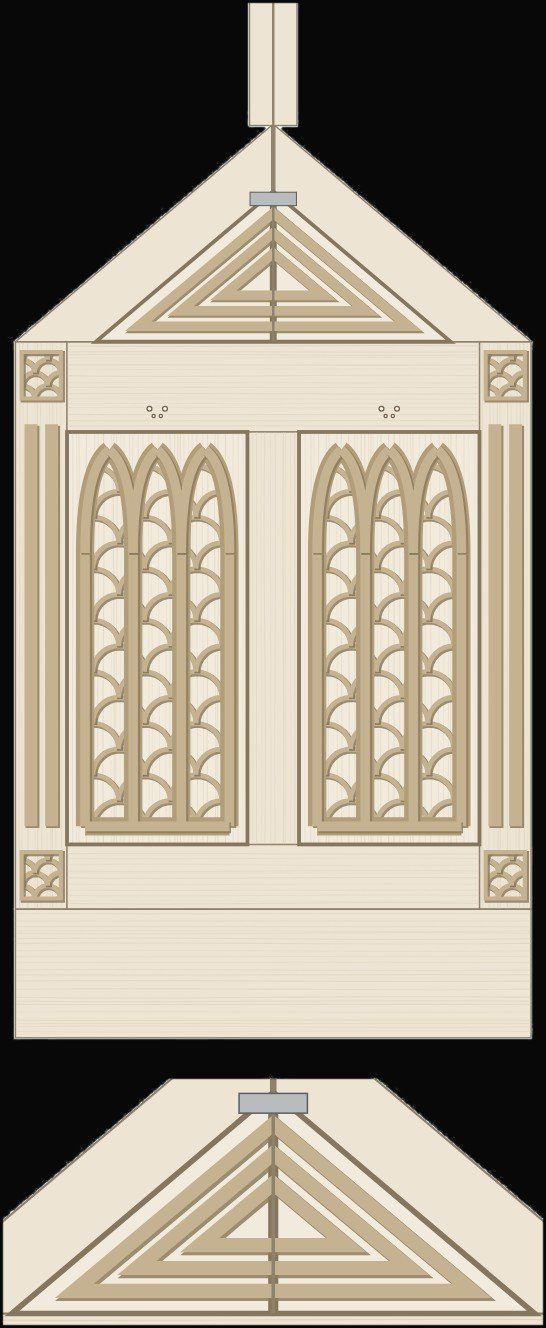
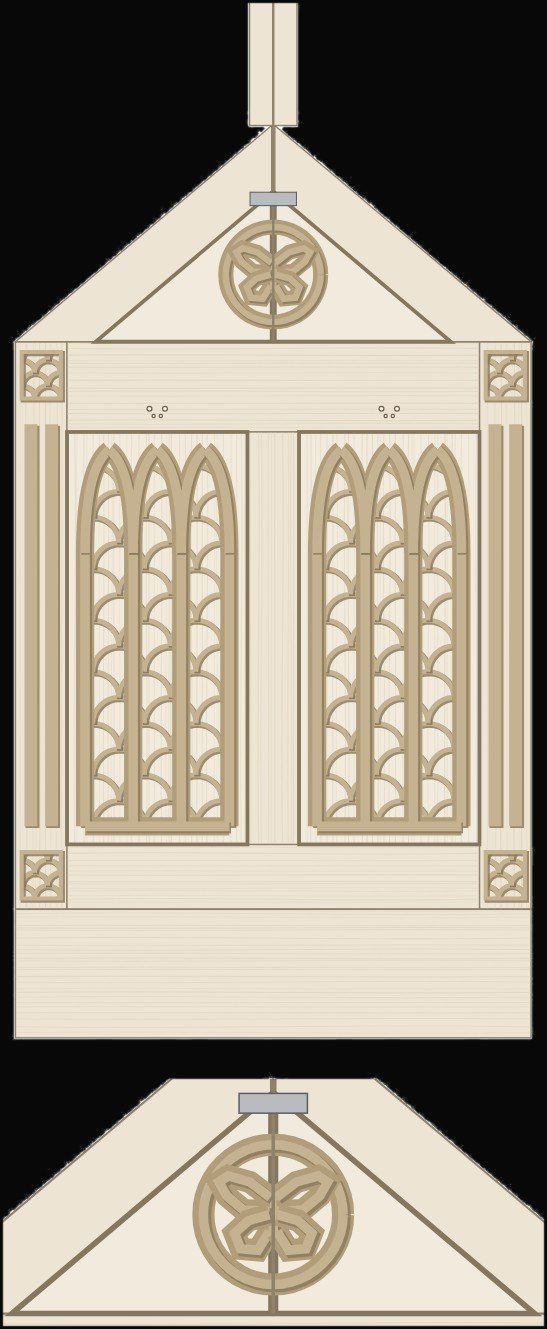
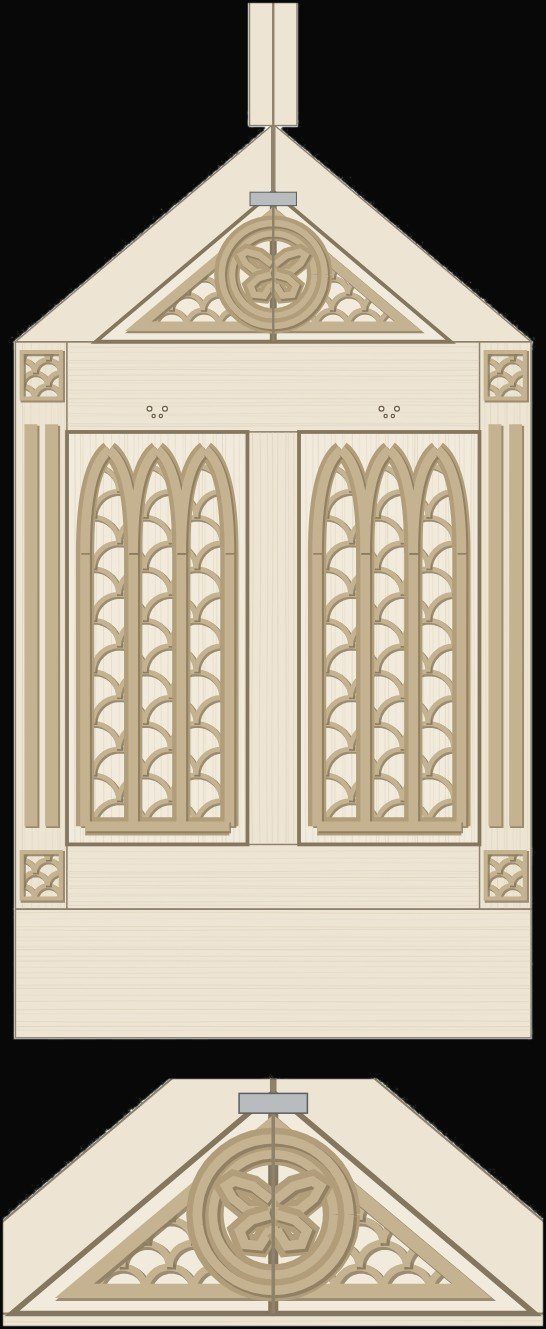
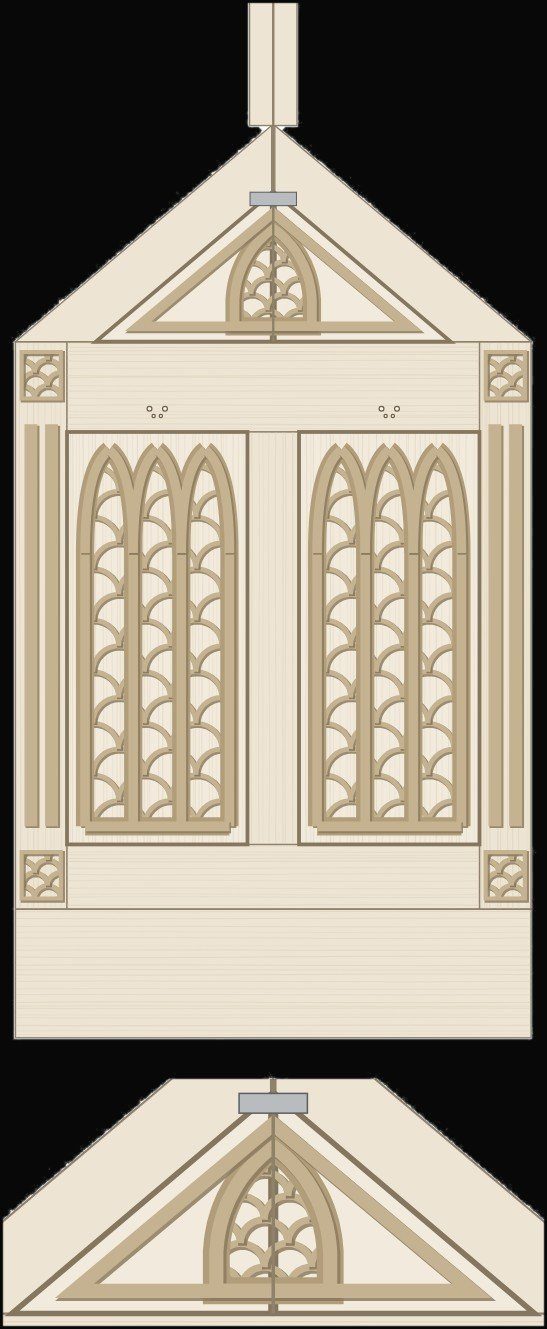
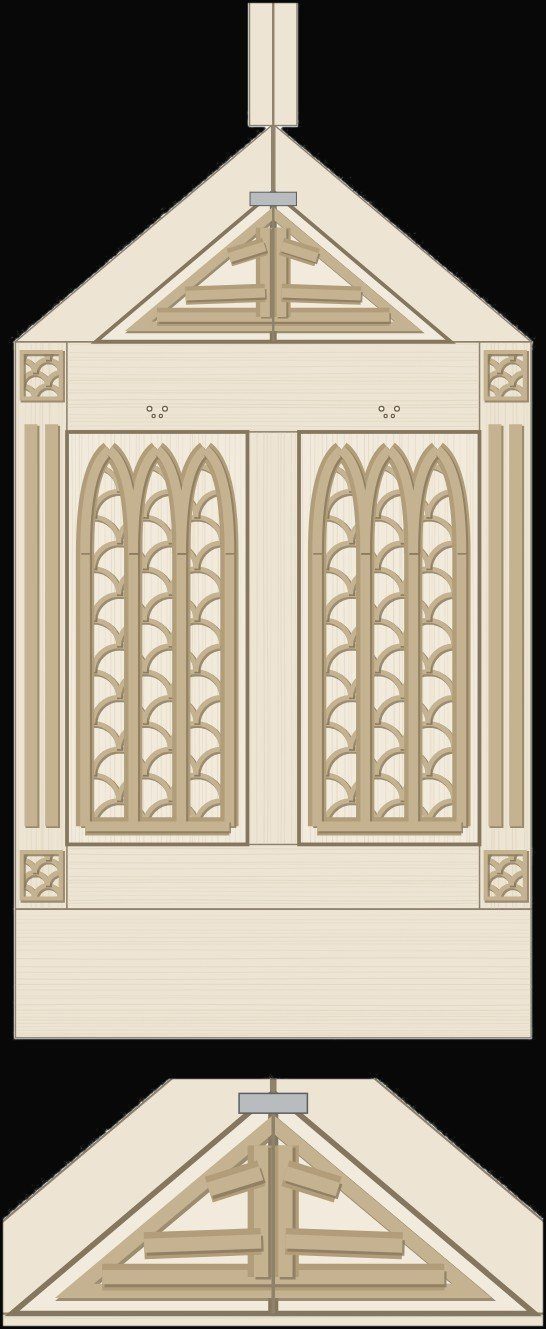
Then the routing went. Every line became a flush strip of laser-cut stainless set into raw white ash, and the scales gave way to three-strand braids drawn from the handle, gathering into square blocks at head and foot. This is the case as built.